It is early morning in the small estate of Ruaraka, just off the busy Outering Road, and the steady hum of a milling machine fills the air.
The sound is familiar to residents in the area, many of whom rely on neighbourhood posho mills for their daily meals.
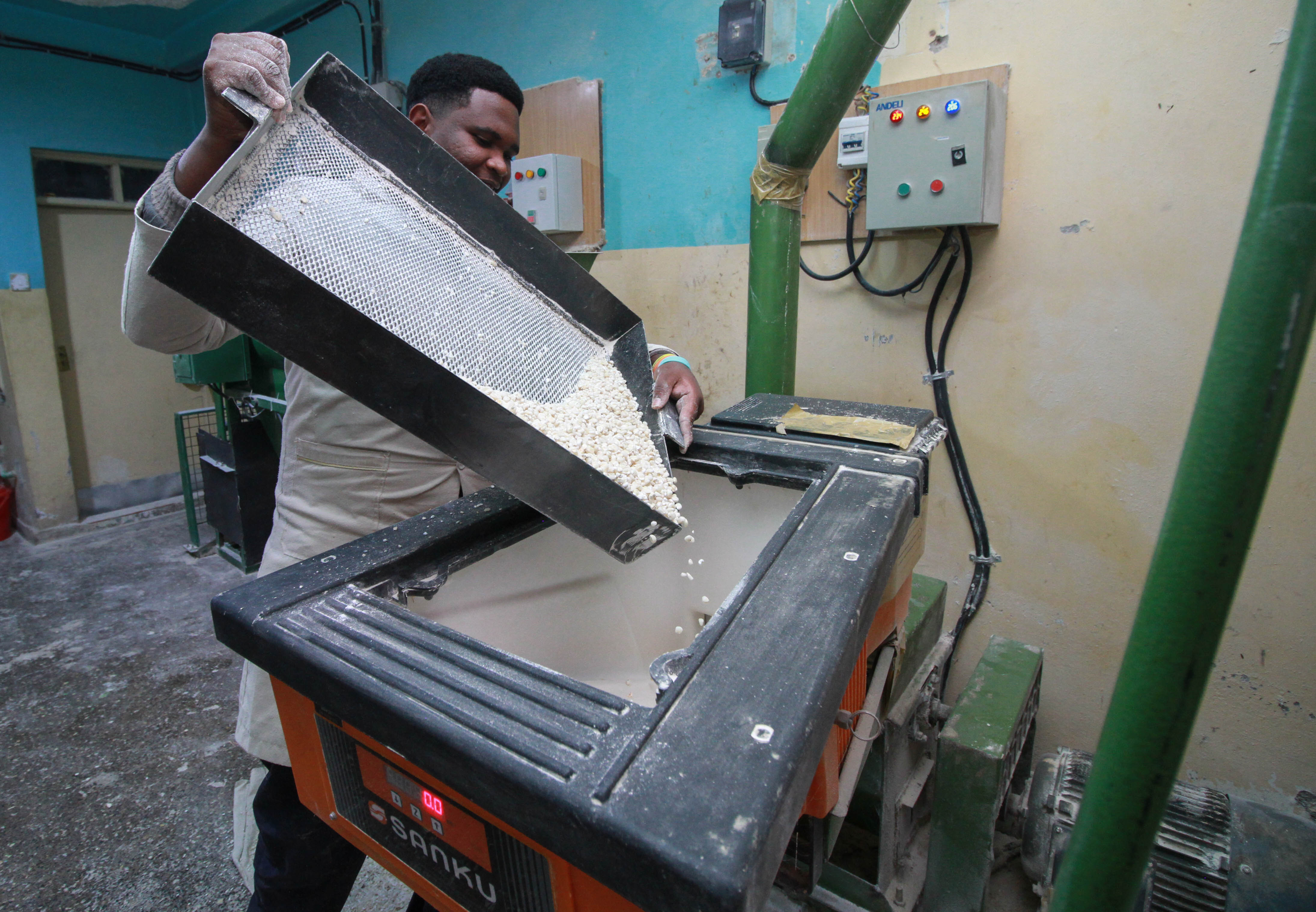
Inside a modest workshop, Ashford Kamau moves briskly between machines and customers, his attention divided between weighing maize, adjusting dials, answering questions and guiding people on where to stand as their grain disappears into the grinder.Customers stream in carrying small sacks, buckets and plastic containers. For them, this visit is routine, often repeated several times a week.For Kamau, however, the work represents something more than a business transaction. As he pours maize into the mill, the process goes beyond ordinary grinding.
Mounted on the milling machine is a small digital device, known as a dosifier, which automatically adds a carefully measured mix of vitamins and minerals (premix) to the flour as it is milled.
The dosifier is simple to use. It automatically measures the weight of the maize, releases precise quantities of premix during milling and stops when the batch is finished.Within seconds, what would otherwise be ordinary unga is transformed into fortified maize flour, enriched with nutrients essential for growth, immunity and overall health.
The transformation is quiet and almost unnoticed by customers unfamiliar with the technology, yet its implications are significant for households that depend on ugali and porridge as daily staples.
“This machine does not just grind maize,” Kamau explains during an interview.“It adds what the body needs but many families do not always get from their meals.”
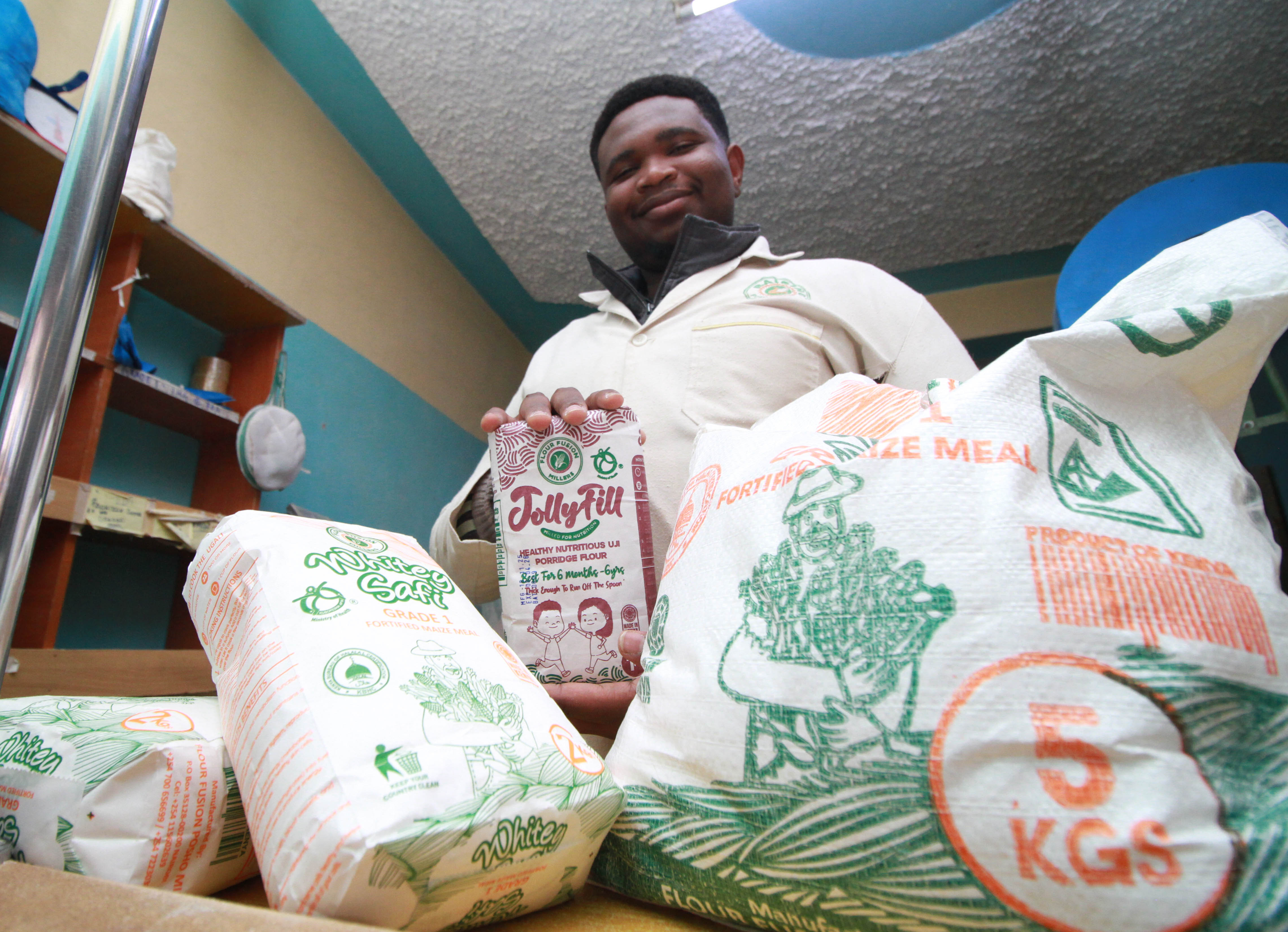
The mill, known as Flour Fusion, was started in 2017 by Kamau’s father as a simple neighbourhood posho mill.At the time, its purpose was straightforward: to provide affordable milling services to nearby residents.
Over the years, Kamau gradually learned the trade, starting by assisting with basic operations before taking on more responsibility. Eventually, he assumed full control of the business.
Today, Flour Fusion has evolved beyond a standard milling service. It has become a small nutrition hub serving households, schools and young children in the area.
KIDS’ DIET GAPS
The shift did not happen overnight.
Kamau says the focus on nutrition developed gradually as he and his family became more aware of the gaps in children’s diets and the role fortified food could play in addressing them.
The primary focus, Kamau explains, has always been children.
The mill produces porridge flour for infants from as early as one week old to about two years, a critical period for growth and brain development.
This porridge flour is prepared with care, using the same fortification process to ensure consistency and quality.In addition, the mill produces fortified ugali flour for households and institutions.
A nearby GSU primary school is among its regular clients, consuming about 600kg of maize flour every week.Porridge production at the mill averages about 100kg a week, while daily walk-in customers account for another 100kg or more.
The steady flow of customers reflects both demand and trust built over time.Customers pay Sh10 per kilogramme for milling and fortifying services.
Kamau says this rate is competitive compared to larger mills, many of which do not offer fortification.
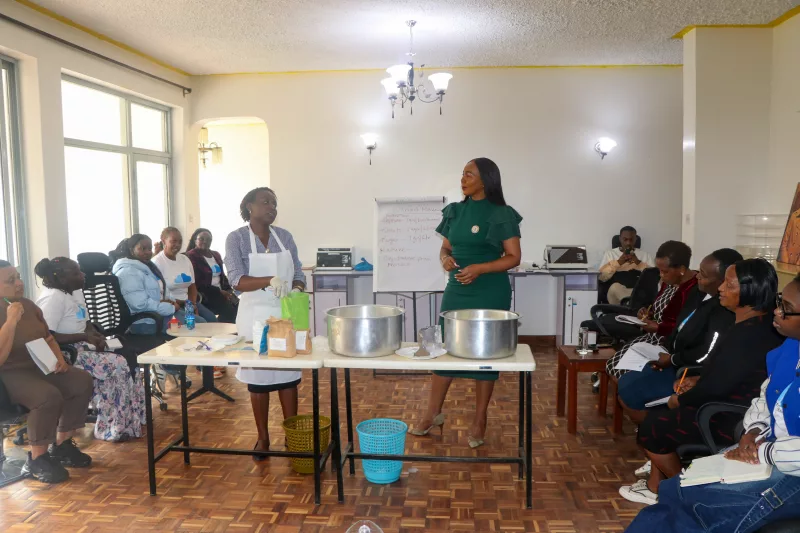
For many customers, this is the first time they are hearing about fortified flour. Kamau says he and his team take time to explain what fortification is and why it matters.
“People usually ask what that small machine is, and it gives us a chance to explain why fortification matters,” Kamau says.These conversations, often held over the noise of the milling machines, have become part of his daily routine.
The fortification technology and premix used at Flour Fusion are supplied by Sanku, a social enterprise working to end malnutrition by making fortified flour affordable and accessible.Sanku focuses especially on small- and medium-scale millers, who serve a large portion of the population but often lack the resources to invest in fortification equipment.
Sanku provides millers with dosifiers free of charge and sells them high-quality premix containing essential micronutrients.
The model allows millers to integrate fortification into their operations without bearing the high upfront costs associated with specialised equipment.
HOW IT WORKS
The dosifier works automatically. Once maize is loaded into the mill, the device measures the weight and releases precise amounts of premix as milling continues.
When the maize runs out, the system shuts off on its own.The process is designed to minimise error and ensure consistency in nutrient levels.
Kamau says it took him just a few days to learn how to use the technology.“The process is very accurate. You don’t guess. The machine calculates everything,” he says.
The simplicity of the system has made it easier to incorporate fortification into everyday operations without slowing down service.
His elder brother, Danson Kariuki, a co-founder of the mill, says the decision to fortify flour was both strategic and practical.As the family looked to scale up operations and package their own maize flour brand, Whitey Safi, fortification became a requirement under Kenyan law.
“Buying a dosifier on our own was expensive,” Kariuki says. It costs up to Sh300,000 in the market.
“We needed a partner who could support us technically and financially. That’s how we found Sanku.”
The partnership allowed the mill to meet regulatory requirements while expanding its reach, Kariuki says.
Beyond providing equipment, Sanku offers regular technical support, training and quality checks to ensure fortified flour meets Kenya Bureau of Standards requirements.The mill also conducts laboratory tests every six months to confirm compliance.
These measures help maintain standards and build confidence among consumers.
Despite this progress, challenges remain. Rising maize prices have increased production costs, while sourcing raw materials, such as maize and millet, has become more difficult.
Kamau acknowledges these pressures but says the impact of the work makes the effort worthwhile.“Some people cannot afford meat or fruits every day. But everyone eats ugali. If we can make that ugali healthier, then we are already winning,” he says.
His words reflect a practical approach to nutrition, rooted in everyday realities.
HEALTHCARE STRATEGY
Sanku Kenya partnerships and government relations senior manager Felistus Mutambi frames their work as a public service.
“Fortification is a public health strategy to combat micronutrient deficiencies,” she says.
Kenya’s journey with fortification began in the 1990s with iodised salt, which significantly reduced iodine deficiency disorders, she says.
Subsequent research found widespread deficiencies in iron, zinc, vitamin A and B vitamins, particularly among children and women. These findings informed later fortification efforts.
Sanku’s approach focuses on small- and medium-scale millers.By providing dosifiers free of charge and selling high-quality premix, the organisation aims to lower barriers to entry.
“Small millers cannot afford the equipment or expertise to fortify flour on their own,” Mutambi says.
“We offer both technology and technical support, installing machines, training staff and ensuring the premix is used correctly.”
The premix contains nine essential micronutrients: vitamin A, iron, zinc and the B-vitamin complex, including B1, B2, B3, B6, B9 and B12.Mutambi says these nutrients were selected regionally, in consultation with East, Central and Southern Africa Health Community standards, to address the most prevalent deficiencies.
“Fortification helps restore nutrients lost during ordinary milling,” she says.“It’s a cost-effective intervention compared to supplementation, which is expensive and often limited in reach. By targeting staple foods like maize, wheat and edible oils, we can reach large portions of the population.”
Awareness and trust remain central to the programme’s success.Sanku and its partner millers engage in community awareness campaigns aimed at consumers and local leaders.
Many people are unaware of the importance of micronutrients, and consistent education helps build understanding and acceptance of fortified products.
Sanku business development officer Caroline Mbinya says the organisation’s work is driven by a clear social mission.“Our goal is to reach people who cannot afford a balanced meal,” she says.
“Fortified flour ensures that even a simple meal of ugali and vegetables contains essential vitamins and minerals.”
Mbinya says with dosifier being costly, their mission is mainly to ensure small-scale millers can still access the technology through partnerships and subsidies, allowing fortified flour to reach low-income households without increasing the cost of staple foods.
On the technical side, Sanku technician and engineer Robert Vengi oversees the installation and maintenance of dosifiers.He says larger machines used by industrial mills can process up to 900kg per hour and are designed to stop automatically if premix runs out.
Smaller machines used by posho mills operate on a batch-by-batch basis, measuring each load and dispensing premix accurately.
This system, he says, ensures consistency across all fortified flour sold.
CHALLENGES FACED
Even with these systems in place, challenges persist.
Kamau points again to rising maize prices, noting that higher costs sometimes have to be passed on to consumers, affecting sales.
Procuring raw materials, such as maize, wimbi and cassava, is also increasingly difficult. For Sanku, awareness and affordability remain key barriers.
Many small millers and consumers do not fully understand the benefits of fortified flour, while the cost of premix can be a concern.“We work with the government, WFP and local partners to reach rural areas like Baringo and Makueni,” Mutambi says.
The impact of fortification is measurable.Since mandatory fortification began in Kenya, vitamin A and iron deficiencies among pregnant women and children have declined.
Fortified maize and wheat provide a reliable source of essential nutrients, supporting child growth, maternal health and productivity.“Fortification is a multi-stakeholder effort,” Mutambi says.
“It requires government regulation, industry compliance, technology and community engagement. When done well, it can transform public health outcomes in a cost-effective way.”
At Flour Fusion, the focus remains on expanding access while maintaining quality and affordability.Kamau says the mill aims to reach more schools, households and small-scale clients.
He adds that fortification is their way of giving back to the community and contributing to a healthier future.

Sanku’s model continues to scale across Kenya. Initially targeting small millers, the initiative now supports medium and large-scale operations, offering quality assurance, standardisation and technical support.
Awareness campaigns and ongoing assistance help millers become advocates for fortification in their communities.
Fortification addresses a crucial gap in Kenya’s fight against malnutrition. Traditional milling removes essential nutrients, leaving families vulnerable to deficiencies.
By enriching staple foods, fortified flour offers a practical, everyday solution that benefits children, mothers and entire communities.
Kamau sums it up simply: “If people choose fortified flour, they are getting seven times more nutrients than ordinary flour. It’s healthier, cooks faster and tastes better. That’s a win for families.”
With Sanku’s support, community-minded millers like the Kamau family and continued public education, Kenya is steadily making progress in reducing malnutrition and building a healthier population, one kilo of fortified maize flour at a time.