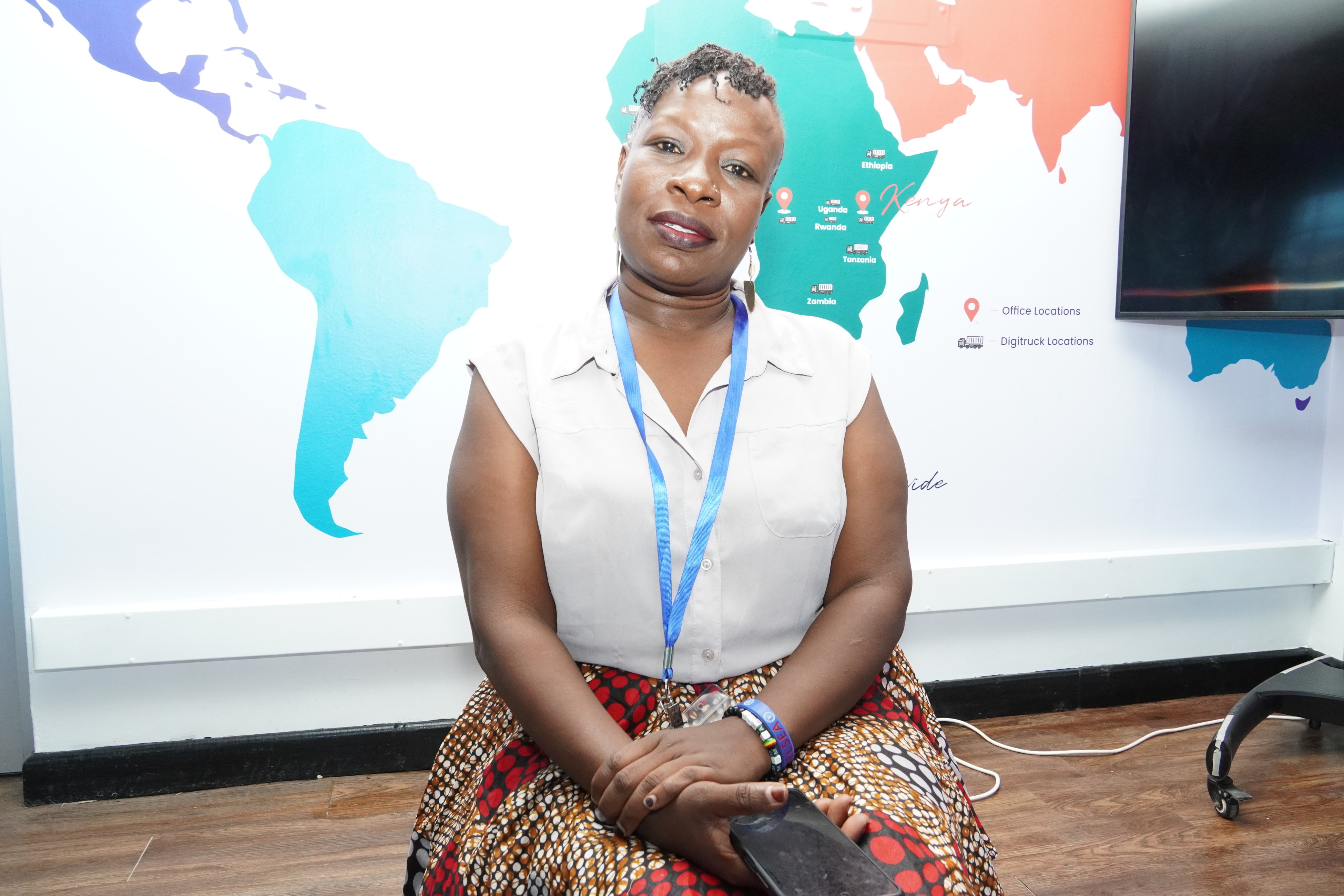
 Ex-convict Maureen Awuor during the interview with the Star in Syokimau, Machakos county on Thursday / TOM JALIO
When Maureen Awuor, 42, landed in prison, she felt the walls closing in on her not just physically but mentally.
Gone was her job as a teacher, and now she was staring at being separated from her three children for six long years.
The sentence came about after she was convicted of obtaining money by false pretences. As a single mother, the fall was steep and unforgiving.
“Being in prison is kind of a mental torture,” she recounts during an interview with the Star in Syokimau, Machakos county on Thursday.
Her sleeveless blouse and kitenge skirt bespeak life’s little luxuries after the monotony of a striped black-and-white gown behind bars.
“You’ve left your family out there,” she recollects. “You are just within the walls. You don’t have freedom.”
Her tone varies from sombre reflection to humble contentment as she revisits her journey in prison. But for the most part, her face beams with the smile of someone who got served lemons and made lemonade.
Maureen, who hails from Busia but has lived in Mombasa since 2007, was incarcerated in Shimo la Tewa Women’s Prison on March 6, 2024.
She had once stood confidently before classrooms in secondary school, teaching English and Literature. Now she was reduced to counting hours behind bars, uncertain of what awaited her outside.
She would later appeal and be acquitted, leaving prison on November 18, 2025, after serving one year and eight months. But at the time, the future felt sealed. She feared losing her identity and being branded a criminal for life.
The turning point came eight months into her sentence, when a digital literacy programme was introduced by Close the Gap, a social enterprise that refurbishes IT equipment to reduce e-waste.
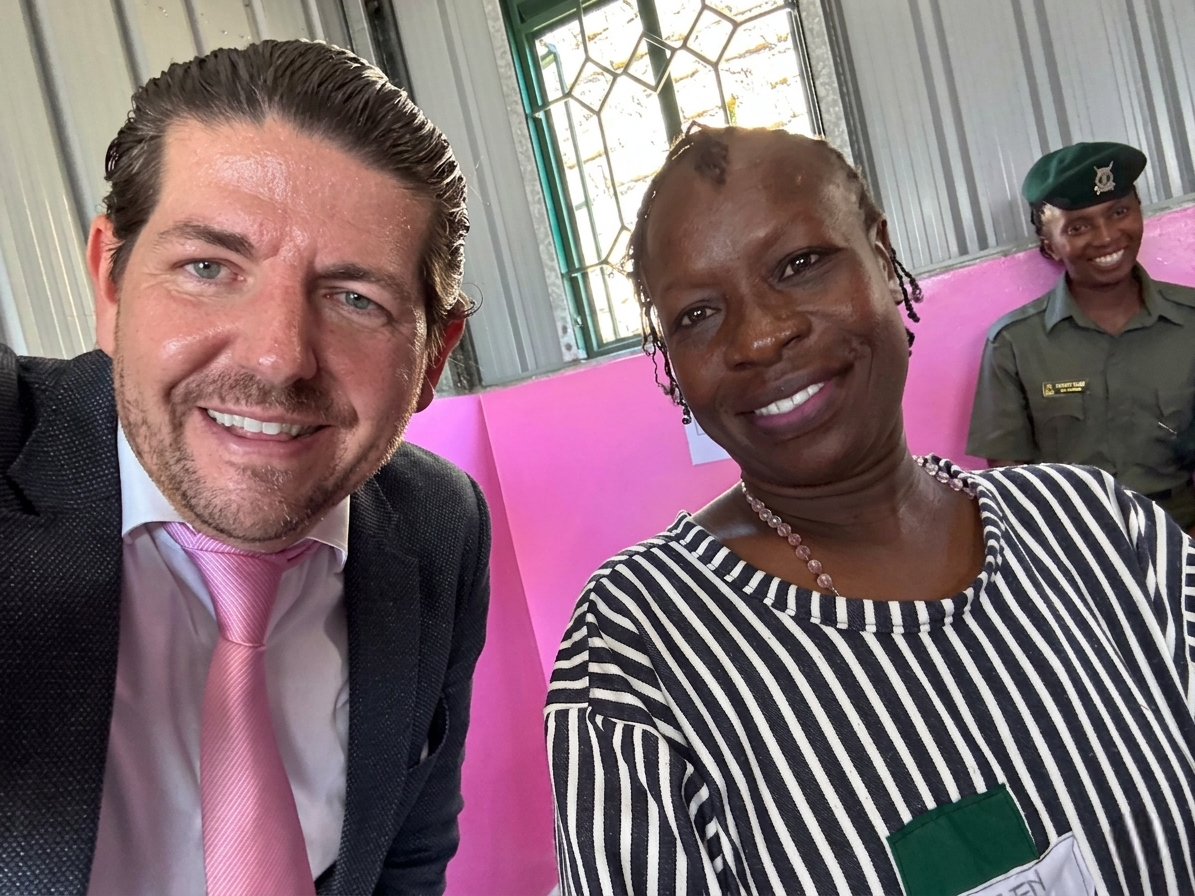
Close the Gap donated the computers through CEO Olivier Eynde, and Tech Kidz Africa, a technology academy led by Paul Akwabi, provided the training.
This opened a door Maureen had never imagined walking through. She was among the first six inmates to enrol in the course.
“When I got this opportunity, I was elated,” she says. “Now the tough environment had something to ease it.”
The training covered a wide range of skills, from computer maintenance to website development and graphic design, alongside Microsoft Office tools.
The learning curve was steep but invigorating. Maureen immersed herself fully, determined to expand her horizons.
“Before my incarceration, I only knew basic computer skills,” she says. “I didn’t know that one day, I would be a web developer.”
FROM STUDENT TO TEACHER
What began as a student experience soon evolved into something deeper. After completing her training and earning a certificate, Maureen stepped into a teaching role within the prison itself.
She began instructing fellow inmates and even prison officers in ICT, becoming part of the second cohort’s education while still serving her sentence. It was a return to her roots as a teacher, yet in a completely different context.
“Being in prison is not a walk in the park,” she says. “So when you are involved in imparting knowledge to others, you are mentally engaged. You don’t have to worry about the tough situations.”
Teaching ICT behind bars brought a renewed sense of purpose. “I really love teaching,” she says.
It also challenged her to grow beyond her comfort zone. Transitioning from English and Literature to coding and digital skills required adaptability and courage. Yet she embraced it fully and became a champion of the initiative.
“It was quite interesting teaching something new, in a new environment,” she says. “I told my fellow inmates the importance of learning ICT.
The programme restructured Maureen’s daily life, replacing despair with routine and purpose.
Each morning, she woke up with something to look forward to, a class to attend or teach, a goal to pursue. The prison walls remained, but her mind found space to breathe.
“It felt like I was outside,” she says. “I was not in prison anymore.”
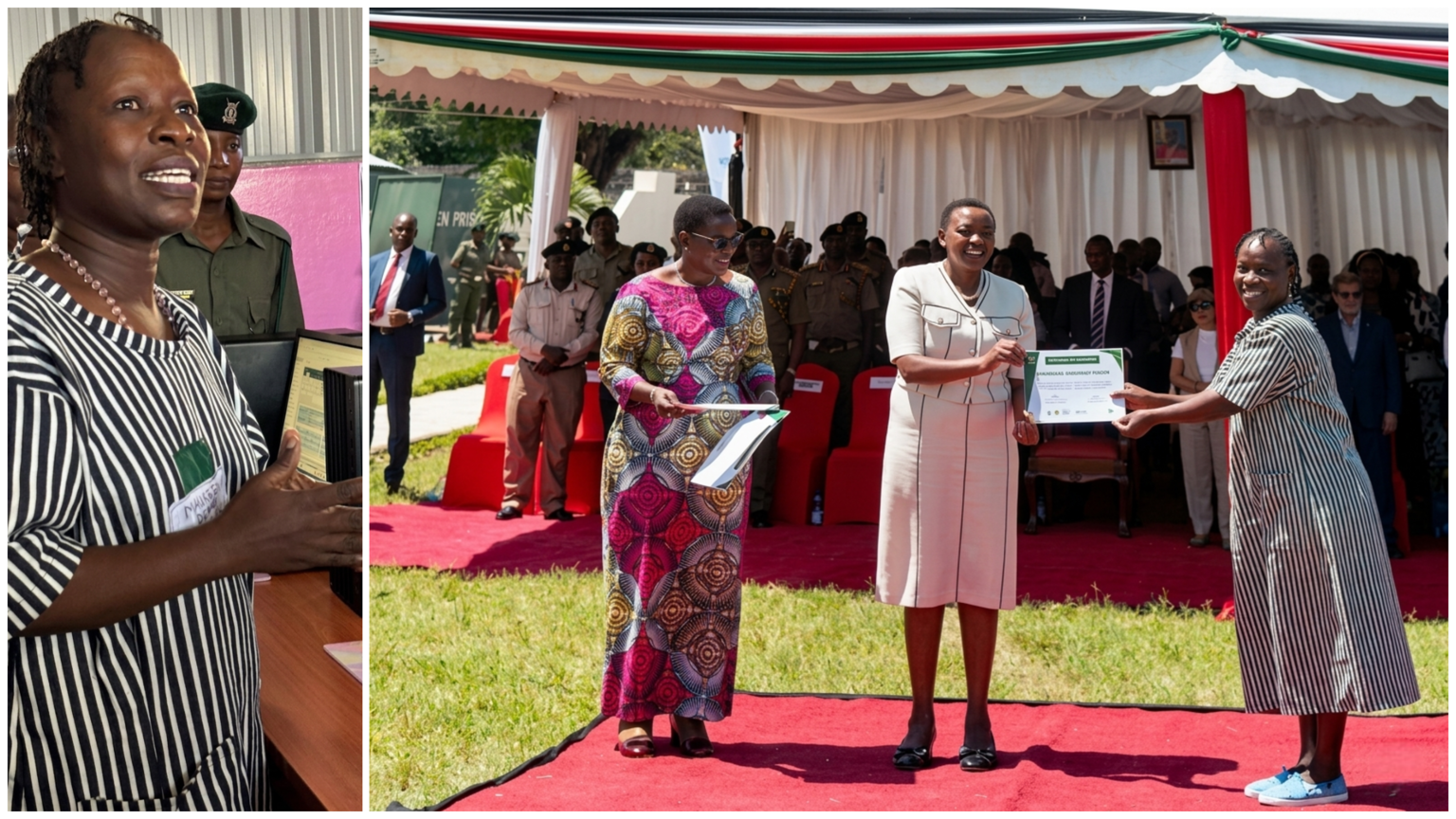
Recognition came in a memorable and unexpected way. Upon completing the programme, Maureen received her certificate from none other than First Lady Rachel Ruto.
“It felt great,” Maureen recalls. The date, March 15 last year, is etched in her memory.
“I had never known that I would one day brush shoulders with such high and mighty,” she adds with a laugh.
At one point, the First Lady visited the budding computer lab. In a video capturing the moment, Maureen projects the codes she used to create a website, apparently speaking on behalf of fellow inmates.
Addressing the First Lady alongside Correctional Services PS Salome Beacco, she exuded confidence she could use the skills to empower the youth out there.
“Your Excellency, with your permission, we request if you can allow us to make you a small website as appreciation for your kind-heartedness,” she boldly suggested, drawing chuckles all around.
STIGMA AFTER PRISON
When she was finally discharged following her acquittal, Maureen faced a new kind of challenge: reintegration. Armed with new skills, she stepped back into a society that was not entirely ready to accept her.
Even her own family struggled to welcome her back. A painful incident at a funeral laid bare the reality of rejection.
“I went there thinking that it was now time to reunite with my family,” she says.
“Nobody wanted to associate with me. I could not even sleep at home.”
She found herself reaching out for help in the middle of the night.
“I had to call the CEO of Close the Gap, Olivier, and tell him, ‘I’m stranded in Busia. Kindly just pay me fare,’” she recalls. “And he did that.”
Stigma, she says, is “ultra-real”. While her people are warming up to her now, those earlier moments exposed her vulnerability and showed the importance of support systems for former inmates.
Close the Gap did more than provide training. It extended a lifeline beyond prison walls.
“Immediately I left prison, it was Olivier who invited me and my daughter for my first meal,” Maureen says. “The first phone, the one I have,” she holds it up, “he took me to Safaricom and bought it for me.”
She also received support from the CEO of Tech Kidz Africa, who helped her settle down. “Paul Akwabi did some shopping for me and paid my rent for three months,” she says gratefully.
These gestures, though practical, carried deeper significance. They restored her sense of worth and possibility.
“Here are people who have offered me training free of charge,” she says. “And now I’m out of prison and they are holding my hand again.”
STARTING AFRESH
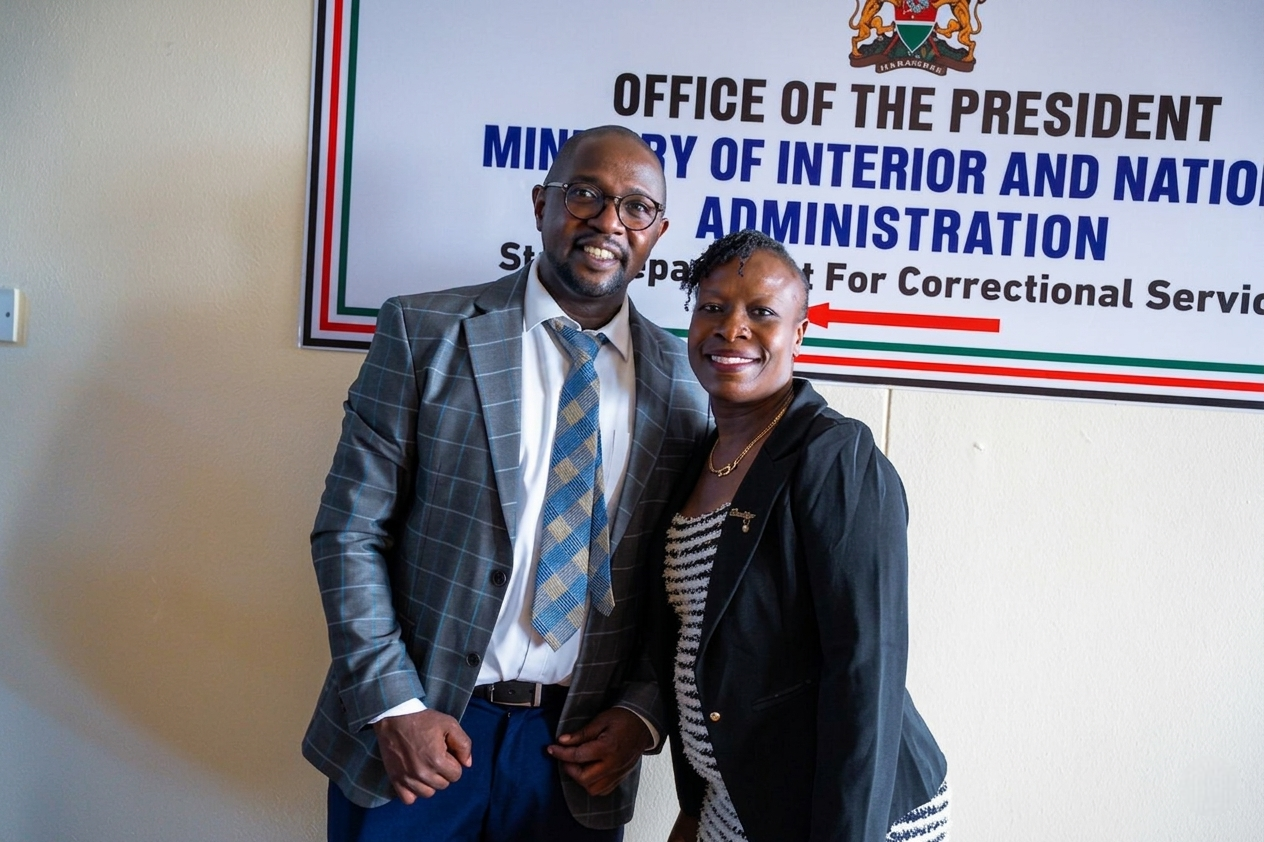
Within a month of her release, Maureen secured a job as an ICT teacher at Progressive Malindi Academy, a secondary school in Kilifi county. It was a remarkable turnaround, one made possible by the very skills she acquired behind bars.
“At times, I see my being in prison as a way God wanted to elevate me, to lift me from one level to another,” she says.
“Because if I were not in prison, literally speaking, I would not have learned these skills.”
In her new workplace, her past did not define her, her abilities did.
“They welcomed me despite being an ex-convict,” she says. “They saw the value I could give to the students.”
The contrast between her reception at home and at work was striking. It highlighted the uneven nature of reintegration and the critical role institutions can play in offering second chances.
For Maureen, the classroom became a place of healing and affirmation. “It’s quite a good feeling,” she says, “that now I can teach young students what I learned behind bars.”
Her life in jail has shaped her views on the prison system and what it can do better.
She sees the hardship induced by prison conditions as a potential cause of stress and depression. She survived by keeping herself constantly occupied. She took on multiple courses besides digital literacy, including guidance and counselling, beadwork and baking.
“I never slept,” she says. “That’s what kept me going. I did not want to be idle. You know an idle mind is the devil’s workshop.”
Maureen praises the introduction of rehabilitative programmes in prison, a point she reiterated during the launch of Close the Gap’s circular economy hub in Syokimau on Thursday.
“Despite the obstacles faced in prison, like limited access to Internet and security concerns about technology use, I managed to get digital training,” she told a packed room of diplomats, prisons officials and corporate executives, including Olivier and Akwabi.
“And as we speak, I am a living testimony that what the State Department for Correctional Services is doing is impacting lives outside here.”
Expounding on the topic in this interview, she calls for practical support to help inmates utilise the skills they learn.
“For example, Maureen has done digital literacy. There’s something I need, such as a laptop, to help me do my web designing,” she says.
“I’ve done baking. You can give me just some capital so I can start a small business with my baking skills.”
She encourages partnerships between the prison system and external organisations. By bringing in more investors and programmes like Close the Gap, she believes more inmates can be equipped for life after prison.
“If you come out and there’s nowhere to start, you feel like you want to go back to crime to survive,” she says. “But when you get support, it reduces recidivism, or reoffending.”
For those still behind bars, Maureen’s message is clear and grounded in her own experience. She urges them to seize every opportunity for growth, no matter how small it may seem, framing it as a bridge back to society.
“Those are employability skills,” she says. “They can change your life.”
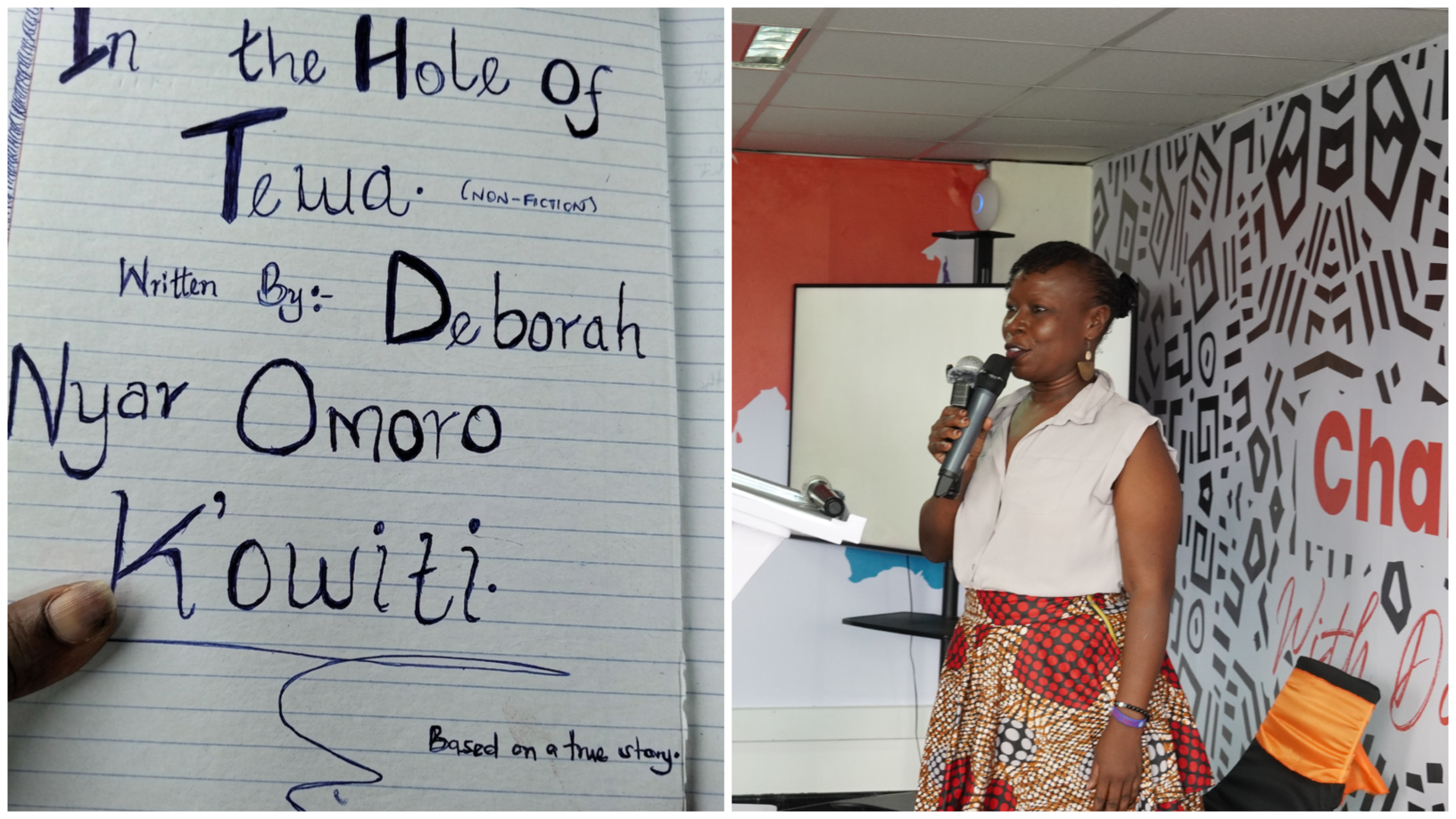
Today, Maureen stands not just as a survivor of incarceration but as a testament to the power of opportunity and support. Her journey from despair to stability is neither simple nor complete, but it is undeniably transformative. She wrote about it while in prison and is now working on publishing the manuscript under the title, In the Hole of Tewa.
Maureen carries both the scars and the lessons of her experience, using them to guide her forward and inspire other inmates. “They should know,” she says, “that being in prison is not the end of the world.”
***
Tom Jalio is the features editor of the Star and the producer of YouTube channel Jalio Tales