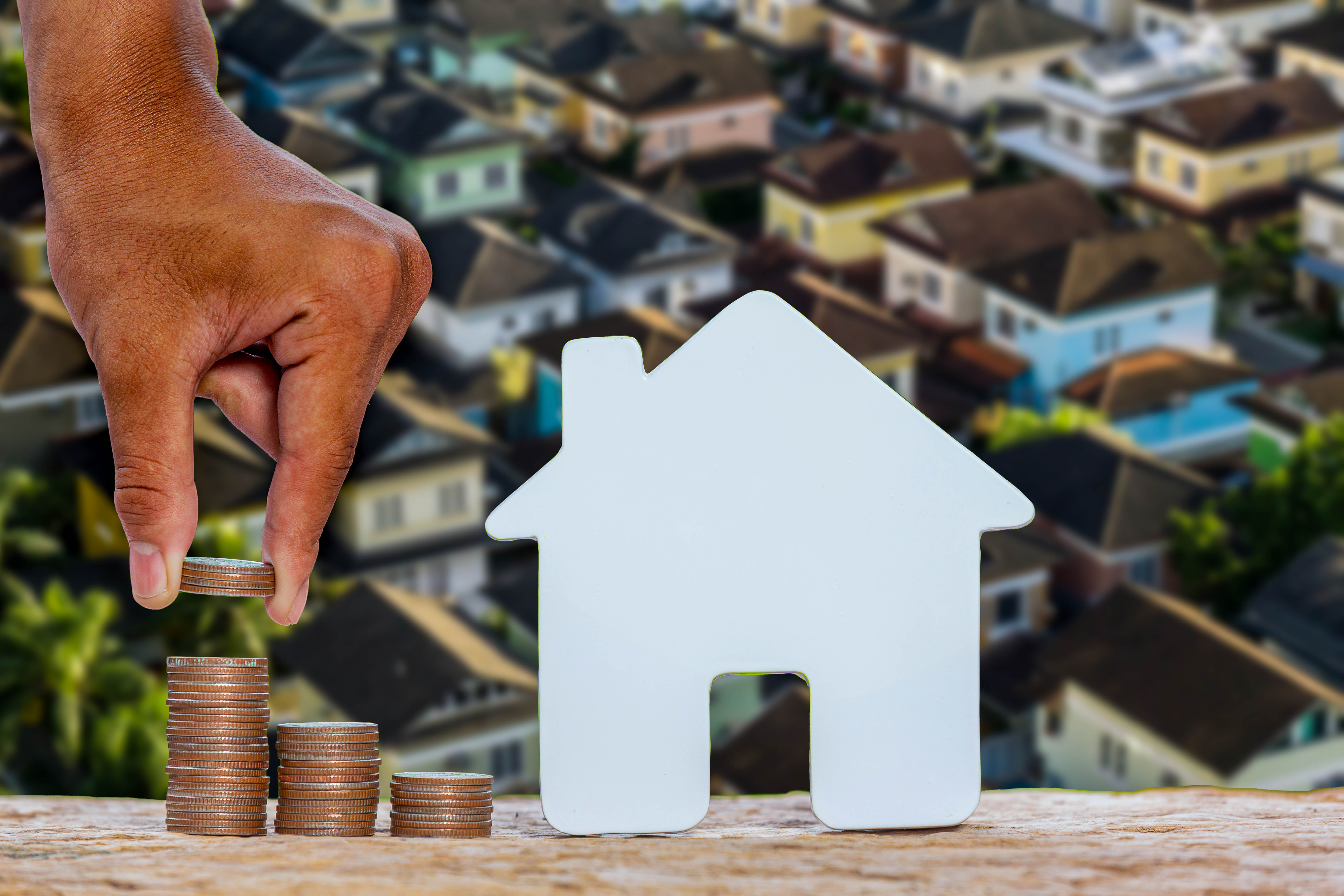
Africa’s housing market is moving away from a rigid split between renting and owning toward structured pathways that allow households to transition between the two.
Rent-to-own models are gaining ground as a financing mechanism that converts monthly rent into long-term equity.
Millions of Africans remain locked out of mortgage finance, with fewer than 5 per cent of adults accessing formal home loans, according to the International Monetary Fund. In some markets, the Fund notes, traditional mortgage systems reach as little as 3% of the population.
The scale of the gap remains significant. Africa’s housing deficit exceeds 50 million units and could rise to 130 million by 2030, pointing to sustained demand for alternatives to conventional ownership models.
Across multiple markets, policymakers and developers are testing structures that lower entry barriers while retaining a pathway to ownership.
In Rwanda, implementation is already underway. The Rwanda Housing Authority and the City of Kigali are securing land to roll out a rent-to-own affordable housing programme targeting low-income workers.
Under this structure, tenants pay monthly rent alongside an additional contribution that accumulates over time, gradually building equity and enabling eventual ownership. Households occupy the property while progressing toward purchase, removing the need for large upfront deposits.
“Traditional mortgages require large upfront deposits and strict credit access, which excludes a significant portion of the market,” Seeff Property Group real estate analyst Stacy Lethabo says.
“Rent-to-own shifts that structure. Instead of needing a lump sum at the beginning, households build their stake incrementally, converting what would have been pure rent into future ownership.”
She draws a clear distinction between the two systems.
“A mortgage is front-loaded; you qualify first, then access ownership. Rent-to-own reverses that logic. You access the home first, then work toward qualifying for ownership over time,” Lethabo says.
HOW IT WORKS
Structurally, the model combines a lease agreement with an option or obligation to purchase.
A portion of the monthly payment covers occupancy while another is set aside, often in escrow, as a future deposit. At the end of the agreed period, tenants transition into ownership, typically by securing a mortgage to complete the purchase.
Execution, however, depends on regulatory clarity. Lethabo says weak legal structures remain a primary risk.
“Most disputes in rent-to-own arrangements arise from poor documentation and interpretation, not the model itself,” she says.
“Contracts must clearly define payment structures, default terms and ownership transfer conditions.”
Beyond Rwanda, similar approaches are being tested. In South Africa, rent-to-buy schemes are targeting households excluded from traditional mortgage systems, alongside ongoing adjustments to tenant protection frameworks.
In Eswatini, the Select Home initiative is delivering more than 500 units annually under a comparable structure.
At the same time, broader market conditions continue to shape housing demand. In South Africa, house price growth is projected to peak at around 6 per cent in 2026 before moderating, supported by easing inflation, gradual rate cuts and improving credit demand.
The outlook remains sensitive to macroeconomic variables, including interest rates, inflation and oil price movements, underscoring how closely housing demand tracks wider economic conditions.
This dynamic is evident in Accra, where real estate development is expanding but remains misaligned with local income levels.
High-end apartment projects are concentrated in areas such as Airport Residential Area, Cantonments, Labone and East Legon. These locations attract expatriates, diaspora investors and high-net-worth buyers, supported by infrastructure quality, proximity to commercial centres and strong market visibility.
AFFORDABILITY GAP
Ohene Acheamfour, an Accra-based market analyst, says pricing in these areas reflects both physical infrastructure and less tangible factors that reinforce their positioning within the market.
That positioning is evident in price levels. Studio apartments in prime areas average about $120,000 (Sh15 million), while penthouses range between $1.8 million and $3 million (Sh230 million to Sh390 million), with many units pre-sold.
Prices per square metre typically fall between $2,500 and $3,500 (Sh320,000 to Sh450,000), aligning more closely with international capital flows than domestic purchasing power.
For most Ghanaians, the gap remains wide. Entry-level units are still unaffordable for a large share of the population, while mortgage access is constrained by high interest rates and short tenors. Demand in this segment is, therefore, largely driven by diaspora and foreign capital.
This points to a deeper structural imbalance.
Lethabo identifies three pressures shaping housing markets across African cities: access to finance, alignment with incomes and the adequacy of housing supply. Even where units are available, they do not always meet standards for safety, quality or long-term use.
In Nigeria, an estimated 15.2 million homes are classified as substandard, highlighting a parallel quality deficit alongside the broader housing shortage.
Within this context, rent-to-own models provide a more income-aligned approach. By allowing households to build equity gradually through rent payments, they expand access for informal and low- to middle-income earners, who are typically excluded from formal banking systems.
KENYA’S APPROACH
In Kenya, similar approaches are being integrated into affordable housing delivery. Programmes combine government-backed financing with lease-to-own structures, while the emerging buy-to-rent segment positions housing as an income-generating asset.
Kenya’s Affordable Housing Programme remains central to this effort, targeting the delivery of 500,000 units.
By mid-2026, about 210,446 units will be under construction, adding to more than 111,000 units previously completed or in progress.
The programme is structured around an annual delivery target of 250,000 units, with pricing ranging from about $6,500 to $44,650 (Sh840,000 to Sh5.7 million), covering multiple income segments.
In Senegal, initiatives such as the Kajom Capital programme are linking formal and informal workers to state-backed housing, extending access beyond traditional mortgage systems.
What connects these approaches is a redefinition of ownership. Rather than a single transaction requiring high upfront capital, ownership is increasingly structured as a staged process that households can enter and build over time.
The implications extend beyond housing into broader questions of inclusion and urban development.
Researcher and social justice expert Kelly Munyao says housing in Africa is not only an economic issue.
“It is also a question of dignity, belonging and participation in urban life,” she says.
“If scaled effectively, rent-to-own models could expand access to secure tenure, strengthen financial inclusion and provide more stable pathways into formal housing systems.”