
On a rain-soaked afternoon in Nairobi, the mud clung stubbornly to Nicholas Muyoti’s shorts, soaking his jersey and weighing down his boots.
The ball squelched beneath his feet with every movement. At nine years old, he darted past three defenders with a mixture of instinct and foresight, striking twice to salvage a draw for his school team.
From the tin-roofed stands, classmates erupted into cheers, oblivious that they were witnessing the quiet formation of a mind attuned to responsibility, vision, and the intricate rhythms of the game.
Muyoti felt it then, though he did not know the name for it: that football was never simply about scoring, never only about the glory of a goal, but about reading the movements around you, the intentions of your teammates, and the pressures of the moment.
“Every stage teaches you something,” Muyoti reflects now, seated in the fluorescent-lit office at Kenya Police FC, walls bare except for a few framed photographs of teams and trophies he has helped shape. “Football is about people first, the ball second. You build belief in them, and everything else follows. If you don’t feel the rhythm of the game, you cannot lead it.”
That rhythm, the cadence of decision and anticipation, would carry him through decades of football—from primary school pitches to captaining the Kenya national team, from the storied terraces of AFC Leopards to the rise of Nairobi United, and now into the discipline and ambition of Kenya Police FC.
His story is not of flamboyance but of persistence, intelligence, and quiet authority—the kind of authority earned not in words but in the patience of preparation, in the measured response to chaos, in the faith placed in others.
Born on September 8, 1976, in Nairobi, Muyoti’s earliest memories are of ragged balls bouncing across uneven fields, sudden downpours drenching shoes and jerseys, and the unmistakable scent of wet earth.
His education followed the arc of a boy whose mind and body demanded discipline: Our Lady of Mercy Primary, Mumias Boys, Amukura Secondary in Busia, and finally Upper Hill School in Nairobi, each step layering expectation, teaching him to observe and anticipate, to respect both authority and teammates, to see beyond the immediate and into the potential of a match, of a career, of a life.
“Football is more than running after a ball,” he says, voice calm but deliberate, each word measured as if he is explaining a law of nature. “It is patience. It is a vision. It is understanding people. That is how leaders are born.”
Even as a child, Muyoti showed instincts that would later define his career. “I wasn’t the tallest or fastest,” he recalls, “but I positioned myself where others could not. I learned to read movement and anticipate what was coming. That became my first skill.”
One rainy afternoon, after a match that left his uniform sodden and his shoes caked in mud, he walked home with the ball tucked under his arm and a determination forming quietly in his chest. “I thought, this is what I want,” he says. “Not just to play, but to understand, to guide, to win—not just games, but respect.”
His first professional steps were taken at Kenyatta Hospital FC while he was still a student at Upper Hill. The pitches were uneven, the kits were frayed, and the travel was gruelling.
“I had to run between classes and training,” he says, shaking his head, recalling the strain. “It was exhausting. But I learned that dedication is more important than natural talent. Without effort, nothing lasts.”
He watched teammates who relied on raw ability falter under pressure, who allowed lapses in concentration to undo talent. “I watched, I learned. I decided early that I would never be that player. I would prepare, anticipate, and protect the team.”

Those small lessons, absorbed in mud and dust, would later become the pillars of his coaching philosophy: meticulous preparation, patience, and a relentless attention to the human side of the game. “Talent wins games,” he insists, “but preparation and belief win championships.”
Leadership forged in pressure
In 1997, Muyoti joined AFC Leopards, a club suffused with history, expectation, and the weight of fans who treated victories and defeats with equal intensity.
Over six seasons, he became a versatile presence, moving between midfield and defence with intelligence and instinct, learning to balance between personal skill and collective responsibility.
“Leopards are special,” he says, eyes distant as he recalls the packed stands, the roar of the crowd, the smell of the grass after a night’s rain. “Every game felt like a war. Every victory was a statement. Every loss taught humility.”
The derbies against Gor Mahia were tests not just of ability but of nerve, of the capacity to remain calm in a stadium thrumming with thousands of hearts beating in tension.
“In one game, I made a last-minute sliding tackle that preserved a narrow win,” he recalls. “The crowd was roaring. Adrenaline was high. I focused only on the next move. Leadership is calm when everyone else panics.”
Winning the Moi Golden Cup in 2001 cemented his reputation as a player who could navigate chaos, anticipate pressure, and channel the moment into order.
“I learned that a leader’s job is to anticipate chaos and channel it into order,” he explains. “You do not just play for yourself. You play for the team, for the fans, for the history of the club.”
Between 2001 and 2003, Muyoti captained Kenya, guiding them to Cecafa and Castle Lager Cup victories, wearing the national jersey with a solemnity that belied his age. “Wearing the national jersey is sacred,” he says. “You carry the hopes of a country. Every decision matters.”
His first cap came at the 2001 Cecafa final against Ethiopia, a moment that is etched into his memory. “I could hear my heartbeat,” he recalls. “How I behaved, how I played, could affect the entire team. That responsibility shaped me. It made me a leader.”
In a semi-final where Kenya trailed 2-0 at halftime, Muyoti reorganised the squad with calm authority.
“I told them, stay focused, trust the plan, trust each other.’ We came back 3-2. Leadership entails patience, clarity, and belief. You cannot force results; you guide them.”
In late 2002, as the Kenya national team toured England for friendlies, Muyoti caught the attention of Swindon Town.

“It was flattering,” he says with a smile. “It showed that when you prepare, people notice. But football is timing. Not every opportunity becomes a reality. You learn patience from that.”
In 2006, Muyoti ventured abroad, signing for Sporting Afrique in Singapore as captain, tasked with leading a culturally diverse team through a season that demanded patience, adaptation, and diplomacy.
“Leadership abroad teaches patience,” he says. “You adapt to styles, languages, temperaments. It is not just football—it is people management.”
Later, in India, he joined Churchill Brothers and Sporting Clube de Goa, encountering long flights, oppressive heat, and pitches that challenged skill and stamina in ways unfamiliar to him.
“I remember a match in Goa. We were down 2-0 at halftime. I gathered the team and explained the plan. We came back 3-2. Belief and clarity can overturn impossible situations,” he reflects. An injury in 2008 kept him sidelined for eight months. “You learn patience when you cannot play,” he says. “You watch, analyse, grow mentally. Football is fragile. You must respect it.”
Returning to Kenya, Muyoti played for Thika United, Sher Karuturi, Sofapaka, and eventually returned to AFC Leopards before hanging boots in 2011.
He immediately transitioned into coaching, beginning as an assistant before assuming managerial responsibilities. He developed a philosophy rooted in observation, discipline, and mentorship. “I coach players, not positions,” he says. “Belief wins games. Effort sustains them. Confidence is contagious.”

Over the following years, he guided Oserian FC, Zetech University, Thika United, Nzoia Sugar, Kakamega Homeboyz, Nairobi City Stars, and eventually Nairobi United, where his vision translated into unprecedented success.
Triumph and vision
In January 2025, Muyoti took the helm at Nairobi United, then a second-tier side. He led them to the Kenyan National Super League title, earning promotion, and added the Mozzart Bet Cup, a triumph that ushered the club into continental competition for the first time.
“Every player must know their role, trust their teammates, and believe in themselves,” he says. “That is how we achieved something unprecedented.”
CAF Confederation Cup matches challenged his tactical acuity: hostile fans, long journeys, and unfamiliar environments. “CAF matches teach patience and adaptability,” he explains. “Every environment, every fan, every whistle is a lesson.”
In locker rooms, he spoke to players individually, recognising that some needed encouragement, others focus, and that leadership was as much about the conversation off the pitch as the decisions on it.
A young striker, shy and uncertain, became league top scorer under his guidance. “Coaching is a conversation,” he explains. “Sometimes the loudest words are the ones you don’t speak.”
After Nairobi United, Muyoti joined Kenya Police FC as an assistant coach. “This is another step,” he says. “Football is about growth, challenge, and pushing beyond comfort. My job is to instil discipline, clarity, and belief.”
He emphasises structured play, compact defence, and fluid transitions. “Numbers matter, but so does feel,” he says. “Football is analytical and artistic. Preparation and instinct meet on the pitch.”
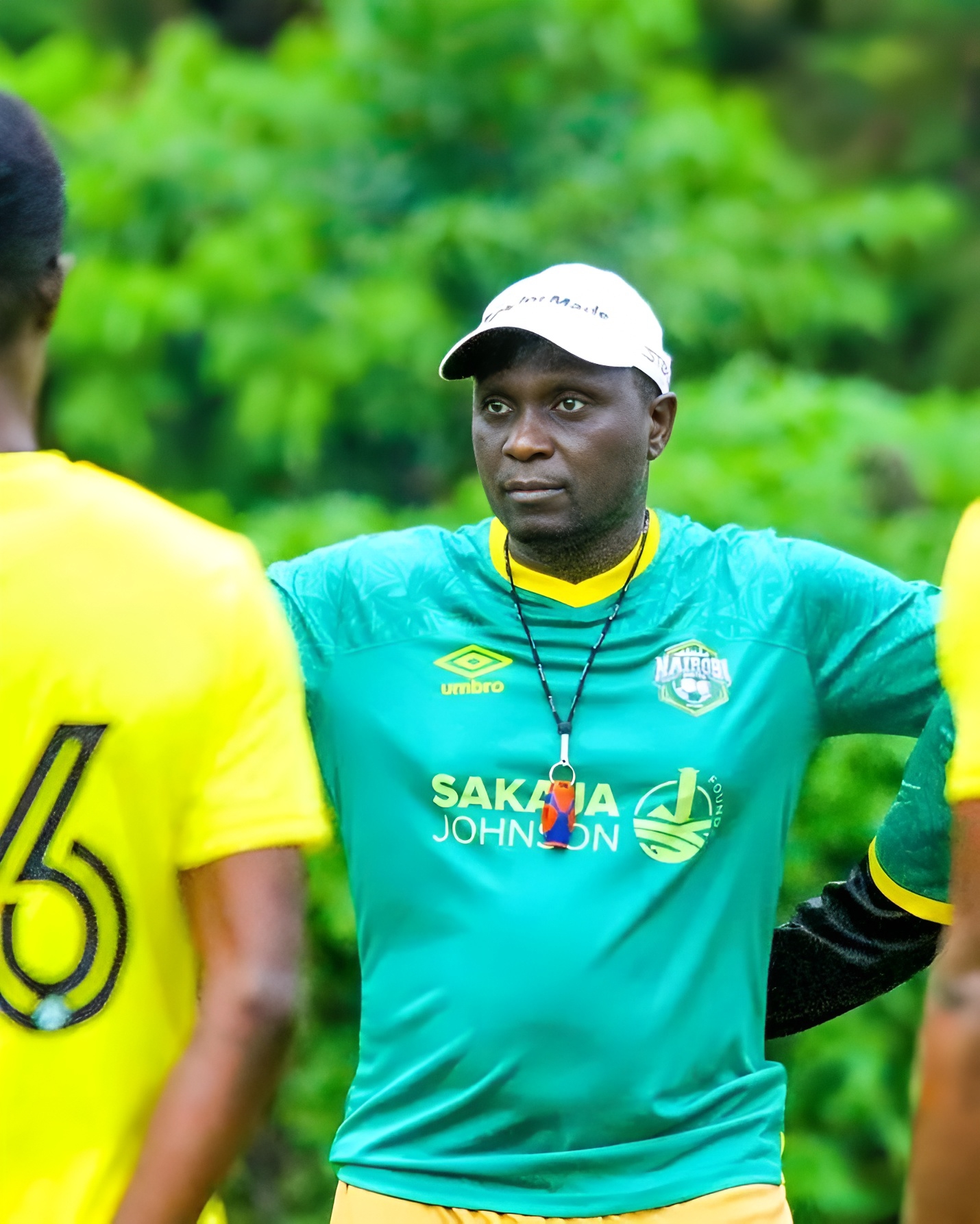
Through decades, across continents, across roles as player, captain, mentor, and coach, Muyoti’s journey is a testament to persistence, intellect, and human insight.
“Football is life,” he says. “Every setback is a setup for a comeback. Every match is a chance to inspire. Every team teaches you something new. This is just the beginning.”
Muyoti’s story is one of rhythm and observation, of disciplined practice and quiet authority, of belief in the people around him as much as the ball at his feet.
From Nairobi schoolyards to CAF group stages, from AFC Leopards to Nairobi United and now Kenya Police FC, he embodies the resilience, leadership, and vision that define Kenyan football in the modern era.