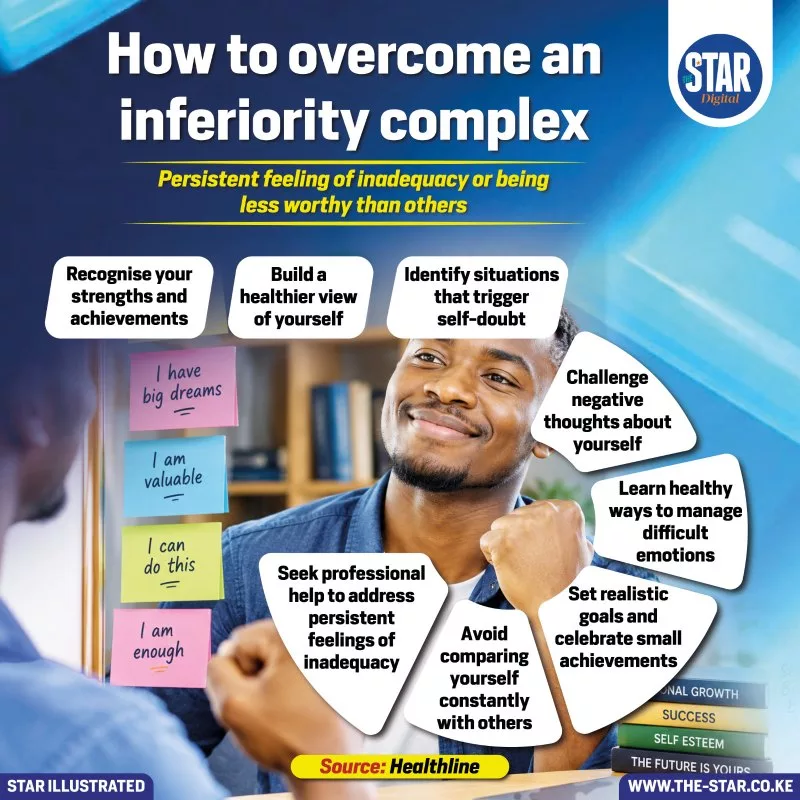
An inferiority complex involves persistent feelings of inadequacy or believing that one is less capable or worthy than others. These feelings can affect confidence, decision-making and how people interact with those around them.
However, there are practical ways to develop a healthier self-image and manage self-doubt.
According to Healthline, recognising personal strengths and achievements is an important step towards overcoming feelings of inferiority. Taking time to acknowledge progress, including small accomplishments, can help individuals appreciate their abilities rather than focusing solely on perceived shortcomings.
Building a healthier view of oneself also involves identifying situations that trigger self-doubt. These may include criticism, workplace challenges, social interactions or comparisons with other people.
Once these triggers are recognised, individuals can begin challenging negative thoughts and questioning whether their beliefs about themselves are supported by facts.
Learning to manage difficult emotions is another important step. Instead of allowing disappointment, embarrassment or frustration to reinforce feelings of inadequacy, individuals can develop healthier ways of responding to these experiences.
Setting realistic goals can also help build confidence. Breaking larger ambitions into manageable tasks makes progress easier to recognise and provides opportunities to celebrate achievements along the way.
Avoiding constant comparisons with others is equally important. People have different abilities, circumstances and experiences, and measuring personal worth against someone else's achievements can undermine self-esteem.
For those experiencing persistent feelings of inadequacy that interfere with daily life, seeking professional help can provide additional support. A qualified mental health professional can help identify underlying concerns and develop strategies for managing negative thought patterns.
Overcoming an inferiority complex takes time, but recognising personal worth and developing healthier thinking habits can help individuals build confidence and improve their overall well-being.