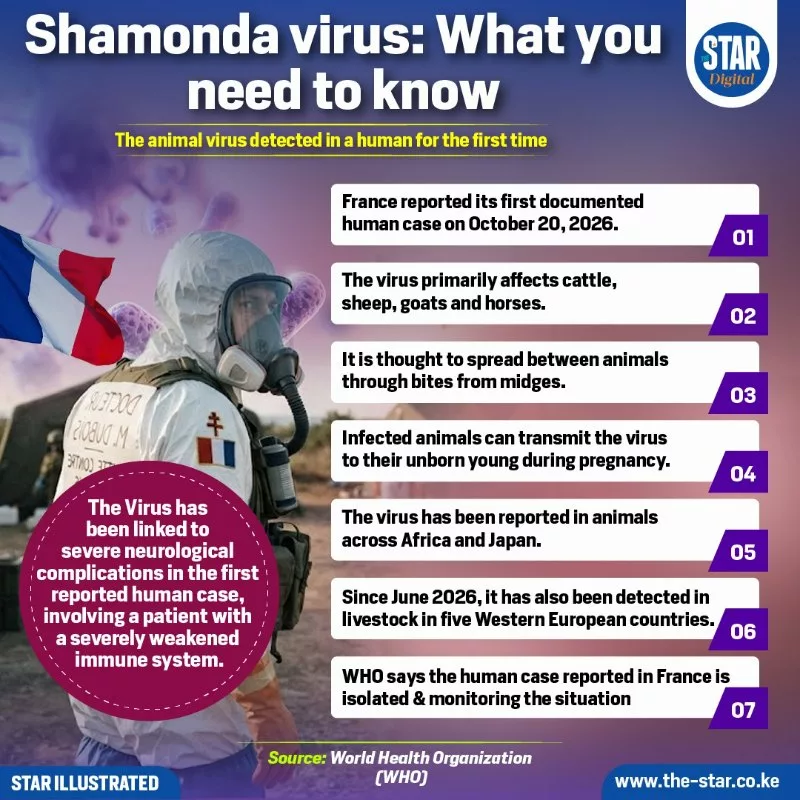
The Shamonda virus, which primarily affects livestock, has been detected in a human for the first time, with France reporting a documented case on October 20, 2026.
According to the World Health Organization (WHO), the case is isolated and the agency is monitoring the situation.
The virus primarily affects cattle, sheep, goats and horses and is believed to spread among animals through bites from infected midges, small flying insects.
Infected animals can also transmit the virus to their unborn young during pregnancy, raising concerns about its effects on livestock reproduction and animal health.
The virus has previously been reported in animals across Africa and Japan. Since June 2026, it has also been detected in livestock in five Western European countries, indicating its presence in several regions.
The first reported human infection has raised concerns because of the severe neurological complications experienced by the patient, who had a severely weakened immune system.
However, the detection of the virus in a human does not, on its own, establish that it can spread between people or cause widespread illness in the general population.
The WHO says it is monitoring the situation following the French case.
The discovery highlights the importance of surveillance for animal diseases that may cross the species barrier and infect humans.
Monitoring infections in livestock, investigating unusual human illnesses and strengthening cooperation between animal and human health authorities are important in identifying potential risks early.
The WHO continues to assess the situation as information about the first documented human case emerges.