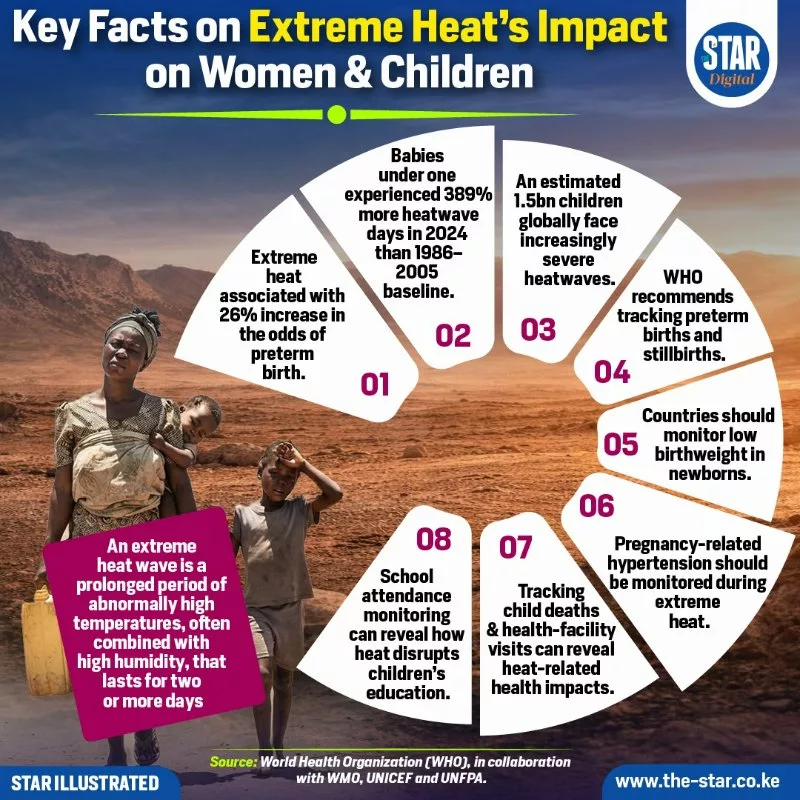
Extreme heat poses growing health risks to pregnant women and children, with exposure associated with a 26 per cent increase in the odds of preterm birth, according to findings highlighted by the World Health Organization (WHO) and its partners.
The WHO, working with the World Meteorological Organization (WMO), UNICEF and the United Nations Population Fund (UNFPA), has highlighted the need for countries to strengthen monitoring of heat-related health effects, particularly among vulnerable populations.
Babies under one year experienced 389 per cent more heatwave days in 2024 compared with the 1986–2005 baseline, while an estimated 1.5 billion children globally face increasingly severe heatwaves.
An extreme heatwave is a prolonged period of abnormally high temperatures, often accompanied by high humidity, lasting two or more days.
The health risks extend to pregnancy outcomes, newborn health and children’s wellbeing, making the collection of reliable data critical for identifying affected populations and guiding interventions.
The WHO recommends that countries track preterm births and stillbirths, as well as low birthweight among newborns. Monitoring pregnancy-related hypertension during periods of extreme heat is also important in assessing maternal health risks.
Authorities are further encouraged to monitor child deaths and visits to health facilities to identify possible heat-related illnesses and changes in healthcare needs.
School attendance records can also help establish how extreme temperatures disrupt children’s education, particularly when heat makes classrooms unsafe or uncomfortable.
The findings underscore the need for stronger health surveillance and preparedness as extreme heat becomes an increasing concern for women, newborns and children worldwide.