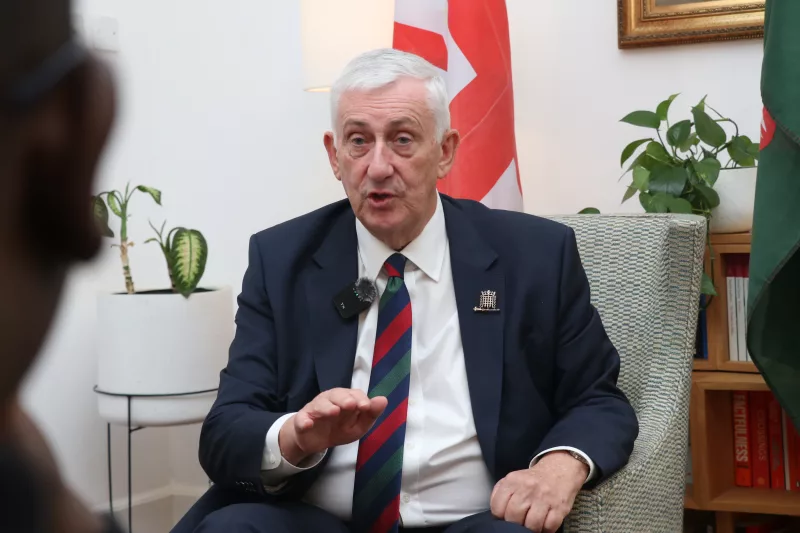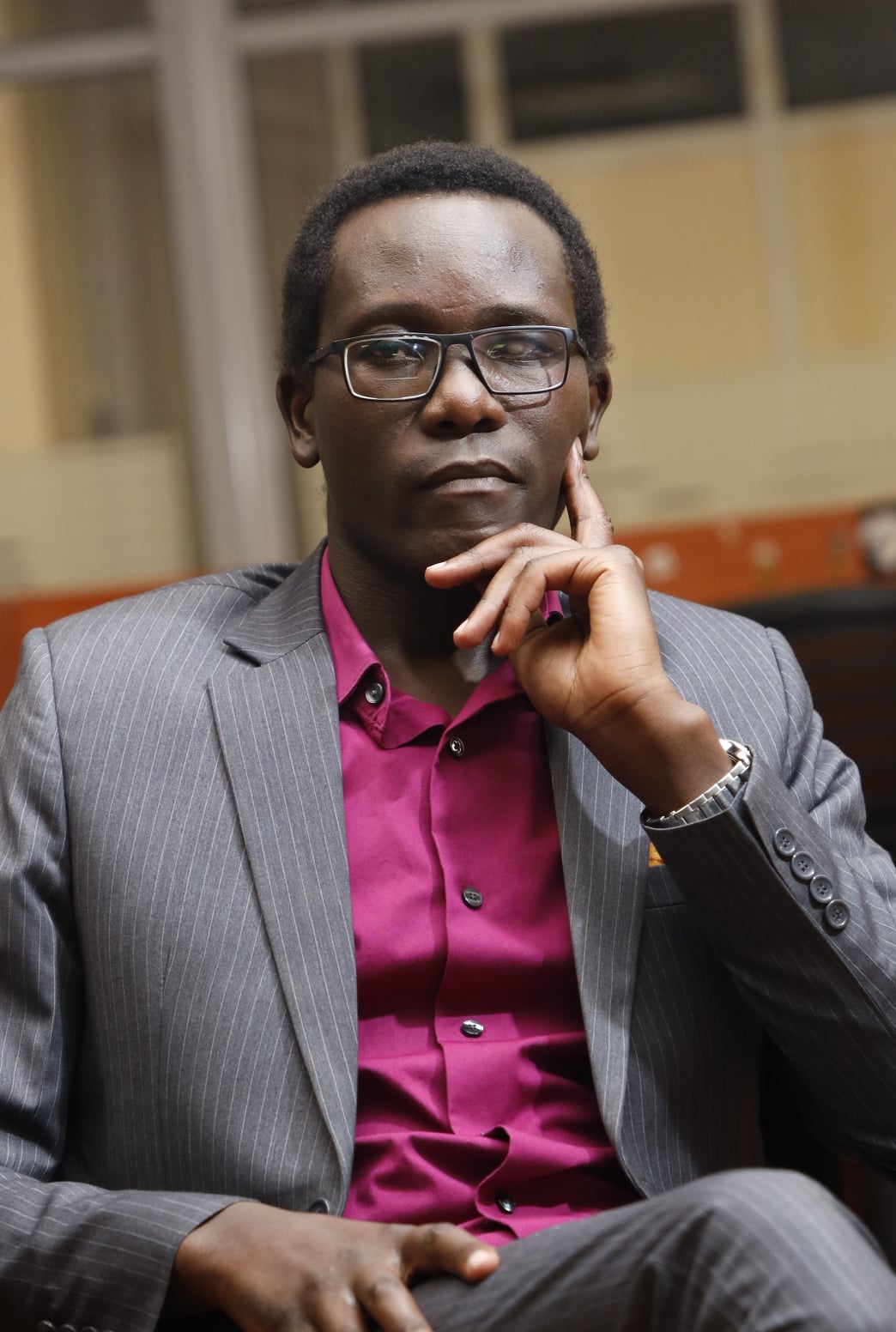
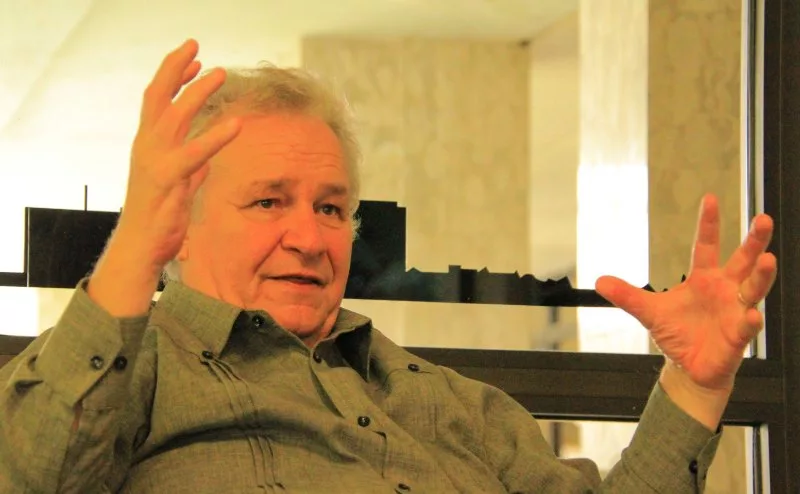
For Peter Maddens, leaving Kenya after five years as Belgium’s envoy was more than the end of a diplomatic posting. It was the closing of a remarkable family chapter that began decades earlier, when his father served in the same capacity.
Pieter Maddens was Belgium’s ambassador to Kenya from 1975-78, and presented his credentials to President Jomo Kenyatta.
Years later, on September 1, 2021, Peter Maddens presented his credentials to President Uhuru Kenyatta. Then came an almost poetic final link.
As he prepared to leave Nairobi, Maddens bade farewell to President William Ruto, whom he describes as “in many ways, the political son” of the President whom his father took leave of.
Three Belgian diplomatic generations, three Kenyan presidencies and a relationship spanning decades.
“It is very special to me,” Maddens says of the coincidence, describing his appointment as his father’s successor in Kenya as an “enormous honour”.
Now back in Brussels as Africa Affairs director, Maddens leaves behind a Kenya he believes is undergoing profound political change, from the rise of Gen Z and its rejection of tribal identities, to the country’s increasingly strategic role between competing global powers.
In this interview, he reflects on his extraordinary personal connection to Kenya, the lessons of the Gen Z protests, the future of Africa-Europe relations and why he believes the era of aid dependency must give way to trade, investment and genuine partnership.
Q: As you conclude your five-year tour of duty, what would you consider the defining moment of your tenure in Kenya?
Maddens: That’s a hard one. Obviously, there's the Net Zero Embassy project. At the same time, there was the Double Taxation Agreement. And I don't want to sound too pompous, but the fact that my personal story resonated the way it did and put Belgium on the map here.
If I had to choose just one defining moment, it would be the Net Zero Embassy. It took a lot of work to make it happen, and I think it represents something lasting.
You served during one of Kenya's most politically eventful periods, including the Gen Z protests. How would you describe those developments?
Gen Z is not just a Kenyan phenomenon. We've seen similar movements all over the world. Every revolution in history has been started by young people.
When Kenya's young people had their moment, they proudly described themselves as leaderless, tribeless and fearless.
Fearless is nothing new. Every revolutionary is fearless.But tribeless was hugely significant. I think that's a major step forward for Kenya.
I come from a country that also functions on what you might call a tribal basis. Belgium has linguistic, cultural, geographical and social divisions. Yet we've shown that such a society can work if everyone agrees to live by a common set of rules and institutions.
That commitment to shared rules is the price you pay for peace. Sometimes our system looks complicated, even ridiculous. We've gone more than 500 days without a government on two occasions. But if that's the price of peace, then it's worth paying.
Do you think the Gen Z movement made mistakes?
Yes. I think they made a mistake by insisting they were leaderless.
That created a space where they could simply be ignored. If there's nobody to engage with, governments can choose not to engage at all.
That is exactly what happened. It allowed the movement to lose momentum and eventually disintegrate.
Looking ahead to 2027, what lesson should young people take from that experience?
The biggest mistake young people made wasn’t in 2024, it was in 2022.
It was voter apathy.
If you look at the numbers, roughly half the electorate didn't register to vote. Of those who registered, roughly half didn't vote.
The President was elected according to the rules, and the rules are what they are. But you can also understand where the frustration comes from when so many people stayed away from the ballot.
Every time I speak to young people, I tell them the same thing: Please, please, please register to vote.
Kenya needs an election with a strong turnout because whoever becomes President needs a genuine mandate.
These are difficult times. You don't want a President whose authority is weakened simply because too few people participated.
You've argued that the future of Africa-Europe relations should be based more on trade than aid. Why?
Because for too long, we've created a relationship of dependency. That hasn't been healthy for either side.
The future should be based on business partnerships, trade partnerships and investment partnerships. That's also consistent with what President William Ruto has been advocating.
Instead of financing endless development projects, we should be helping to unlock private investment. Development finance institutions should play a much bigger role.
Frankly, I think we've reached the point where we should move away from funding parts of governments indefinitely.
The fact that when USAid suspended its operations, Kenya's health system immediately came under such pressure, should make everyone think. No country should become that dependent on a single external partner.
The relationship has to evolve into one built on investment, value addition and genuine partnership.
Ethnicity continues to dominate debate ahead of the 2027 election. Is Kenya making progress in overcoming ethnic politics?
It isn't really for me to make that judgment, or to prescribe solutions. Every society goes through phases, and this is one that Kenya is going through.
But there are encouraging signs.The Handshake between President Uhuru Kenyatta and Raila Odinga was one indication. The Gen Z movement calling itself tribeless was another. And if you look back at the 2022 election, much of the campaign was actually about issues rather than ethnicity.
Put those three things together and they suggest that there is growing acceptance within Kenya that the country is ready to move beyond tribal politics.
I don't want to say Kenya is already there, because that's not for me to say. But I think Kenyans are ready to be done with tribal politics. And that's remarkable.
It is something Kenya could eventually demonstrate to the rest of the continent, just as it has done in technology and economic innovation.
Value addition.It makes no sense to export raw avocados to China. It makes no sense to export tea in bulk or simply sell cut flowers. The value should be added here.
Kenya should insist that investors process products locally before exporting them.Let investors earn their profits, that's perfectly fine. The important thing is that the processing, manufacturing and employment happen here.That's where thousands of jobs will come from.
If you are producing around one million graduates every year but creating only a fraction of those jobs, that's not sustainable. Eventually, it will explode.In many ways, the frustrations expressed during the Gen Z protests reflect exactly that reality.
Belgium and Kenya are discussing a labour mobility agreement. Why is that important?
It's in the interests of both countries.Kenya is producing more skilled graduates than its economy can absorb. Belgium, on the other hand, faces labour shortages in sectors such as healthcare, elderly care and childcare.
A managed labour mobility agreement allows both countries to benefit. There is already a proposal on the table, and we want to move forward with it.
That said, I have mixed feelings when it comes to medical professionals.
If Kenya has unemployed doctors, while some parts of the country still lack adequate healthcare, then perhaps the first priority should be employing those doctors here before exporting that talent abroad.
But as Belgium, we also have genuine shortages, and if highly qualified Kenyan professionals choose to work in our health sector, that benefits both countries.
Kenya has become one of the EU’s closest partners in Africa. How does Belgium view Kenya's strategic importance?
Just look at the map.Kenya occupies one of the most strategic locations in the world. It serves as an important bridge between East and West.
More importantly, it is an island of relative stability in a neighbourhood facing multiple security and political challenges.
That makes Kenya enormously important, not just politically but commercially as well.
That is why we have invested in strengthening political dialogue, the Economic Partnership Agreement, the Double Taxation Agreement and regular bilateral consultations.
All of these deepen the relationship and allow us to learn from one another.Because the learning goes both ways.
Kenya increasingly finds itself balancing relationships with the US, Europe, China, Russia, India and the Gulf states. What role can it play in this changing geopolitical landscape?
Kenya is exceptionally well positioned.Every major international actor understands Kenya's strategic importance.
Its geography matters. Its political stability matters. Its democratic debate matters.
Keeping dialogue open with all major partners is the right approach.
If you look at how President Ruto has managed relations with the United States, Europe, China, Russia, India and the Gulf countries, I think he has struck a fairly intelligent balance.
That balanced engagement serves Kenya well.
Climate diplomacy has become one of Kenya's foreign policy priorities. Where do you see opportunities for deeper cooperation between Belgium and Kenya?
First, Kenya should tell its own story more confidently.Around 95 per cent of Kenya's electricity is generated from renewable sources. That's an extraordinary and remarkable achievement, and Kenya doesn't promote it nearly enough.
We're ready to work with Kenya wherever it sees value.One example is our collaboration during the UN Environment Assembly on a resolution addressing the environmental consequences of artificial intelligence. That was an excellent example of what genuine partnership looks like.
Our philosophy is very simple. We're no longer interested in telling Kenya what it should want.
But if Kenya believes we have expertise, experience or technology that can help, then we're always ready to share it.
Whether it's climate, technology, investment or innovation, the door is open.
During your tenure, Belgium often chose not to sign some joint statements issued by Western ambassadors on Kenya's political situation. Why?
I believe our principal instrument for engaging Kenya should be the European Union, not ad hoc groups of countries.
More importantly, we're done telling countries what they should want.
Sometimes those statements become very prescriptive, and I don't think that's appropriate anymore. In fact, I'm not sure it ever was.
We should be honest in our analysis, but honesty doesn't require us to prescribe solutions.
I think we've reached a stage in our relationship where partnerships should be based on dialogue and mutual respect, not instructions.
The most personal one is my family story.That continuity is very special to me.
Being my father's successor here was an enormous honour, but what made it even more meaningful was how warmly that story was received in Kenya.
Another memory I'll treasure is our farewell reception.There were about a hundred guests. It wasn't a particularly large gathering, but what struck me was that people weren't there because of my title.
They were there because they had become friends.That was deeply moving.
Your successor has already been appointed. What should Kenyans expect?
His name is Tom Neijens.He already knows Kenya quite well. As a university student in agronomy, he conducted part of his research here, and his wife is a bioengineer working on food security.
He has also served in Ethiopia and at the United Nations, and worked closely with Alexander De Croo when he was Belgium's development minister and later Prime Minister.
He's an engineer by training, so I'm confident he'll continue building on the Net Zero Embassy project and deepen our work on climate, agriculture and sustainable development.