Crushed by soaring medical bills and social stigma, Kisumu parents caring for children with cerebral palsy are calling for subsidised therapy and mental health support.
Families say the financial strain of managing the condition has left them struggling to survive.
Caregivers and teachers also want the county government to address staffing shortages in special-needs schools, particularly the shortage of occupational therapists who play a critical role in helping children develop skills for greater independence.
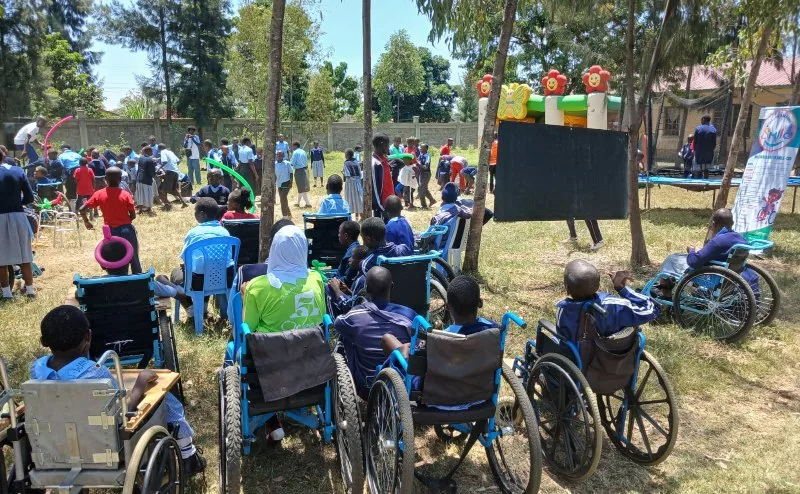
The concerns emerged during celebrations to mark World Cerebral Palsy Day at Joyland Special Junior School in Kisumu, where stakeholders highlighted neglect, stigma, inadequate assistive devices and limited resources affecting children with cerebral palsy.
Cerebral palsy is among the most common motor disabilities in childhood, according to the US Centres for Disease Control and Prevention (CDC), which estimates that the condition affects about one to four children in every 1,000 globally.
Kenya, however, lacks official national statistics on its prevalence, with local estimates suggesting that about one in every 100 children lives with the condition.
The absence of comprehensive data makes it difficult to establish the number of children requiring rehabilitation, assistive devices and specialised educational support.
For caregivers such as Eunice Okong’o, who cares for her four-year-old daughter, the challenges extend beyond the cost of treatment.
She said misconceptions about cerebral palsy remain widespread, with some families associating the condition with witchcraft, family planning or alleged bad blood within families.
Okong’o said such beliefs have contributed to rejection and broken families, leaving some mothers to raise children with cerebral palsy alone.
“I am still single because I was chased out of my marriage by my in-laws after giving birth. I was accused of bringing bad blood from my side of the family,” she said.
She said caregiving had also become financially difficult, with families having to meet the cost of diapers, medication, transport and therapy.
“For some of us who are jobless, even getting transport to take a child for therapy is a challenge,” she said, adding that caregivers often have to balance earning a living with full-time care.
Okong’o called for stronger government-led awareness campaigns to dispel myths surrounding cerebral palsy and improve acceptance of affected children and their families.
She said access to medicines remained another challenge, with some families forced to buy drugs privately when they were unavailable in public health facilities.
Omondi Oduor of Million Reasons to Smile Community Based Organisation said children with cerebral palsy and their caregivers also needed greater access to psychosocial support.
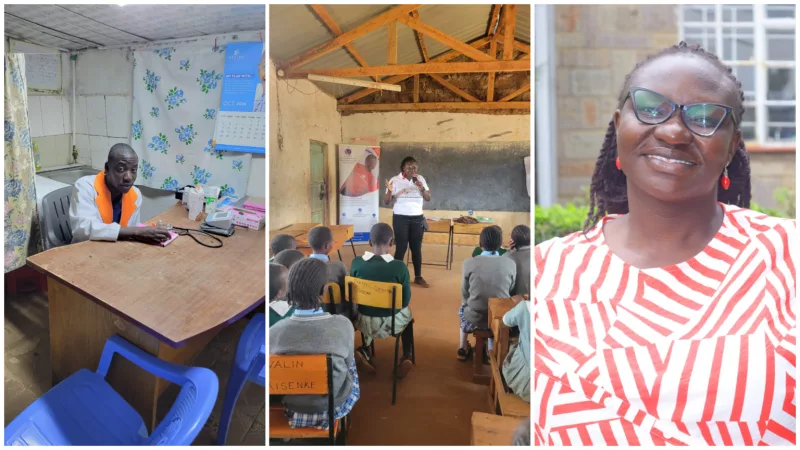
At Joyland, teachers said inadequate staffing was making it difficult to provide individualised support to learners with different disabilities.
Teacher Susan Auma said some classes have large numbers of learners compared with the available teachers and specialists.
“At times one teacher handles 20 learners in a class. We need occupational therapists who can help us improve the lives of these learners,” she said.
Auma said the school also needed more assistive devices and information technology equipment for learners who may be unable to write but can communicate or learn through computers.
She urged parents to stop hiding children with disabilities at home, saying school provides an opportunity for them to acquire skills and interact with others.
Sam Owino, representing the school principal, said Joyland caters to learners with different disabilities, including cerebral palsy, spina bifida and Down syndrome.
He said the institution seeks to equip learners with skills that can enable them to become more self-reliant after leaving school.
“We do our best by rehabilitating them so that when they leave here they become self-reliant and less dependent on others,” Owino said.
He said learners who can transition into mainstream education are supported from PP1 through higher levels of education, while others follow a stage-based pathway focused on special-needs education and vocational skills.
Kisumu county disability mainstreaming and rehabilitation officer George Omamo said cerebral palsy care requires several specialists working together.
He listed occupational and physiotherapists, speech therapists, nurses and psychological counsellors among the professionals needed to support a child.
Omamo said the county had 21 physiotherapists, while Jaramogi Oginga Odinga Teaching and Referral Hospital has additional rehabilitation personnel, including occupational therapists and physiotherapists.
He said the county was continuing to assess cerebral palsy cases before releasing updated figures.
Omamo said the county government was also working to improve accessibility of health facilities for people with disabilities, including creating barrier-free pathways.
He acknowledged that improving accessibility remained a continuing process, particularly in older facilities that were constructed before current disability-access standards were adopted.
National Council for Persons with Disabilities county officer George Odembo said the council supports persons with disabilities through interventions including education support and provision of assistive devices.
He welcomed partnerships between government agencies and organisations supporting children with disabilities.
The stakeholders said addressing cerebral palsy requires more than medical intervention, urging investment in education, rehabilitation, assistive technology, social protection and public awareness.
They said reducing the burden on caregivers would also require better access to affordable services so that children do not miss therapy and treatment simply because their families cannot afford transport or other associated costs.
Instant analysis
The plea from Kisumu parents highlights a critical policy failure where public health and special education frameworks fail to buffer families against the double blow of catastrophic medical expenses and social stigma. Without county subsidies for therapy and dedicated specialists in schools, caregiver burden remains a key driver of household poverty.