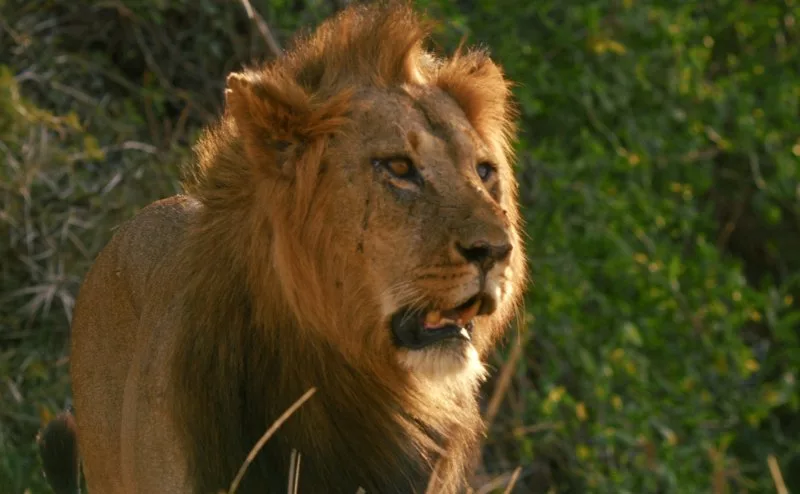
 What unfolded on screen was not just a wildlife story. It was a story about culture, identity, and the environment. Photo/Ivan Agerton
I arrived at the Westgate Mall in Nairobi expecting to watch a film about lions and the people trying to save them. But I left with a much bigger appreciation of what is at stake if Kenya loses these animals.
The screening of Pride of Samburu brought together journalists, conservation enthusiasts and other guests. What unfolded on screen was not just a wildlife story. It was a story about culture, identity, the environment and the choices communities must make to protect their future.
Until I watched this film, I had not fully appreciated how deeply lions are woven into the culture of some Kenyan communities. Their loss would not only affect the environment. It could also mean the disappearance of traditions, beliefs and knowledge passed from one generation to another.
For the Samburu, the lion has long been associated with bravery and the role of warriors in protecting their community. Traditionally, hunting a lion was considered a sign of courage. But as the animals became fewer, some members of the community began to question what this tradition meant for their future.
The film follows Jeneria Lekilelei, a Samburu warrior who changed from hunting lions to protecting them. His turning point came when he realised that only 11 lions remained in his homeland. He saw that the disappearance of the animals was a warning of a much bigger crisis.
Today, Jeneria is an elder and a leading voice in lion conservation. His transformation is among the film’s most powerful messages. Traditions need not be abandoned, but they can change to meet new realities.
“I was among the first Samburu Warriors to become involved in lion conservation. Bringing others from my generation into this work was a challenging journey, but an incredibly meaningful one,” he says.
“What I hope for every warrior in the future is that we carry this forward, generation after generation, so that warriors are no longer known for hunting lions at all, but for protecting them.”
His words capture the heart of the film. The same knowledge once used to track lions for hunting can now help keep them alive.
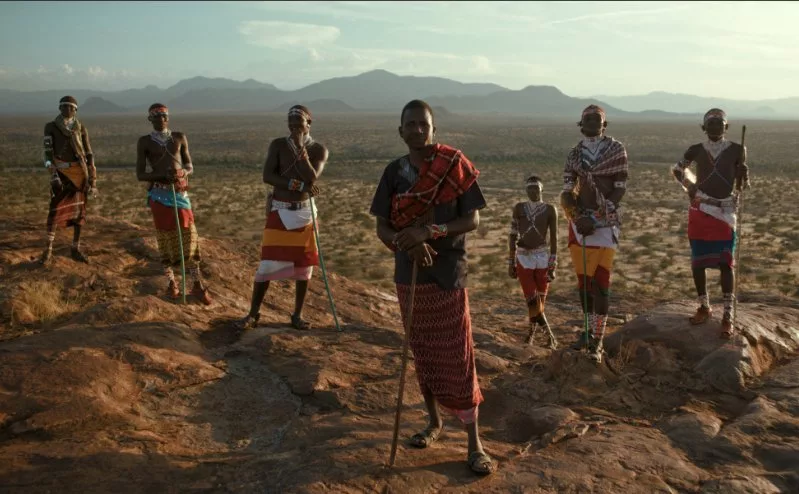 Samburu morans. “Lions play a crucial role in our culture. When lions roar, it’s a sign of hope in our culture. Losing them is like losing a part of ourselves,” Jeneria said. Photo/Ivan Agerton
A loss beyond wildlife
One of the most striking moments in the story is the realisation that a lion is more than an animal to the Samburu.
“Lions play a crucial role in our culture. When lions roar, it’s a sign of hope in our culture. Losing them is like losing a part of ourselves,” Jeneria says.
That statement stayed with me. It made me think about how much of our natural heritage we may lose without even noticing until it is gone.
The lion also carries meaning in other cultures and faiths. In Christianity, Jesus is referred to as the Lion of the tribe of Judah, a biblical image associated with strength and victory. Across African societies, lions feature in stories, traditions and ideas about courage and leadership. The meanings differ, but they show how animals can occupy a place in human life that goes far beyond their physical presence.
The environmental consequences of losing lions are equally serious. As top predators, they help regulate populations of other animals, contributing to a healthy balance in the ecosystem. Their presence also supports tourism, which provides jobs and income for many Kenyans.
Kenya had an estimated 2,512 lions in the 2025 National Wildlife Census, down from 2,589 in 2021. The country’s population has faced serious pressure over the years from habitat loss, declining prey and conflict with people. Across Africa, lion numbers have fallen from estimates of about 200,000 in 1975 to roughly 20,000 today.
These figures make the film’s story particularly urgent.
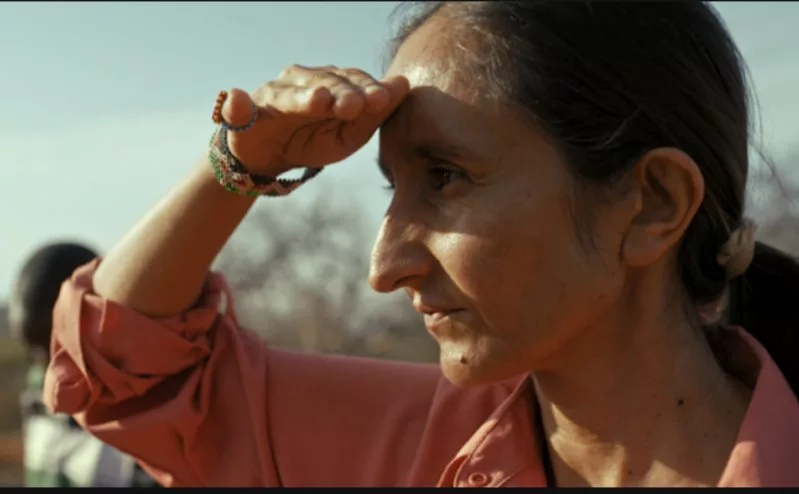 National Geographic Explorer and Ewaso Lions founder Shivani Bhalla. Photo/Ivan Agerton
Communities at the centre of conservation
What gives Pride of Samburu its hope is that it does not portray local people as obstacles to conservation. Instead, it shows what happens when communities are part of the solution.
Through Warrior Watch, young Samburu warriors monitor lions and use information from tracking technology to alert communities when the animals approach roads or areas where people and livestock are present. This can help prevent conflict before it occurs.
The film also highlights Munteli Lalparasoroi and the Mama Simba initiative, which brings Samburu women into conservation work.
“I am a custodian of the environment and wildlife. In my line of work, we work to restore the environment. We give grass to the herbivores and that, in turn, is meat for the lions, which keeps the balance,” she says.
Her explanation makes a complicated environmental relationship easy to understand. Protecting grasslands helps feed the animals that lions depend on, while healthy ecosystems support people and wildlife alike.
National Geographic Explorer and Ewaso Lions founder Shivani Bhalla says the film was made from the perspective of the people who live alongside lions.
“‘Pride of Samburu’ is a Kenyan story, about Kenya's own national animal, and it was critical to tell it from the perspective of the people who live alongside these lions every day,” she says. “It also shows how communities know what is best for them and their wildlife, and how they've harnessed that knowledge to start impactful conservation programs. We hope this film offers a powerful example to the world of what true community-led conservation looks like.”
Vanessa Serrao, the vice president of the National Geographic Society’s Impact Story Lab, said the filmmakers worked with Ewaso Lions and the Samburu community for close to a decade to build trust and understand the story the community wanted to tell.
“Our focus at the Impact Story Lab is to support storytelling that drives measurable, positive change for both communities and wildlife. Pride of Samburu is a powerful example of that,” said Vanessa, also the documentary’s director and executive producer.
The film also reflects the work of Kenyan filmmakers and composers, whose contribution helps give the documentary its local character.
Kaitlin Yarnall, the National Geographic Society's chief storytelling officer, says the story demonstrates the power of storytelling to inspire people to protect the natural world.
At the Nairobi screening, Shivani offered a message of hope to Kenyan audiences. “This is our land. This is our wildlife. It is up to all of us to do whatever it takes to keep it going. I hope when Kenyans see this film, they can see that community-led conservation is possible.”
That is a message worth taking seriously.
I believe everyone should watch Pride of Samburu. It challenges us to look beyond the lion as a tourist attraction or a symbol on our national identity. It asks us to see the animal as part of our shared natural and cultural heritage.
If lions disappear, we will lose more than a species. We will lose part of the stories that explain who we are, the balance that sustains our environment and an inheritance that should belong to future generations.
The film leaves us with a simple but powerful lesson. Saving lions is not only about protecting wildlife. It is also about protecting ourselves.