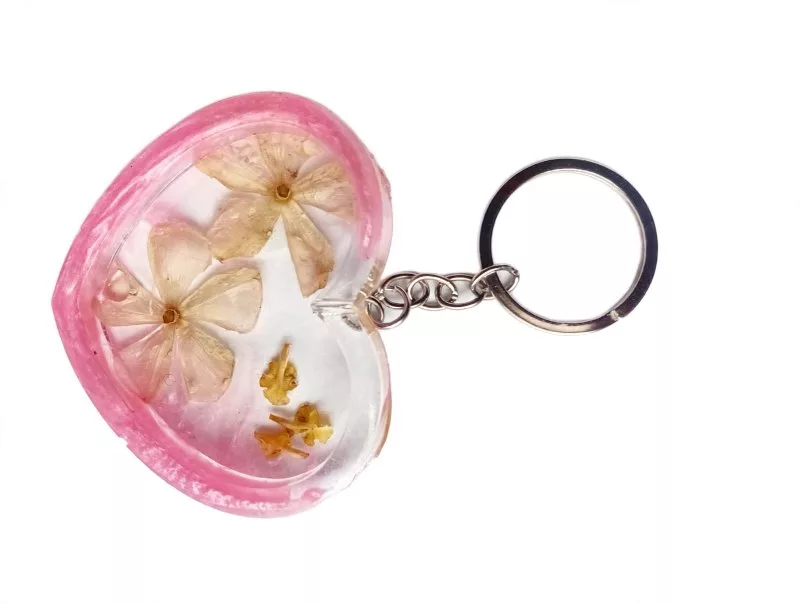
 Sample earing /WAMBUI FAITH
A small bottle of resin can become a pair of earrings, a keyholder, a wall clock or a decorative frame.
With a mould, colour and imagination, what starts as a liquid can take almost any shape.
This is the appeal of resin art, a craft that is finding a place among Kenya's growing community of creative entrepreneurs.
Epoxy resin, commonly used in resin crafts, is a two-part material made up of resin and hardener. When mixed in the correct ratio, it cures into a hard, glossy surface.
The material is used to make jewellery, ornaments, home décor and other decorative and functional products. Its versatility allows artists to experiment with different moulds, colours, pigments and designs.
In Nairobi, resin supplies, moulds and other accessories are increasingly available to hobbyists and small businesses. Local craft suppliers stock products ranging from small resin-and-hardener sets to silicone moulds for earrings, coasters and clocks.
For the founder, Faith Wambui, of Little Miss Fena, also known as Unwrapp You, the attraction was the freedom to experiment.
From a name to a business
Little Miss Fena was a name that existed long before the business.
The founder had already decided that if she ever started a business, that would be its name.
Unwrapp You represents the idea of opening something of your choice — something crafted, artistic and personal.
The business has been operating for about eight months. What began as an experiment with resin has grown into a small creative venture producing jewellery and accessories.
The decision to work with resin came partly from noticing that it was not a common product around her.
But its versatility was the bigger attraction.
Resin did not tie her to one product. If one idea failed, she could use the same material to try something else.
“That is when I decided to take a chance on it,” she says.
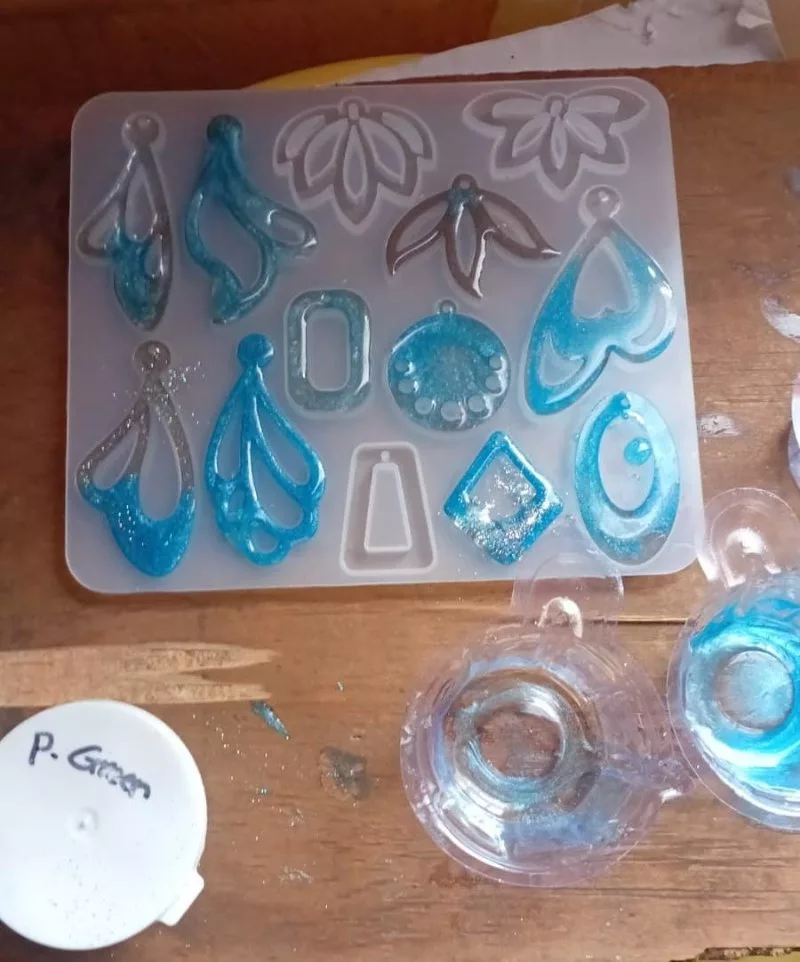 Progress of hoop earrings before cure /FAITH WAMBUI
TikTok became the classroom
There was no formal training.
The founder taught herself through TikTok videos, first learning the precautions, dos and don'ts of working with resin before trying it herself.
Her first experience was relatively smooth, although the material came with surprises.
The smell was stronger than she expected. The resin could also stick easily to her hands.
Her second attempt proved more challenging.
That was when she learnt one of the most important lessons of resin work: measurements matter.
The resin and hardener must be measured and mixed according to the manufacturer's instructions. An incorrect ratio can prevent the material from curing properly.
This is one of the areas where resin craft requires more than creativity. It also demands patience and attention to detail.
Safety is another consideration.
Occupational safety guidance recommends avoiding skin contact with epoxy resins and using appropriate protective equipment and ventilation when handling uncured materials.
For the founder, however, every setback became part of the learning process.
From personal earrings to keyholders
The first product was not made for a customer.
It was a pair of customised hoop earrings for herself.
When they turned out well, she bought a mould for long earrings and continued experimenting.
Later came keyholders, which have become one of the business's stronger products.
Their appeal, she says, is partly their versatility.
Unlike jewellery, which can be associated more strongly with a particular audience, keyholders can be used by both men and women.
The business has since introduced stud earrings and is looking towards home décor.
The plans include experimenting with picture frames, car hangers and wall clocks.
The wider Kenyan market also shows how far resin craft can extend beyond small accessories. Other local makers are using epoxy resin for wall art, trays, coasters, clocks and even furniture.
For resin artists, therefore, the first successful mould does not have to be the last.
One idea can lead to another.
The question behind every piece
For the founder, creativity is important, but so is the value.
Before completing a piece, she considers whether it is worth the customer's money.
She also asks herself a more personal question:
“Would I walk around with this?”
She considers whether a piece can be worn on different occasions and whether she would genuinely want to own it herself.
That thinking influences the designs.
Customers are also given room to participate in the creative process. They can choose colours and send inspirations for the founder to interpret.
This creates room for personalised products rather than simply choosing from finished designs.
For Irene, a customer who bought a customised resin keyholder bearing her baby's name and a pair of earrings, that personal touch is what makes the products stand out.
“What attracted me most was the customisation and creativity. Having my baby's name on the keyholder made it more special, while the earrings caught my attention because of their beautiful design and uniqueness,” she says.
Irene says the products met her expectations, particularly the keyholder, which has become more than an ordinary accessory.
“My keyholder is particularly special because it has my baby's name, making it something I can cherish. To me, handmade products are more than just accessories; they can hold memories and express love in a unique way,” she says.
Her experience reflects how personalisation can transform an everyday item into a keepsake, giving customers a role in shaping the products they buy.
Affordability is another consideration.
But keeping handmade products affordable has proved to be one of the difficult parts of running the business.
The cost behind a handmade piece
Resin art may look simple once a finished product is in a customer's hands.
The process behind it is different.
There is the cost of resin and hardener, moulds, pigments and other accessories. There are also tools, protective equipment and packaging.
For a small creator, every failed piece can add to the cost of production.
A mistake in measuring or mixing the resin can mean starting again.
Time is another hidden cost.
A piece has to be designed, mixed, poured, cured and finished before it reaches the customer.
The curing period also means the creator cannot always produce and sell a piece immediately.
Local suppliers have increasingly made it possible for beginners and small businesses to access materials in relatively small quantities. Some suppliers, for example, sell small resin-and-hardener sets intended for jewellery, keyholders and other small projects.
That lowers the barrier for someone who wants to experiment before committing to larger quantities.
But turning the craft into a sustainable business requires more than simply knowing how to make attractive pieces.
It requires understanding customers, controlling costs and producing work that people are willing to pay for.
For Irene, the value of handmade resin products lies partly in their uniqueness and the effort behind each piece.
“Handmade resin products are unique because they allow for creativity and personalisation. Compared with ordinary accessories, they have a special touch that makes them stand out. I believe they can offer good value for money because of the effort and creativity involved in making them,” she says.
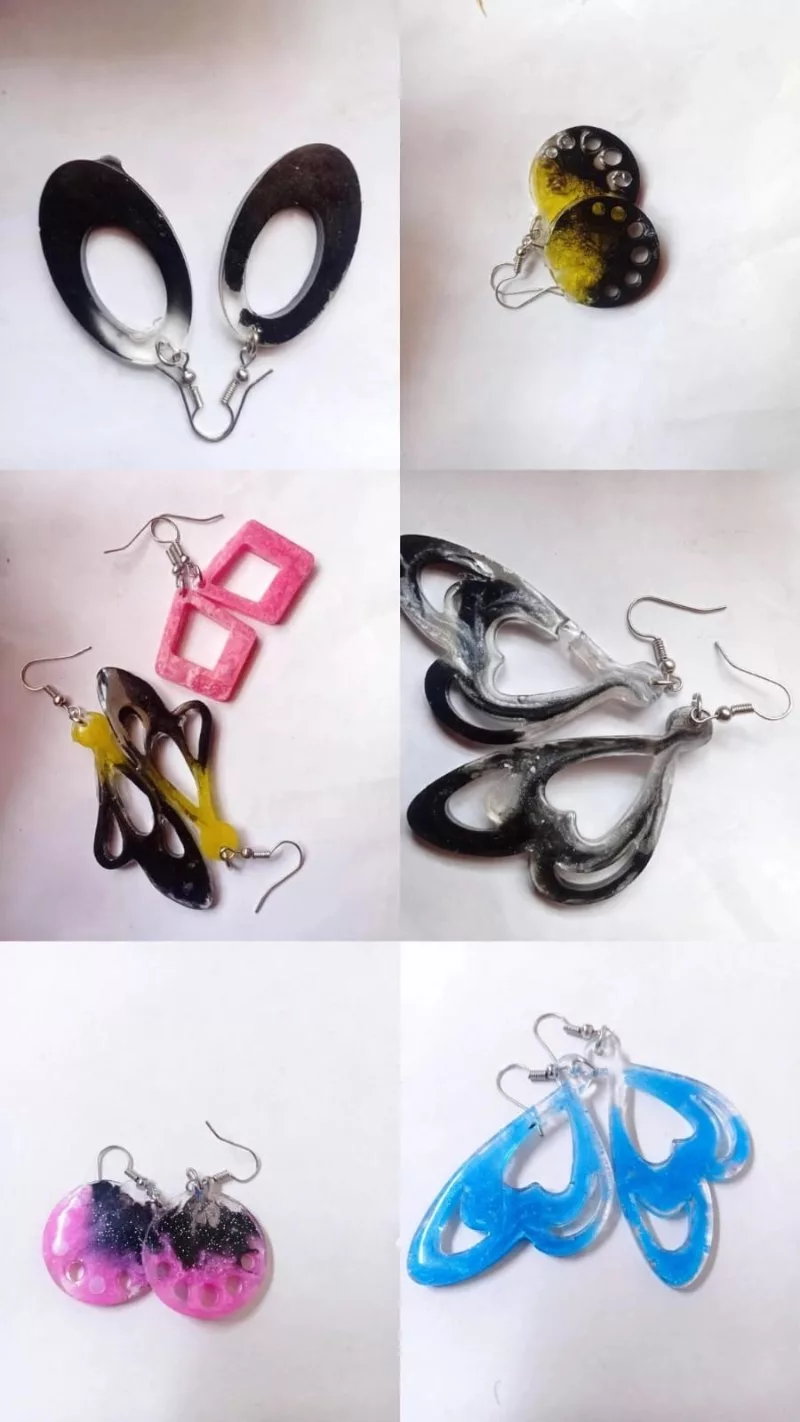 Hoop resin earrings after cure /FAITH WAMBUI
Creativity meets business
For Little Miss Fena, the journey is still at an early stage.
The business is experimenting with products while learning what customers want.
That is part of the attraction of resin.
A single material can produce products for personal use, gifts, accessories and home décor. It also gives a small creator room to develop a distinctive style.
For Irene, the appeal extends beyond owning something beautiful. It is also about having a product that reflects personal preferences and carries meaning.
She believes Little Miss Fena could attract more customers by offering more designs, colours and customisation options. Showcasing more examples of personalised products on social media, she adds, could inspire customers and help them choose their preferred designs.
She also encourages people who have never purchased resin art to give handmade products a chance, noting that buying them supports small businesses and encourages creativity.
Across Kenya, other makers have similarly incorporated resin into handmade products, from jewellery and keyholders to larger decorative pieces.
For the founder of Little Miss Fena, the goal is to keep learning and expanding.
What began with a pair of earrings has opened the door to a much wider creative world.