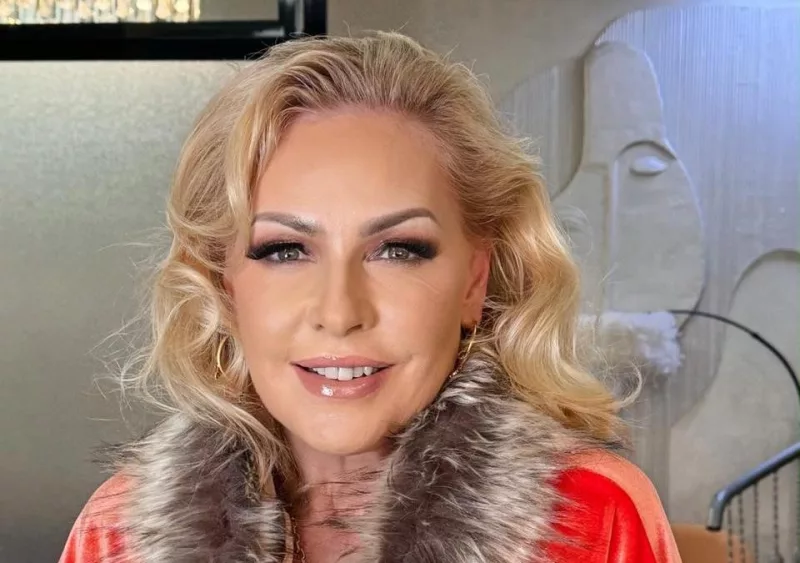
When doctors told Lisa Christoffersen she had Stage 4 cancer and possibly only 10 days to live, she did not respond as they expected.
“Death can wait for me. I don't have time to die,” she recalls telling herself.
“Life is so amazing and I have books to write, children to raise, rallies to do and life to live.”
The words capture the woman behind the polished appearance, love for fast cars and adventurous spirit that have become her trademark.
Christoffersen, a Danish-Kenyan entrepreneur, author, art curator, interior designer and rally driver, has built a life that cuts across worlds.
She has worked in hospitality, collected African art, written guidebooks about Kenya, appeared on The Real Housewives of Nairobi and founded the Lioness Rally, a women-led motorsport initiative.
But behind the titles is a story of survival, belonging and refusing to stop when life takes an unexpected turn.
In an exclusive interview with the Star, Christoffersen opens up about the experiences that shaped her connection to Kenya, surviving cancer and why she believes more women deserve a place in motorsport.
For a woman who has repeatedly crossed boundaries between countries, careers and expectations, survival has become less an ending than another beginning.
Christoffersen's relationship with Africa began long before Kenya became home.
She was born in Moshi, Tanzania, on the foothills of Mount Kilimanjaro, and spent her first 10 years there.
Her Danish father was an adventurer and rally driver who introduced her to wilderness, cars and exploration.
Her childhood unfolded in West Kilimanjaro, where the family farm faced the mountain on one side and the Amboseli landscape on the other.
Her education later took her to Denmark, where she remained until she was 22.
She worked for Scandinavian Airlines at Copenhagen airport and became a Kiswahili interpreter, a skill she had acquired while growing up in Tanzania.
Then came a phone call that changed the course of her life.
RETURNING TO KENYA
A friend who had acquired a hotel on the outskirts of Nairobi needed help decorating it. He believed Christoffersen had the eye for design needed to transform its interiors.
There was one problem. She was not an interior designer.
“He told me that I did have good taste and I said, ‘Yeah, I do,’” she recalled with a laugh.
Christoffersen packed her belongings into 22 suitcases and moved to Kenya.
It was less a leap into the unknown than a return to a part of the world she already understood.
“I came here arriving with 22 suitcases, and I felt as if life had done that 360, and I came back home. You know Africa when it is in your blood,” she said.
Her work on the hotel project led to a furniture factory, with furniture manufactured in Malindi, polished and supplied to clients.
An unexpected opportunity had become the beginning of a career.
Over the decades, Christoffersen has developed a career around African art, design and cultural heritage.
For her, collecting and selling art is about more than finding beautiful objects for a home. It is also about understanding the histories, beliefs and craftsmanship behind them.
“I am a storyteller, so I love telling these specific stories,” she said.
She believes Africans themselves need to take greater interest in understanding their heritage.
“Get to know your own country and what it stands for and the beliefs as well,” she said.
During the Covid-19 pandemic, she also wrote A Monkey's Wedding, a children's story inspired by the African expression for when the sun shines while it rains.
It reflects her preference for passing stories from one generation to the next.
“Although I embrace modern business, I still prefer pen and paper to a phone or tablet when recording my thoughts and ideas. I would rather have a pen and paper than an iPad,” she said.
LIFE-CHANGING DIAGNOSIS
In 2005, while raising her two children and running her business, she became seriously ill.
Eventually, she travelled to Johannesburg, South Africa, for specialist medical attention.
After extensive tests, she received a diagnosis of stage 4 cancer.
“The prognosis was that I had 10 days to live. What followed included months of chemotherapy and five weeks in intensive care on life support,” she recalled.
“I do consider myself a miracle baby.”
Christoffersen describes the scar left by her treatment as a reminder of what she survived and of the importance of the mind in navigating life's hardest moments.
While she was away receiving treatment, she alleges that she lost millions of shillings and valuable stock.
The experience left her with difficult lessons about trust, business management and protecting what she had built.
“It’s taught me a lot here that you’ve got to really try and protect yourself from all angles,” she said.
Christoffersen's love of motorsport is another inheritance from her father.
Watching the return of the World Rally Championship Safari Rally to Kenya in 2021 prompted her to take action.
Invited to watch the final day in Naivasha, she noticed that women were largely on the sidelines.
She recalls thinking of the women she saw as cheerleaders rather than active participants.
Her response was to create an opportunity for them to compete.
“It is from there that I said to myself that I am going to start Kenya’s first all women-only Safari Rally,” she recalled.
The idea became the Lioness Rally.
With support from people in the motorsport community, the initiative took shape. It culminated in an event at Kasarani Stadium involving eight female drivers and eight female navigators, alongside women in other rally roles.
For Christoffersen, the significance went beyond getting women into cars.
“We broke the bias,” she said.
“Since then, the Lionesses have pursued opportunities to compete, including in the Kenya National Rally Championship, while seeking to move up to the Africa Rally Championship.”
Christoffersen has also competed in the Safari Rally, including this year’s event, where she drove alongside her navigator.
She says rallying is exhilarating but success is not measured by speed alone.
“The driver and navigator must work in close coordination, relying on pace notes, memory, observation and trust to negotiate difficult terrain,” she said.
On long straight sections, speeds can reach between 160 and 180 kilometres per hour, depending on conditions.
“We are not there just always for the speed but to finish,” she said.
She describes rally cars as a “billboard on wheels”.
The ambition is not simply to put women on the starting line but to create a sustainable pathway for more women to participate in motorsport.
The work does not end when the engines are switched off.
“Everybody has skeletons in the closet, and it is about encouraging you to proceed and succeed in life wherever you are,” she said.
REALITY TV STAR
Christoffersen's public profile expanded when she joined The Real Housewives of Nairobi.
Initially, she had little interest in reality television and hung up when she first received a call inviting her to consider the show.
A subsequent conversation with a friend persuaded her to hear the producers out.
She eventually joined the first season, seeing the opportunity as a chance to explore television while bringing attention to women's rallying.
“I tried to remain authentic on camera, although I also acknowledge that reality television can involve artificial situations and portrayals that I do not always agree with,” she said.
“After the first season, I left the show and began exploring my own television projects.”
When people hear her name, she would like them to remember one thing: “Inspiration! Number one, breaking barriers,” Christoffersen said.
She is already looking towards another challenge, with the possibility of representing Kenya at the 2027 Rebelle Rally, a 4x4 navigation rally held in the deserts of California and Nevada.
Kenya has become home not simply because she has lived here for decades but also because it has given her room to build businesses, pursue her interests and tell stories she believes deserve to be heard.
Her journey has not been without setbacks.
Christoffersen has faced a life-threatening illness, professional disappointments and the financial demands of pursuing motorsport.
But she refuses to allow one painful chapter to define everything that follows.
At the heart of it all is the phrase she has attached to her own name.
“‘Lisa’ stands for ‘Life Is So Amazing’,” she says, adding that her Kenyan name is Makenna.
It is an optimistic description for a life that has tested her resilience in extraordinary ways.
For Christoffersen, the next chapter is already taking shape, somewhere between an unfinished book, an African art collection and the sound of a rally car warming up.