The government has proposed sweeping changes to how students in public universities, colleges and Technical and Vocational Education and Training (TVET) institutions will be funded.
Under the proposed Tertiary Education Placement and Funding Bill, 2026, students joining public institutions would continue receiving government financial support. However, unlike the current system, most of that support would come as repayable loans instead of a combination of scholarships, grants and loans.
The Bill is currently before Parliament, meaning the proposals have not yet become law. If approved, they will apply to students admitted from the September 2026 intake, while continuing students will remain under the current funding model.
What Would Change?
The government says every student placed in a public university, college or TVET through KUCCPS will still qualify for government funding.
The biggest change is how that funding will be provided.
Currently, many students receive:
- A government scholarship or grant, which does not have to be repaid.
- A HELB loan, which is repaid after graduation.
- In some cases, a contribution from parents or guardians.
Under the proposed model, the scholarship component would largely be removed for new students. Instead, government support would mainly be issued as loans, meaning students would repay most, if not all, of the money used to finance their education after completing their studies and securing employment.

In simple terms, the government would still pay for a student's education upfront, but graduates would later repay the money.
The amount each student receives would still be determined by factors such as household income, programme costs, special needs and affirmative action considerations.
HELB Would Be Replaced
The Bill also proposes creating a new institution called the Tertiary Education Funding Authority (TEFA).
If Parliament approves the proposal, TEFA would take over the work currently handled by:
- the Higher Education Loans Board (HELB),
- the Universities Fund, and
- the TVET Funding Board.
Education Cabinet Secretary Julius Ogamba says bringing the three institutions together will simplify the funding process, reduce duplication and create a single authority responsible for financing tertiary education.
Besides managing student funding, TEFA would also mobilise additional resources through education bonds, private investment and development partners.
Loan Repayment
Under the proposed law, graduates would begin repaying their loans within one year of completing their studies or shortly after securing employment.
Employers would deduct repayments directly from the salaries of those in formal employment and remit the money to the funding authority.
Graduates working in the informal sector would instead enter structured repayment agreements based on their income.
To protect borrowers, deductions would be capped at 25% of a person's earnings.
How Is This Different From HELB?
The biggest difference between the current HELB model and the proposed system is that government scholarships would largely disappear for new students.
Today, students who qualify for financial support receive a scholarship that does not have to be repaid, alongside a HELB loan that is repaid after graduation.
For example, if a student's education costs KSh200,000, part of that amount may currently be covered by a government scholarship, while the rest is financed through a HELB loan.
Under the proposed model, almost the entire amount could be issued as a loan. This means students would still access higher education, but they would eventually repay nearly all of the government funding they receive after they begin working.
Ruto's Earlier Promise
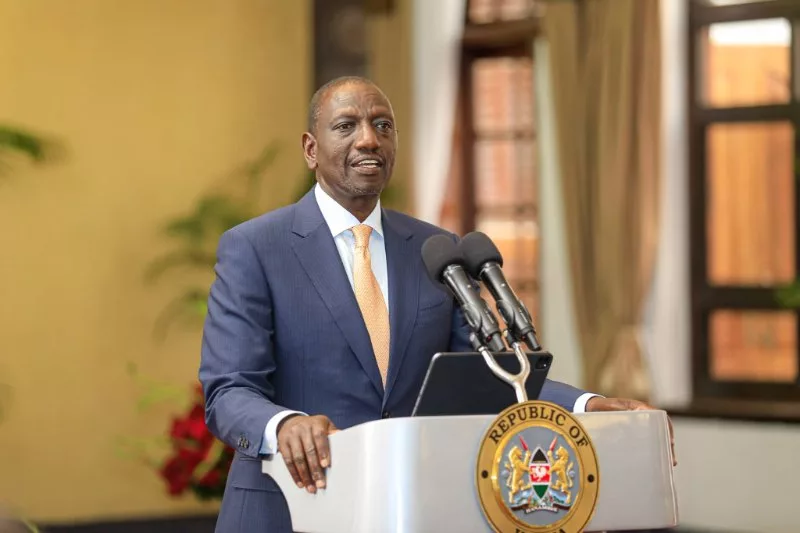
The proposal comes just weeks after President William Ruto announced that every student who qualifies for admission to a university, college or TVET institution would receive full government funding, regardless of their family background.
Speaking at State House in July, the President said no qualified student should miss out on higher education because they cannot afford tuition fees.
"Going forward, any student who has passed and is placed in a college or university, each of them will get full funding for their education. It will not matter the background of any child in Kenya, but how good they are," Ruto said.