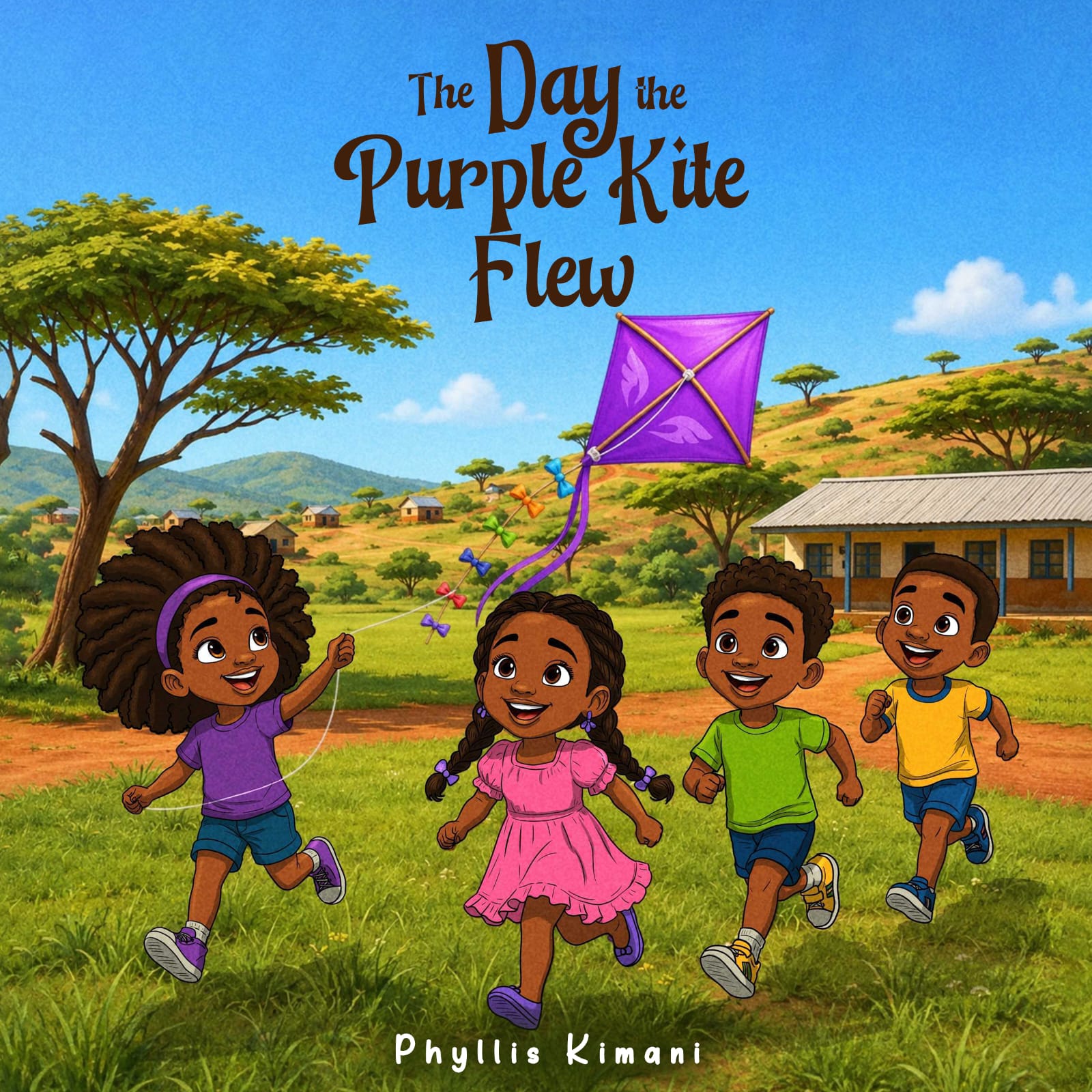
 Cover of the book
The wind has finally arrived, and the children of Mlima School are ready to fly the biggest, brightest purple kite their village has ever seen.
But just as the celebration begins, Amani suddenly collapses. Her body shakes, the kite slips into the sky, and confusion spreads through the crowd.
In that powerful moment, Amani's friends discover something even more important than catching a kite.
They learn what epilepsy really is, how to respond with calm and compassion, and why true friendship means staying by someone's side when they need you most.
Guided by Teacher Neema's gentle wisdom, the children replace fear with understanding, myths with truth, and uncertainty with courage.
The Day the Purple Kite Flew is a beautifully illustrated story that helps children understand epilepsy through an unforgettable adventure filled with warmth, hope, and resilience.
Set against the vibrant backdrop of rural Kenya, it celebrates friendship, inclusion, and the extraordinary difference a caring friend can make.
Perfect for children, parents, teachers, libraries, and healthcare professionals, this inspiring first book in the NeuroReach Friends Series also includes: Child-friendly seizure first aid using the memorable Stay. Safe. Side. Saidia. Approach, helpful guidance for parents, caregivers, and educators, simple facts that dispel common myths about epilepsy and a fun classroom activity and Kiswahili vocabulary to extend learning beyond the story.
Written by pharmacist and NeuroReach Africa founder Phyllis Kimani, this heartfelt story is more than a picture book, it is a movement to help children grow up informed, compassionate, and unafraid.
Because every child deserves to be understood, every storm passes, and every child needs friends who stay.
NeuroReach Africa is an organisation dedicated to improving epilepsy awareness, education, research, and access to care across Africa.
Kimani on the other hand is registered as a pharmacist in both the United Kingdom and Kenya and has experience in community pharmacy, public health, and patient-centred care.
Drawing on both her professional expertise and lived experience as a caregiver, Kimani is passionate about reducing stigma surrounding epilepsy and empowering individuals and families through education and innovation.
She is leading research initiatives exploring digital health solutions and access to care for people living with epilepsy in African settings.
Through NeuroReach Africa, she works with healthcare professionals, researchers, policymakers, and communities to improve the lives of people affected by epilepsy across the continent.