There is a certain kind of story that refuses to let you settle into comfort. It grips you by the collar, drags you through dark alleys, crowded streets and broken dreams, then leaves you staring at the last page, wondering whether hope was ever real.
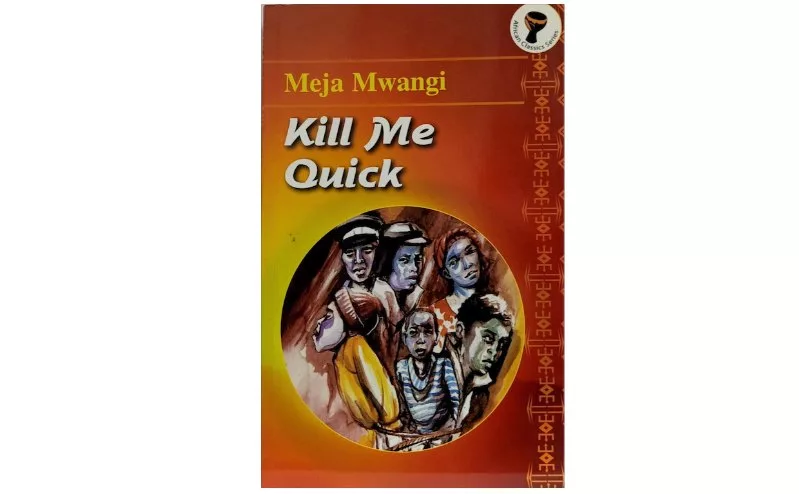
Meja Mwangi's Kill Me Quick is exactly that kind of novel, a relentless exploration of ambition, poverty, betrayal and survival that transforms Nairobi into both a promised land and a merciless predator.
At its heart, the novel tells the story of two young men, Meja and Maina, who abandon their rural homes with one dazzling dream: to build a better life in the city. Nairobi, in their imagination, is a place overflowing with opportunity, where determination alone can change one's destiny. But the city they encounter is far removed from the paradise they imagined. Instead, they are swallowed by unemployment, hunger, exploitation and crime, discovering that the same streets glittering with promise can also consume those who arrive with nothing.
The brilliance of Kill Me Quick lies in how quickly hope begins to unravel. Every opportunity seems to hide another trap. Every helping hand comes with invisible strings attached. As the story unfolds, the reader becomes painfully aware that survival is no longer about achieving dreams but about making it through another day. This transformation from hopeful optimism to desperate endurance creates an emotional tension that keeps the pages turning long after midnight.
Mwangi wastes no time exposing the harsh realities facing young migrants. The city is not merely a backdrop; it becomes a living force: indifferent, ruthless and endlessly demanding. Poverty is portrayed not as a statistic but as a daily battle against hunger, humiliation and impossible choices. Through vivid scenes of overcrowded streets, grimy lodging houses and dangerous neighborhoods, Nairobi emerges as a character capable of both seducing and destroying those who enter it.
One of the novel’s memorable observations captures this brutal reality: “The city has no room for dreamers; it only rewards survivors.” This sentiment echoes throughout the novel as each setback strips away another layer of innocence. Dreams become luxuries that empty stomachs cannot afford.
The emotional core of the novel, however, remains the relationship between Meja and Maina. Their friendship begins as a source of hope but is constantly tested by desperation and hardship. Mwangi refuses to romanticise poverty. Instead, he asks difficult questions about what deprivation does to loyalty, dignity and human morality.
Another striking moment reflects the crushing weight of hopelessness: "Hunger knows no shame, and desperation has no conscience." The line perfectly captures the moral landscape of the novel, where ordinary people are pushed toward extraordinary choices simply to stay alive.
Mwangi's writing style is one of the novel's greatest strengths. His prose is lean, direct and cinematic, allowing scenes to unfold with remarkable immediacy. Rather than relying on elaborate descriptions, he paints vivid pictures through carefully chosen details and realistic dialogue.
This economy of language gives the story an urgent pace that mirrors the relentless struggle of the characters. The suspense grows naturally because every chapter introduces fresh uncertainty, making the reader constantly question whether relief is finally within reach or whether another tragedy is waiting around the corner. His realistic characterisation also makes every victory feel earned and every loss painfully believable, ensuring that readers become emotionally invested in the characters' fate.
That said, a weakness of the novel is its limited development of several supporting characters. Many individuals who appear capable of adding emotional depth or offering contrasting perspectives enter the narrative only briefly before disappearing or serving a narrow plot function. As a result, the world around Meja and Maina occasionally feels underexplored, and some emotional moments lose impact because potentially meaningful relationships are never fully developed. This leaves parts of the story feeling incomplete, with certain characters existing more as symbols of urban hardship than as fully realised individuals.
Ultimately, Kill Me Quick is far more than a story about two young people chasing dreams in Nairobi. It is an unsettling portrait of how hope can be manipulated, how poverty reshapes morality and how survival often demands unimaginable sacrifices. Meja Mwangi crafts a novel that is emotionally raw, socially relevant and relentlessly gripping.
Long after the final page, readers are left with an uncomfortable realisation: Sometimes the most dangerous place is not the wilderness or the battlefield, but the city that promised to make dreams come true.