The conversations in Ankara may be remembered as more than another NATO gathering. They reflected a profound shift in international alliances, where strategic partnerships are measured not only by shared ideals, but by costs, obligations and tangible returns.
As members debated defence spending, burden-sharing and commitments, one message was clear: the age of transactional alliance politics has arrived.
This shift is not surprising. Russia’s war in Ukraine, instability in the Middle East, great-power competition and cyber threats have reshaped global security.
Governments must justify military spending to domestic audiences while ensuring alliances serve national interests. Ankara was the latest stage for this balancing act.
But there is a paradox. The more security becomes transactional, the less predictable it gets. Alliances built on immediate gain rather than trust become fragile when leaders change, economies tighten, or priorities diverge.
Collective security works when members see their safety as linked to their partners. When every commitment gets a price tag, solidarity erodes.
The Ankara talks reveal more than NATO’s internal politics. They expose a wider dilemma. Military power deters aggression, but today’s biggest threats cannot be solved by force alone.
Climate change, terrorism, pandemics, cyberattacks, food and energy insecurity and economic instability cross borders and ignore alliances. They require cooperation beyond defence treaties.
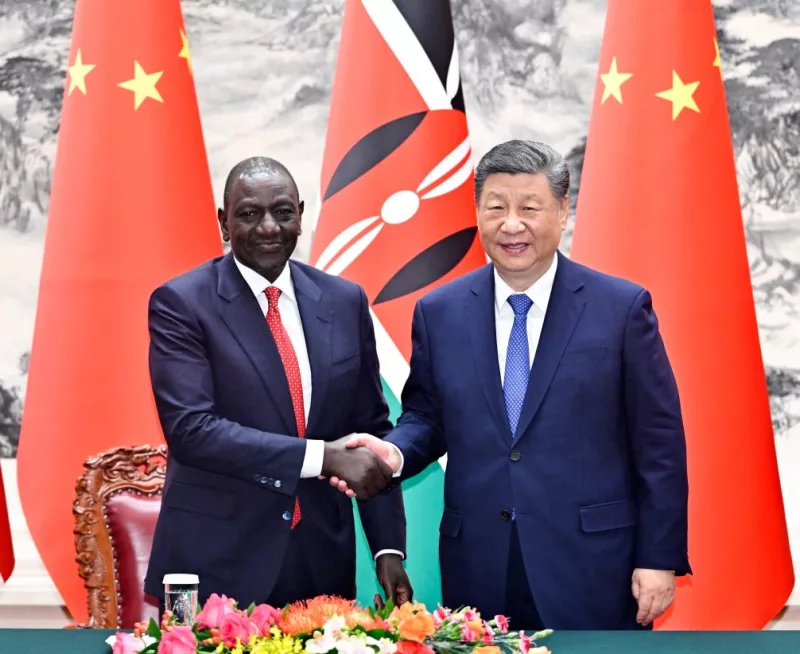
In this context, Chinese President Xi Jinping’s idea of a “community with a shared future for mankind” offers another perspective. It argues that lasting peace requires recognising that nations’ interests are connected. In a fragmented world, one country’s security cannot come at another’s expense.
At the centre of this is the Global Security Initiative (GSI). It calls for common, comprehensive, cooperative and sustainable security.
Instead of confrontation, it promotes dialogue, respect for sovereignty, peaceful dispute settlement and consideration of all states’ security concerns. Its implementation can be debated, but the idea that dialogue must come before conflict resonates as tensions rise.
Security cannot be separated from development. Xi’s Global Development Initiative (GDI), argues that poverty, inequality and underdevelopment breed insecurity.
Jobs, infrastructure, technology, food security and health are not just development targets. They are investments in stability. Countries with inclusive growth handle shocks better.
Also relevant is the Global Civilization Initiative (GCI), which promotes dialogue between civilisations and respect for different development paths.
In a time of ideological division, GCI argues that diversity should not mean division. History shows civilisations advance through exchange, not isolation.
This does not reduce NATO’s role. The alliance remains central to transatlantic security and is adapting to new threats.
Ankara’s decisions reflect real concerns in a volatile world. But the summit also shows the limits of military alliances in dealing with problems that are political, economic and social.
The impact goes beyond Europe. In Africa, Asia and Latin America, many states are pursuing independent foreign policies focused on development, infrastructure, investment and technology, rather than bloc alignment.
They want partnerships that increase options, not restrict them. Complex problems require diplomacy that engages multiple powers.
For Africa, this matters deeply. The continent faces terrorism, climate risk, food insecurity, debt and infrastructure gaps, alongside goals for industrialisation. Military partnerships alone cannot fix this.
What’s needed is investment, technology transfer, capacity building and inclusive cooperation. Whether partners are Western, Chinese or others, the test is whether lives improve and development is sustained.
Ankara may mark more than a NATO adjustment. It signals a search for a new security architecture for the 21st century.
The question is not whether military alliances will exist. They will. The question is whether they can coexist with frameworks that also prioritise development, dialogue and mutual respect.
Global stability will not come from deterrence alone, nor from economics alone. It needs both. Ankara showed the rise of transactional alliances. China’s GSI, GDI and GCI offer a vision based on shared security, prosperity and civilisational dialogue.
The world does not have to pick one exclusively. The task is balance: stronger security without losing cooperation.
This requires institutional change. Alliances must be more adaptable and accountable. New platforms are needed for non-traditional threats: cyber norms, climate adaptation, pandemic readiness, supply chain resilience. These fall outside classic defence mandates.
Trust is key. Transactional politics can deliver short wins but struggles long-term. States that cooperate only when interests perfectly align risk falling apart in a crisis.
Durable alliances need goodwill built through exercises, intelligence sharing and people-to-people ties. Without that, even strong militaries weaken.
Economic tools now blend with security. Sanctions, trade disputes and tech competition are statecraft, not just commerce. Ankara’s debates reflected this, as members weighed defence budgets alongside industry competitiveness.
Developing countries are watching. Many refuse to be forced into blocs. They prefer multi-alignment: security cooperation with some, development with others. For them, stability means jobs, energy and climate resilience more than troop numbers.
The challenge for major powers is to accept this pluralism. A system demanding exclusive loyalty will lose the Global South.
One offering flexibility and linking security to development will gain legitimacy. China’s three initiatives speak to that demand, even as Western alliances adjust.
Ankara may be remembered not for solving these tensions, but for making them explicit. The language of costs has entered alliance politics permanently. At the same time, calls for shared futures have grown.
In an interconnected world, the strongest alliances will build military capability and also trust and development.
That commitment to a shared human future, more than any Ankara communiqué, will shape global peace in the decades ahead.
The writer is a journalist and communication consultant