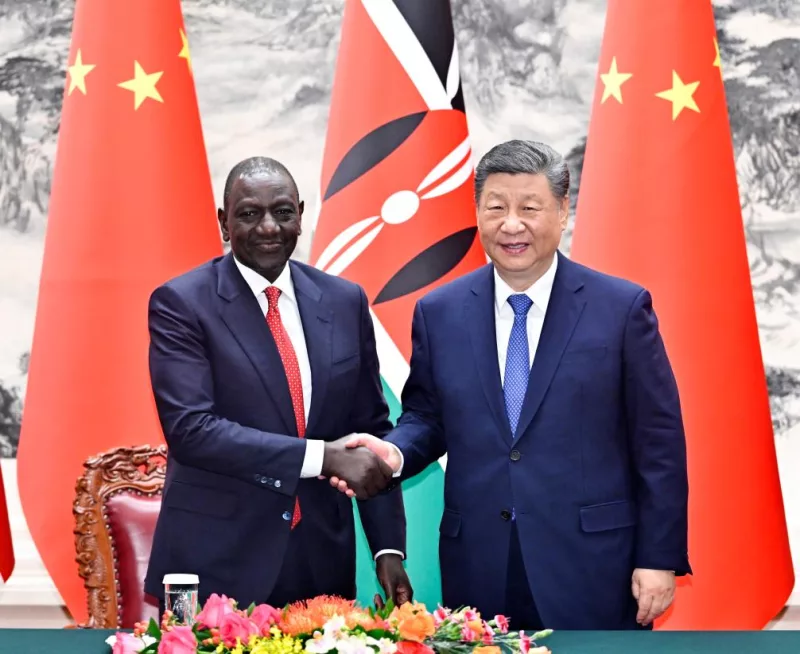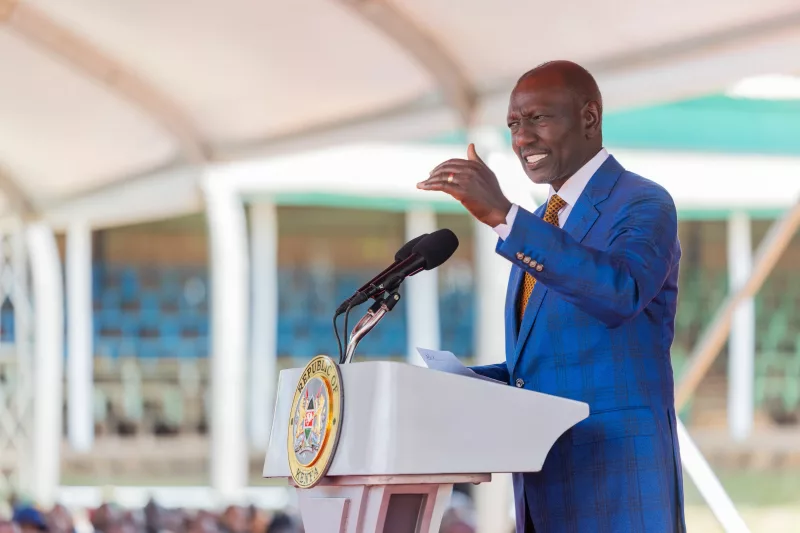
The question of zoning among government-allied parties is emerging as a potential source of friction within President William Ruto’s camp, as disagreements arise over whether the arrangement should apply uniformly ahead of the 2027 general election.
While there has been little comparable public debate over zoning in regions considered strongholds of the ruling UDA, the party is keen to field candidates in areas where its political partners have established support bases.
The emerging dispute has raised questions about whether political cooperation within the broad-based government will be based on reciprocal accommodation or whether individual parties will be allowed to pursue their electoral ambitions.
Ruto is consolidating his Rift Valley political backyard without facing the challenge of friendly parties seeking to field candidates in his strongholds.
Unlike in regions where the broad-based government arrangement has raised questions over how UDA and its allies will share political space, Ruto appears to enjoy greater control over his traditional base.
As UDA seeks to expand its national footprint, ODM and other allied parties want to protect their established political networks and retain their strongholds.
The Coast region has emerged as one of the clearest examples of the tension, with UDA insisting that it should be allowed to field candidates in all six counties despite ODM’s established political presence.
UDA secretary-general Hassan Omar has rejected proposals to reserve the region for ODM, insisting that residents should be allowed to choose between competing candidates.
“ODM says the Coast is their stronghold; we are telling them the Coast belongs to the people of the Coast, let us compete fairly,” Omar said.
The position puts UDA at odds with ODM politicians who favour zoning as a way of avoiding competition between parties supporting the same presidential candidate.
The disagreement also affects the Party of National Unity, led by Senate Speaker Amason Kingi, which has maintained its separate political identity while cooperating with UDA.
In Mombasa, Omar is seeking the governorship, potentially setting up a contest with incumbent Abdulswamad Nassir of ODM.
In Kwale, Governor Fatuma Achani of UDA is preparing to defend her seat against potential ODM challengers, including Hamadi Boga.
Kilifi has also become a centre of political manoeuvring involving ODM Governor Gideon Mung’aro and former Gender Cabinet Secretary Aisha Jumwa, who has left UDA.
Nyanza has also emerged as a focal point of the disagreement, with ODM seeking to protect its traditional political base while UDA pursues an expansion strategy.
In February, nearly 40 leaders from Luo Nyanza had joined UDA or expressed interest in seeking its tickets for various elective positions.
Those mentioned included former Nairobi Governor Evans Kidero and politician Philip Aroko.
The development signalled UDA’s intention to recruit local leaders and compete for seats in a region historically associated with ODM.
And in May, UDA officials in Homa Bay opposed zoning proposals, arguing that preventing the party from fielding candidates could discourage its supporters from participating in the elections and undermine Ruto’s support in the region.
For ODM, zoning would help prevent rival parties within the broad-based government from splitting votes in areas where it has traditionally enjoyed considerable support.
Awendo MP Walter Owino has defended the arrangement as a practical way of consolidating ODM’s grassroots support.
“If UDA has already zoned the presidency from ODM, what's wrong with ODM zoning her strongholds?” Owino asked.
His is of the view that political accommodation should be reciprocal, with parties respecting one another’s electoral interests.
Homa Bay Town MP Peter Kaluma has also described zoning as an essential condition for any pre-election coalition agreement between ODM and UDA.
“There must be clarity in every war. You are either a partner or the enemy. Partners field a single candidate for each seat from the president, governor, MPs to MCAs, then go all out together to win against their opponents,” Kaluma said.
Western Kenya is another region where the zoning question has attracted attention, particularly in counties where ODM has an established political presence.
The areas at the centre of the contest include Kakamega, Vihiga, Busia and parts of Bungoma.
UDA leaders have resisted proposals to reserve the region for ODM, arguing that the party should be allowed to field candidates across the country.
In September, Kakamega Deputy Governor Ayub Savula publicly argued that UDA should be free to field candidates for all elective positions.
For the ruling party, competing in these regions offers an opportunity to recruit aspirants, establish local structures and increase its presence in county and parliamentary politics.
For ODM, however, the entry of UDA candidates could complicate its efforts to retain seats and negotiate favourable terms for any pre-election agreement.
Political commentator Caleb Burudi argues that the zoning debate reflects the different interests parties have in regions where they enjoy varying levels of political influence.
In areas where UDA has a strong presence, the party has little incentive to surrender its opportunity to field candidates.
Its leaders may regard these regions as the foundation of Ruto’s re-election campaign and expect allied parties to accommodate its interests.
“The President’s interest in fielding candidates in Nyanza, Western and the Coast could be driven by a desire to build UDA into a national political party rather than rely on regional alliances,” Burudi said.
He added that the parties have unequal bargaining interests in different regions.
“ODM wants to protect its parliamentary and county seats in areas where it has traditionally performed well. UDA, meanwhile, wants to attract new supporters without being restricted by existing political arrangements. This creates a situation in which ODM seeks zoning as a condition of cooperation, while UDA views open competition as essential to its expansion,” Burudi said.
The zoning debate is unfolding as Ruto intensifies efforts to consolidate support in his traditional political base while courting voters in other parts of the country.
The President has urged residents in parts of the North Rift and South Rift to obtain national identity cards and register as voters.
During a visit to Baringo, Ruto told residents of Tiaty to register as voters rather than leave him relying on support from other regions.
“You residents of Tiaty, register as voters and spare me the shame of having to kneel before people from other parts just to get their votes,” he said.
The remarks underscore the importance the President attaches to mobilising his traditional support base while seeking to expand his national appeal.
Burudi argues that UDA’s desire to compete in ODM strongholds must be understood in the context of its ambition to become a national party.
For ODM and other parties backing Ruto, however, zoning offers a means of protecting elected leaders and preserving their bargaining power ahead of the next election.
Opposition parties have also rejected zoning.
Kiharu MP Ndindi Nyoro has ruled out zoning arrangements for the People’s Party of Kenya, saying the party intends to field candidates across the country rather than reserve particular regions for specific political outfits.
“We are talking with all parties and we believe we will have one presidential ticket,” Nyoro said.
“But People’s Party of Kenya, as a national outfit, there are some vocabulary we do not know their meaning. We do not know what zoning is,” he added.
Former DP Rigathi Gachagua has similarly said his Democracy for the Citizens Party will not agree to zoning elective seats, except for the presidency.
“We do not want zoning. Every party should be allowed to field candidates in areas they feel they are popular,” Gachagua said.
As the 2027 election approach, the challenge for Ruto and his allies will be to determine whether a common presidential platform can coexist with competing parliamentary and county-level ambitions.
Without clear rules on candidate selection and regional accommodation, parties that cooperate nationally could find themselves competing against one another locally, potentially complicating their efforts to maintain a united political front.