This last week, I have spent considerable time in Germany, taking a deep dive into their political architecture.
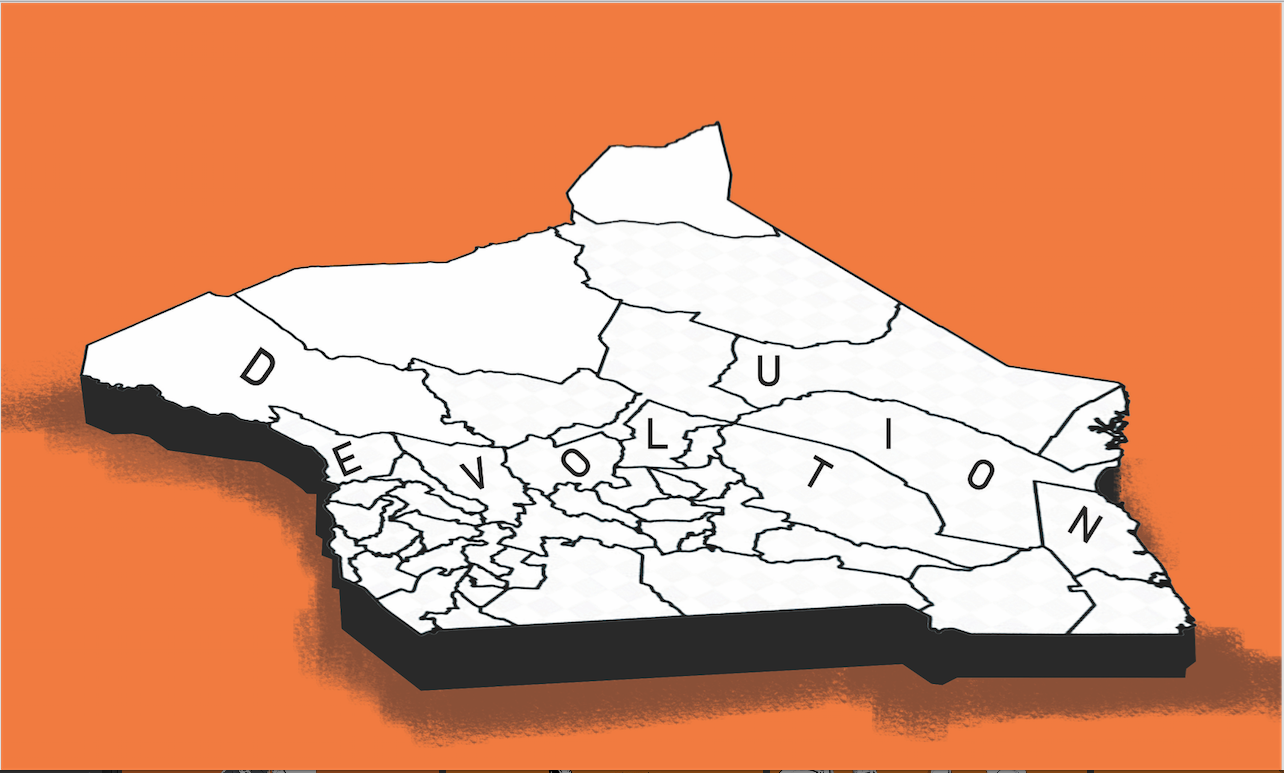
While both far-right and far-left parties are gaining popularity in an increasingly multipolar world characterised by dispersal of power, this is also true of the devolution that Kenya adopted in 2010. It’s possibly the greatest innovation of the 2010 Constitution that ushered in the second Kenyan republic.
In Germany, the country is divided into 16 strong states (lander), with Bavaria being the richest of them all. The states do have some kind of embassies in the capital Berlin, whereby the state premier sits together with his delegation comprising Cabinet members and secretaries. They also have an upper house, the Bundesrat, a council of the 16 states, akin to our Senate.
We didn’t quite get it right with the composition of our senate, as the delegations as currently constituted don’t quite reflect the true state of our counties. This is at times the challenge of copy-pasting foreign pieces of legislation to suit our experience.
Our Senate is a concoction of the Washington equivalent, and the German and South African experience. In future constitutional amendments, this is something that needs to be relooked into.
Coming back to devolution, it’s abundantly clear that devolution is one of those miracles that came with our constitution.
The rate of development across our great country has really increased compared to yesteryears. A recent report that was released this week by the SDG Kenya Forum, clearly indicated the County Development Index, with Nairobi, Kiambu and Nakuru Counties being ranked the highest, at 0.96, 0.89 and 0.86 respectfully.
Of interest, is the fact that Nairobi accounts for 4.1 trillion or 27.5 per cent of our GDP as a country. This is quite telling noting that only some decades ago, Nairobi and the greater Nairobi including Kiambu accounted for more than 60 per cent of the GDP.
Times have changed, and it’s assuring to see the new city counties of Nakuru and Eldoret ranking highly, with the former beating Mombasa to the third position. It’s also revealing to note that the northern Kenya counties of Wajir, Mandera and Marsabit occupy the lowest ranks on this index.
Homa Bay also features in this list, indicating huge disparities in development. For example, the wealth of Wajir is valued as 69.6 billion, against Kiambu’s 819.9 billion. This means that the economy of Kiambu is 8.5 times bigger that of Wajir. It’s also true that the population is a big factor to the size of the economy.
The report by the Controller of Budget, on the other hand, ranks Narok as the best in collecting and utilising revenue for development, with an own-source revenue of Sh4,800 per capita income and 95.5 per cent budget execution. On development expenditure, Kilifi, Wajir, Mandera and Meru are leading, showing a hunger to catch up with the rest of the country.
One of the greatest barriers to economic development in the counties is poor infrastructural development. This means that many counties would do better if there were better roads and other common user facilities. It’s out of this that the national government has put in place the rotational hosting of national holidays like the upcoming Mashujaa Day that shall be held in Eldoret, co-hosted by Uasin Gishu, Nandi and Elgeyo Marakwet counties.
It is out of such hosting that counties such as Homa Bay and Wajir have completely new roads, stadia, water projects, etc including an increase in the number of hotels. The same applies to Bungoma, Kericho, Kwale, Kitui etc.
However, several factors are slowing down this momentum. To begin with, the loss of own source revenue due to corruption is a big hindrance. Kiambu County has been able to increase its collection from two to more than six billion in less than four years.
Where was this money going to before? Secondly, the misuse of public resources is another challenge after the budget has been passed by Parliament and the respective county assemblies. This is very devastating.
It has led to the money meant to develop remote counties finding its way back to Nairobi and other investment destinations, since the corrupt officials predicate their returns on well-established marketplaces and centres. This is the true essence of counter-devolution.
In addition, staff productivity and competence are hindered by recruitment based on political allegiance or ethnicity, are a big hindrance to getting the best talent for the job.
Further, costing of government projects correctly is also a big hindrance its procurement rather than need driven hence leading to misallocation of resources as to where they are most needed.
However, we need to invest more in our counties due to the great wealth that lie under. Turkana has 2.6 billion barrels of oil, gold is in Kakamega, Turkana and Marsabit, Chromite in Turkana, Uranium in Marsabit, Copper in Mandera, Limestone in Wajir, Garrisa, and Marsabit, and Gemstone (Ruby and sapphire are in Isiolo-Merti area.
We also have natural gas in Wajir, wind power in Turkana, while the Chalbi Desert has the potential to give us up to 10,000 megawatts of solar power.
All these counties are future cities, and that’s why the LAPSSET infrastructure project is critical in unlocking the development of our great country, Kenya.