Last week's June 25th peaceful demonstration commemorating Kenyans lost to police brutality, yet again revealed police impunity.
The Interior CS said that the day was “proof that when demonstrations are conducted in accordance to the provisions of the constitution, peace and security are guaranteed.” (sic). Security was not guaranteed, state-sponsored intimidation was. The police did not follow the constitution, demonstrators did.
The government treated the constitution as it has always done, as a set of recommendations it follows when it wishes and interprets how it wishes.
A simple public servant does not determine whether the constitution was followed, a court of law does. The same courts whose declarations the government disregards regularly.
By commending all police, including criminal ones, the Interior CS emboldens rogue officers to continue their wayward ways. Police brutality and intimidation should be condemned not commended.
In any case, there was little to commend.
What we saw were soul-killing tales of police overreach. From the foiled abduction of Standard editor Alex Kiprotich, to illegal barricading of public roads, to forced disappearance, to torture.
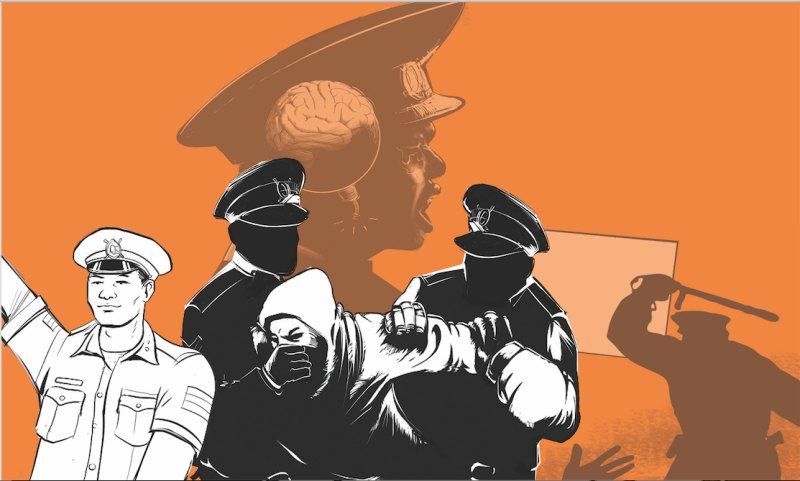
Kenyans saw vehicles with unmarked number plates, police in balaclavas, crime response gear and not anti-riot gear, manhandling of suspects as if they are rogue rebels and the torture of demonstrators who were told not to speak to the media. These were sights of blood thirsty, trigger happy and torture-thrilled police officers.
While some protests can at times turn rowdy and disruptive, that does not justify the excessive use of force observed in every anti-government protest.
Pelting stones, burning tires and shouting epithets cannot be compared to breaking bones, torture and shoot-to-kill tactics employed by the police.
Although Kenya is seen as a bastion of democracy where freedom of expression and human rights thrive, we are all too familiar with the pain that families of activists like Rex Masai, Mwalimu Ojwang’ and hundreds of others go through.
To make matters worse, each subsequent protest or call to action against these human rights abuses is further marked with additional crackdown and detention without trial reinforcing the existing state of affairs.
Police who engage in impunity, hide number plates, hide their faces and kidnap Kenyans are not law enforcement.
They are criminals dressed in blue. The mass cough of unwarranted bullets should be stopped. The pandemic of violence needs to end. All politics aside, people should not play ping pong with other people’s lives or safety. Police accountability should be given the seriousness it deserves.
Like many young Kenyans, we did not experience Moi era intimidation tactics, where fear terrorised everyone. What we are very familiar with, is that the 2010 Constitution guarantees governance based on values for human rights, freedom and the rule of law.
The same constitution entrusts the police with the responsibility to serve and protect. Indeed, there are officers who are conscientious and law abiding. Yet, the few trigger-happy and rogue officers tarnish the image of the entire service.
An image of the police as protectors and part of the community they serve must be the cornerstone of the country’s leadership. Police must reckon that with great power comes great responsibility and they should not be misled by politicians or commands to abuse their oath to protect Kenyans.
Progress has been made to hold reckless officers involved in the killings of activists such as Rex and others. To transform Kenya into a strong democracy as President Ruto envisions, institutional transformation in the police service must happen.
That transformation should and must catch up to the dispensation and aspirations of the 2010 Constitution.
Those who hold our vision of a free country with contempt and abuse of office, must be held accountable.
Because when they are not, the victims are ordinary Kenyans who must suffer the silent brutality of economic oppression and the painful brutality of police violence.
Bullets, teargas and defending rogue officers should not, and cannot, be the answer.
Oginga is a policy and research associate at Georgetown University and Nyakundi is legal intern at Katiba Institute