When Martha Karua was denied entry into Uganda, the incident immediately sparked diplomatic and political debate. Was it a sovereign decision by a neighbouring state? Was it an isolated event involving a prominent Kenyan politician? Or was it a sign of something larger unfolding across East Africa?
The answer matters because Karua's experience may reveal a troubling trend that extends far beyond one individual. Increasingly, the struggle over democracy in East Africa is no longer confined within national borders. It is becoming a regional contest over who gets to speak, organise, observe and challenge power.
For decades, East African integration has been celebrated as one of the region's greatest achievements. Citizens have been encouraged to think beyond national boundaries. Trade has expanded.
Travel has become easier. Regional institutions have grown in influence. The vision has been that of an East Africa connected by shared economic and political aspirations.
Yet recent events suggest a growing contradiction. While borders are becoming more open for goods, services and investment, they appear increasingly restrictive when it comes to political engagement.
Karua's attempted visit to Uganda was reportedly linked to legal and political developments involving opposition figures. Whether one agrees with her mission is beside the point.
The larger question is why the presence of a lawyer, politician or observer from a neighbouring country should generate such sensitivity. In a region that aspires to deeper integration, political participation across borders should not be viewed automatically as a threat.
This development reflects a broader shift in how governments respond to dissent. In the past, concerns about democratic decline often focused on election manipulation, military interventions or constitutional changes.
Today's restrictions are frequently more subtle. Administrative decisions, travel limitations and bureaucratic barriers are increasingly becoming tools through which states manage political pressure.
Such measures rarely attract the same level of international attention as dramatic crackdowns. Yet they can have a profound effect on civic space. They limit solidarity among activists, reduce scrutiny of controversial events and discourage cross-border engagement among citizens who seek accountability.
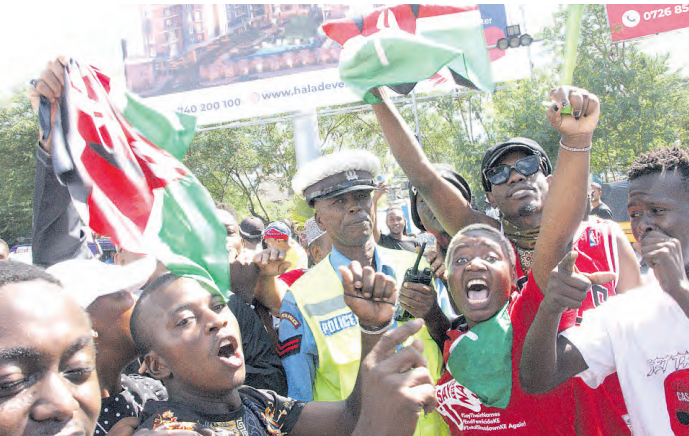
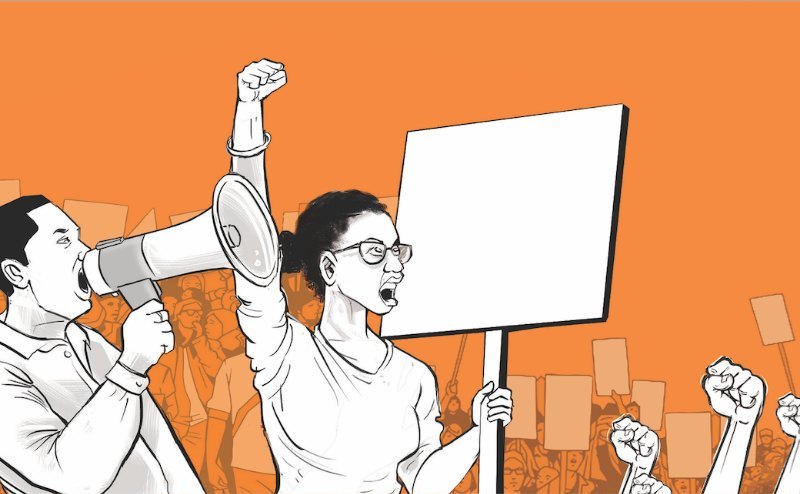
The timing is particularly significant. Across East Africa, a new generation of politically engaged young people is reshaping public discourse. The Gen Z protests witnessed in Kenya demonstrated the power of digitally connected citizens to mobilise around governance, accountability and economic opportunity.
These movements do not operate according to traditional political boundaries. Ideas spread rapidly across borders through social media, online platforms and regional networks.
As a result, governments are increasingly confronting a political reality in which dissent is no longer confined to a single country. Activists learn from one another.
Citizens follow developments in neighbouring states. Lawyers, journalists and civil society organisations collaborate across national lines. Political struggles that were once local are becoming regional conversations.
This raises an important question for the future of East African integration. Can a region truly achieve meaningful unity if political freedoms remain constrained? Economic cooperation alone cannot sustain regional identity.
Citizens must also feel that they can participate in public life, exchange ideas and engage with regional issues without fear of arbitrary restrictions.
To be clear, every state has the right to regulate entry into its territory. Sovereignty remains a fundamental principle of international relations. However, when restrictions increasingly affect political actors, observers and advocates, questions about democratic commitment inevitably arise.
Karua's experience should therefore not be viewed merely as a dispute between Kenya and Uganda or as a story about one politician. It should prompt a broader conversation about the direction of democracy in East Africa.
The region stands at a crossroads. It can continue building a community defined only by economic integration, or it can pursue a deeper vision that also protects political freedoms and civic participation.
As East Africans move toward closer union, the most important question may no longer be whether people can cross borders. It may be whether democratic ideas can cross them as freely.
The writer is a political scientist