The world is in a bind. And held hostage.
First was the Russia-Ukraine war. Then the Israel-Middle East conflict that drew in the Houthis’ strikes within the Gulf of Aden. And now we are witnessing the USA-Israel-Iran conflict that’s chocking the critical Straits of Hormuz.
The world can’t take it any more. The economies are taking a hit from these incidents. Common citizens too are bearing the brunt of it.
And it all boils down to one thing: vulnerability and also criticality of maritime security and safety.
To understand this old, yet seemingly new concept, you need to appreciate the politics and dynamics of the seas, oceans and their importance. This is the vast domain that has connected the world since creation, making it possible for human movement and global trade.
In deed, more than 80 per cent of global trade is facilitated through our oceans and similar waterways. And it’s courtesy of this trade that the world keeps functioning, as we know it.
Many erroneously assume the world relies on air traffic to function. Zilch! And land borders? Nope!
Great wars have been fought since time immemorial. And by and large, the theatre has always been the waters. Even in modern warfare, where air superiority counts or rules, the logistical base remains the waters.
And why is this so?
It’s for the simple reason that the vast waters, commonly known as the ‘commons’, have no singular ownership claim. All nations have a right of passage and other economic activities, albeit conditionally.
Even the littoral waters that are exclusively claimed by coastal states sovereignty have some exceptions of right of innocent passage. Without this stipulation, the world would grind to a halt under a minute as a few would hold the rest hostage.
In a nutshell, the waters are a shared sacred resource for humanity. And they have to be regulated and enforced. That’s how the international law through various UN aligned conventions and frameworks comes in play to assign rights, expectations, responsibilities, accountabilities, implications and all on good and best practices that binds all. National laws align to such international frameworks to enforce local compliance.
And hence maritime security as a cornerstone towards the regime of common usage.
At the apex, therefore, is freedom of navigation. This is in recognition of the reality that the seas are the superhighway of international commerce, hence the very existence of humanity. And whereas most areas are vast and easy to enforce compliance, others are complex, vulnerable, hence known simply as choke points.
That’s how the Straits of Hormuz come in the picture. Everyone globally suddenly knows about this name. Yet it’s not about just the name, but more about the geography of the location that makes it relevant in current global political discourse.
Choke points are critical geographies that impact maritime trade and transport in general. Strait of Hormuz and the Suez Canal make easier reference. They’re maritime transport criticalities that easily impact global supply chains when interfered with.
The example of the accident of Ever Given container ship in the narrow Suez Canal in 2021 led to rerouting of other commercial freighters around Africa to connect the east to the west, and vice versa, impacting global trade. Yet that was only a six days ordeal.
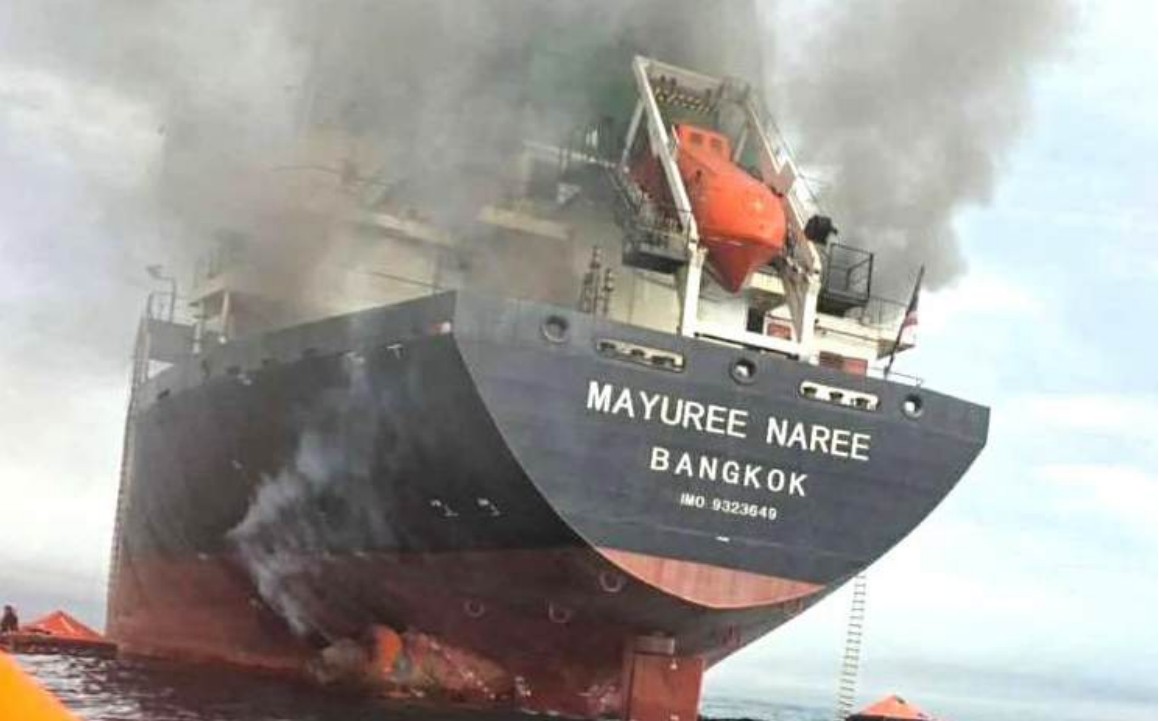
But to the extreme, we have security or criminally related incidents that are intended to disrupt supply chains. As of now, world economies are bleeding due to closure of the Strait of Hormuz owing to the Iran situation. Fuel prices have hit the roof. Stock markets are jittery.
Other similar disruptions are out of crime, such as at the peak in piracy off the coast of Somalia a few years ago.
These topical and historical events highlight the importance and role or maritime security. Just as in the current Persian Gulf situation, such unfortunate situations remain an active theatre of naval forces, especially the navies in the lead.
They interdict maritime threats, pacify belligerents, provide escort to merchant and leisure ships, clear mines, amongst many other assigned missions.
But during peacetime, focus shifts to coast guards to keep an eye on their littoral waters, including illegal exploitation of resources in the EEZ to ensure organised maritime threats are interdicted or enforced timely.
Maritime and naval forces thus operate symbiotically, talk to each other and largely interoperate for the bigger cause. And beyond one nation, they cooperate with other nations, share intelligence, and conduct joint exercises just to keep the waters safe and secure.
This therefore calls for agile, mission ready maritime and naval forces globally to maintain global peace through secure oceans. Kenya isn’t any exception to this expectation, as we need to guard our national security jealously and also grow the pie of our national economy by harnessing our blue resources.
And with safe waters, global commerce shall thrive, vital communications assured, and critical energy supply chains uninterrupted.
The writer is the director general, Kenya Coast Guard Service)