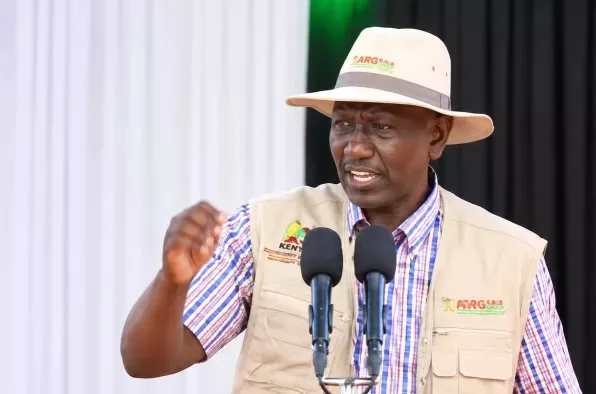
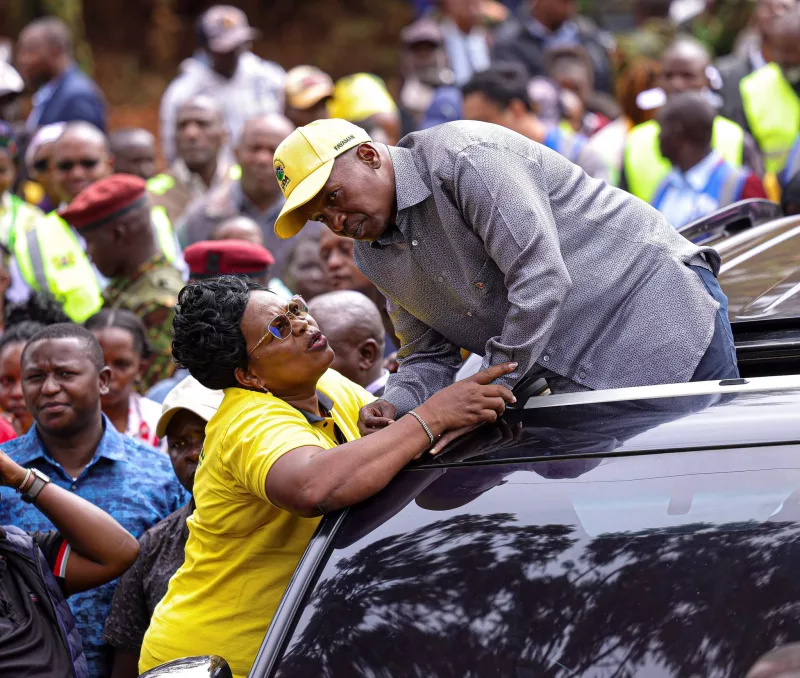
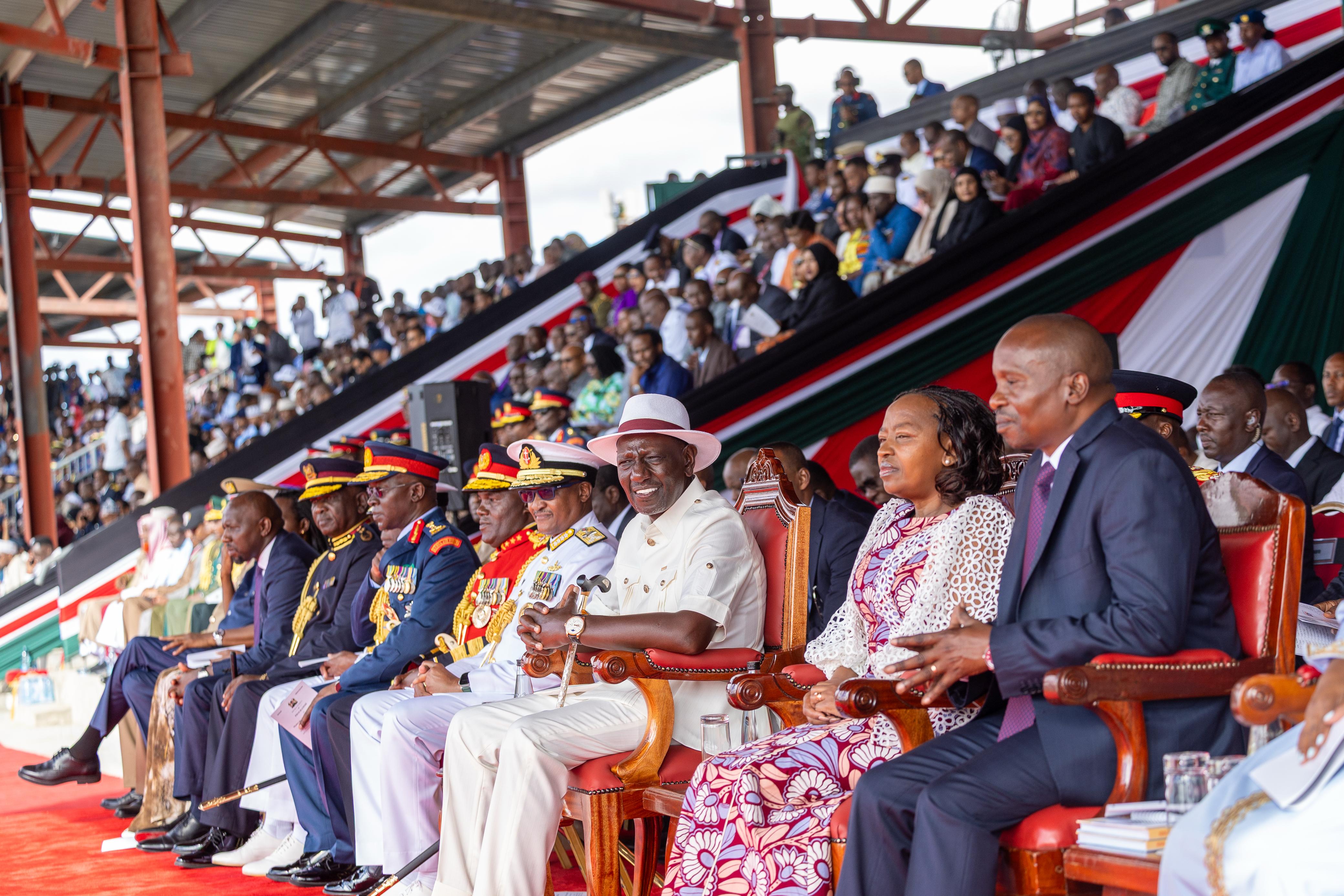
 President William Ruto, First Lady Rachel Ruto and Deputy President Kithure Kindiki during Madaraka Day celebrations in Wajir Stadium on Monday /PCS
The 63rd Madaraka Day celebration was never meant to be a tearful affair. On paper, it was a rotational ritual born of inclusivity—a roster that once placed President William Ruto as the first Deputy President under the 2010 Constitution. But history, as it often does in the arid frontiers of Kenya, wrote its own script.
By any historical measure, Madaraka Day traditionally commemorates Kenya's attainment of internal self-rule in 1963—a moment of national pride and political symbolism.
Yet in the sun-scorched heart of Wajir county, where the memory of exclusion runs deep and generations have lived on the margins of the Kenyan state, the fifth President did something no sitting president has done before: he wept openly, then apologised. And in that order—tears before words—he washed away 63 years of anguish.
The moment arrived after the official goodies. The crowd had already cheered the unveiling of the new Wajir State Lodge, the naming of the Ahmed Khalif Stadium, the groundbreaking for the Isiolo–Garissa–Wajir–Mandera road corridor and the long-overdue commercialisation of Wajir International Airport.
These were tangible, monumental achievements that past administrations had long resisted. But none of it moved the people as much as what came next.
Pausing in his prepared speech, President Ruto looked directly into the eyes of the elders, women and youth before him—his voice, usually a metronomic beat of economic rhetoric, cracked. Tears rolled. Then, in a moment that silenced even the ever-present ululations and wailing, he said: "I extend my sincere apology to the people of northern Kenya for the hardship and exclusion you endured over the years."
It was unscripted. Unscheduled. And unforgettable.
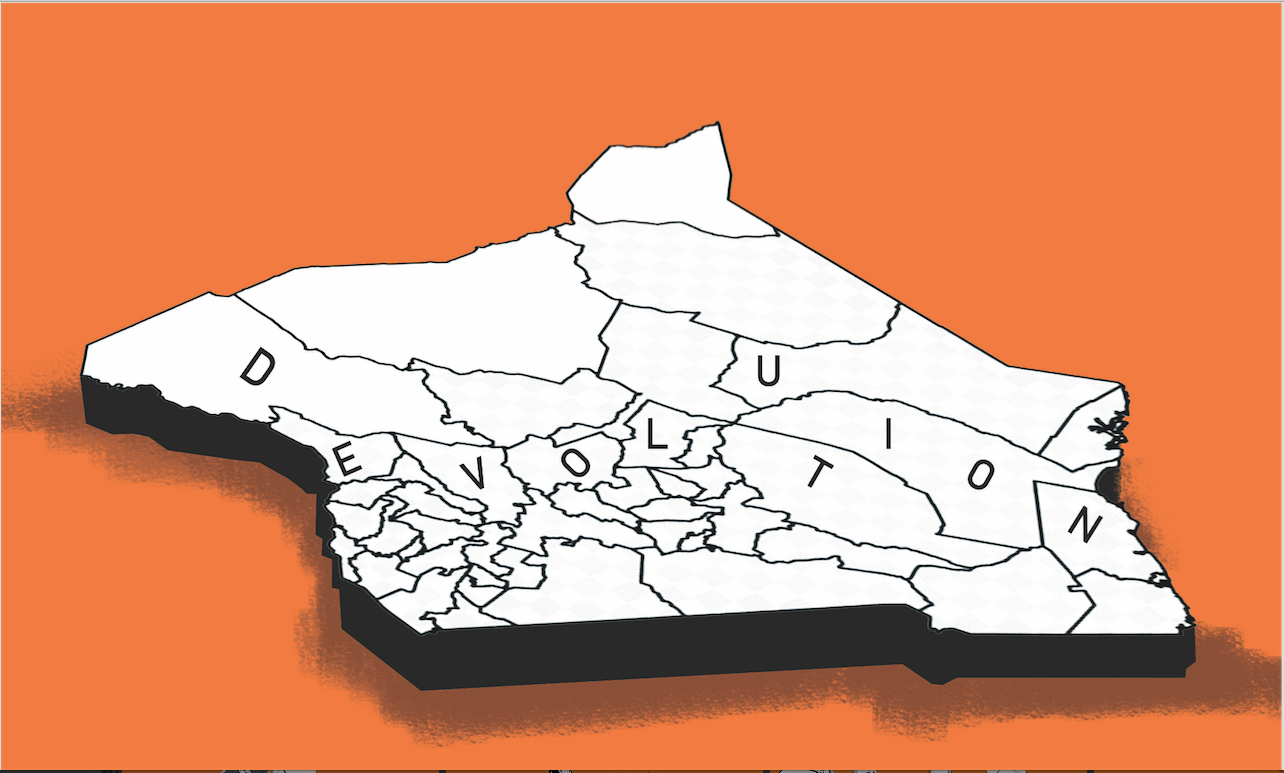
The statement carried extraordinary weight because it touched one of Kenya's most enduring political fault lines. For decades, northern Kenya has occupied a paradoxical position within the republic—geographically vast, yet politically and economically detached.
Colonial-era policies designated large parts as a "closed district." The scars of the Shifta conflict, recurring insecurity, underinvestment and limited representation reinforced perceptions that the region remained an afterthought in national planning.
The President then borrowed—but also transcended—a football anthem. Quoting the famous Liverpool FC Anfield crowd slogan, he declared: "We will walk together. You will never walk alone."
For the people of the Northern Frontier District—who have long felt like tenants in their own country since 1963—those words carried more weight than any stadium or tarmac. One elder, wiping his own tears, whispered: "He didn't just give us roads. He gave us a receipt for our pain."
Let us be clear as political writers: This was not a campaign gimmick. Wajir is not a swing vote bank; it is a historically marginalised region that has learned to expect promises wrapped in indifference. What President Ruto did was to weaponise vulnerability—not as weakness, but as the sharpest tool of statecraft.
His tears captured three things at once: self-compassion from a leader willing to feel the weight of history, emotional release for a people whose trauma had never been acknowledged by any previous head of state and a new policy direction—"One Kenya," not as a slogan, but as an apology in action.
Perhaps the most poetic reaction came from a young teacher in the crowd: "Your tears, Mr President, were the healing waters. You have made us newborn Kenyan babies—born not in 1963, but today, on June 1, 2026."
That is the power of an apology delivered with tears. It does not erase history. But it rewrites the emotional contract between the state and the citizen. Critics will argue that apologies must be matched by measurable outcomes.
The true test lies in budgets, projects and sustained political commitment. Yet for two days in Wajir, Kenya witnessed something uncommon in African politics: a sitting President confronting historical grievances not with defensiveness, but with empathy. The tears were not merely those of one leader.
They reflected the accumulated hopes, frustrations and resilience of generations who have waited decades to hear their story acknowledged from the center of national power.
As the sun set over Wajir on Tuesday, June2, the physical goodies will face audit and implementation delays—that is the cynical truth of Kenyan politics.
But the tears and the apology? Those have already entered the folklore of the NFD. For one day, a President did not come to inspect a parade. He came to confess, to cry and to belong. And in that rarest of political moments, Wajir county finally felt like Kenya—not from 1963, but from today.
The writer is a senior presidential adviser, North and Northeastern Development Initiative Directorate