The Uefa Champions League final over the weekend between
Arsenal and Paris Saint-Germain was more than a football match. It was a lesson
in political realism.
On paper, PSG were overwhelmingly superior. They dominated possession with 72 per cent of the ball, completed over 800 accurate passes to Arsenal’s fewer than 200 and registered 21 shots to Arsenal’s seven. Their expected goals stood at 1.77 against Arsenal’s 0.44. For long stretches, Arsenal were pinned deep, surviving wave after wave of pressure.
Yet PSG could not put Arsenal away.
Arsenal scored the only open-play goal through Kai Havertz. PSG required a penalty to level the match. After all the dominance, control, and statistical superiority, the game went into extra time and ultimately penalties.
That, in many ways, is the story of Kenyan politics.
The opposition currently enjoys what analysts would call favourable conditions. Public frustration over taxation is widespread. The cost of living dominates daily conversation. Youth unemployment fuels anger. Online spaces often appear hostile to the government.
Like PSG, the opposition has possession. It has noise. It has momentum. It often appears to control the political conversation.
But politics is not won through
possession alone. It is won through survival and conversion.
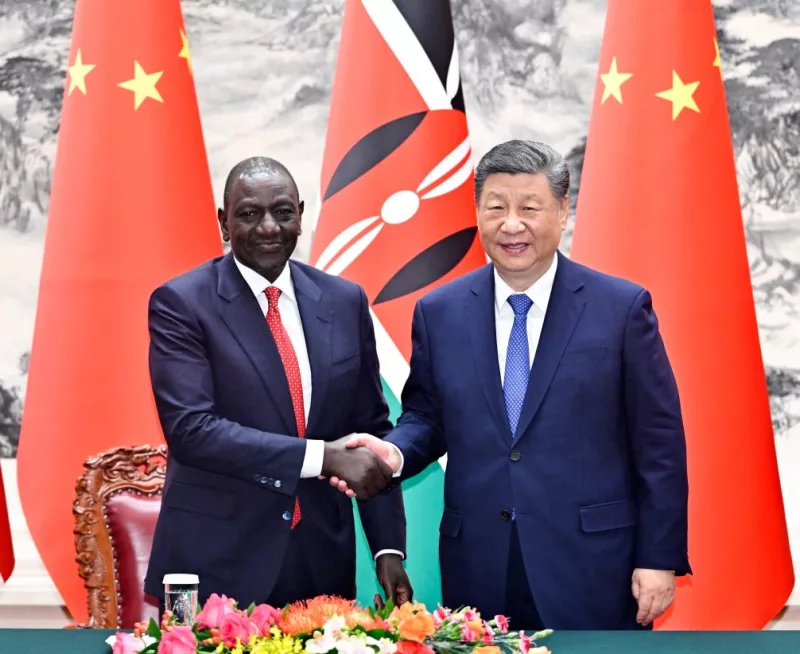
President William Ruto increasingly resembles Arsenal in that final. His administration may not dominate the national mood. It may spend much of the contest absorbing criticism. Yet it remains intact, and his party, UDA, continues to register wins in by-elections. That is not insignificant.
One of the oldest principles in electoral politics is simple: incumbents do not need to be loved to survive. They only need to stay standing while the opposition fails to finish the job.
Arsenal spent long periods under siege, yet PSG never found the knockout blow.
Similarly, Kenya’s opposition may enjoy favourable conditions, but it has not solved its central problem: itself.
The danger is confusing public dissatisfaction with electoral consolidation. They are not the same. A voter may reject government policy yet distrust opposition leaders. Another may want change but disagree on who should deliver it. Others may ultimately vote through ethnic, regional, or local calculations.
The statistics may favour the opposition. The arithmetic may not. In that gap lies incumbency advantage.
History shows that the greatest gift to any incumbent is a divided opposition convinced that momentum alone guarantees victory.
Football offers another lesson. Had Arsenal chased possession statistics, they would have lost discipline. Instead, they absorbed pressure, stayed compact and remained alive long enough to take the game to its margins. Politics demands the same clarity.
The opposition’s challenge is not proving dissatisfaction exists. That case is largely settled. The challenge is converting dissatisfaction into a disciplined electoral machine.
Can rival leaders subordinate ambition to unity? Can competing camps accept that coalitions are built on compromise, not preference? Can they prioritise winning over positioning?
Those questions matter more than rallies or online trends. Because elections, like finals, are decided by margins.
Over the weekend, the statistically dominant side eventually won. But it required penalties, patience, and endurance against an opponent that refused to collapse.
That should worry Kenya’s opposition. For all the noise against government, President Ruto remains the incumbent. He controls state machinery, retains political support, and remains the candidate everyone must beat.
The opposition has possession. Ruto has the scoreboard.
And in politics, as in football, survival while everyone predicts your defeat is often the first step toward victory.
The writer is the executive director, Open Future Hub (OFH). X: @MalibaArnold