Retired US Supreme Court Justice Anthony Kennedy recently offered a sobering warning about the state of public discourse in America. In an interview on Firing Line, he lamented that the “incivility we see in our public life generally is creeping too much into the court’s opinions.”
Coming from a jurist long known for moderation and institutional reverence, this was not a casual observation. It was a diagnosis: American politics has normalised incivility to the point where even the Judiciary—once the last refuge of sober, principled deliberation—is feeling the tremors.
What struck me most was not Kennedy’s critique of the US Supreme Court—unexpected as that was, but his implied resignation to the fact that incivility in American politics has reached a peak and may well remain there indefinitely.
His plea was simple: let the Judiciary remain untouched by this contagion, for if the courts descend into the same rhetorical mud, then the rule of law itself will be no more.
Kenya should pay attention because like the US, incivility in our politics has been on a steady rise. If we are lucky, the 2022 campaign season was the high‑water mark—a period when insults, slurs and personalised attacks reached levels we had not seen in years. And that is without even touching the 2007-08 post‑election violence, which stands in a tragic class of its own.
We have lived through moments when political rhetoric spilled into the streets with devastating consequences. We know what happens when political disagreement mutates into dehumanisation. We cannot afford to go down that road again.
Healthy democracies thrive on debate, disagreement and ideological contestation.
What they cannot survive is the normalisation of ad hominem attacks, character assassination and rhetoric that edges toward incitement. A society that cannot disagree without hatred is a society that cannot govern itself. And a leadership that cannot tolerate criticism is one we can collectively do without.
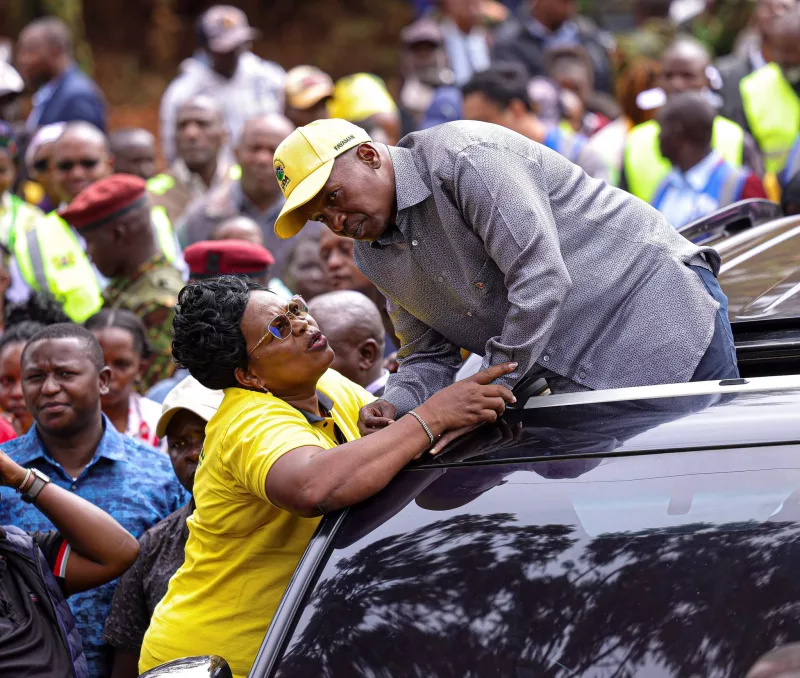
This brings me to the current ‘wantam’ chorus—those who insist President William Ruto must go. In a democracy, that sentiment is not only permissible; it is legitimate.
Citizens have every right to conclude that a leader has squandered the goodwill and political capital entrusted to him. They have every right to organise, mobilise and articulate their desire for change. They have every right to say, loudly and repeatedly, that they want a different direction for the country.
But ‘wantam’ should never mean hatred of Ruto.
It should not be driven by personal animus, tribal hostility, or the kind of venom that corrodes civic life. It should be driven by a sober assessment of governance: whether promises were kept, whether the economy improved, whether leadership was exercised with integrity. If the answer is no, then ‘Ruto must go’ becomes a political judgment—not a personal vendetta.
And those who sing ‘wantam’ must also remember something fundamental: in a constitutional democracy, there is only one legitimate way for that desire to materialise—the ballot box in 2027.
On the other hand, those who sing ‘tutam’—that Ruto will remain—must also do so with civility. They must resist the temptation to treat dissenters as enemies of the state or enemies of progress.
They must not direct anger or hatred toward those who prefer a different leader or at the leader. And they must not weaponise loyalty to the President as a licence to insult, demean, or threaten those who disagree.
Democracy is not a choir that sings in unison. It is a marketplace of competing songs.
Let ‘wantam’ sing. Let ‘tutam’ sing. Let each side articulate its vision, its grievances, its aspirations. Let each side organise, persuade and mobilise. And let the Kenyan people—peacefully, freely and without intimidation—decide whose song carries the day in 2027.
If we can achieve that, then we will have done something far more important than electing a president. We will have strengthened our democracy. We will have proven that political disagreement need not descend into hatred.
And we will have shown that Kenya can rise above the incivility that Justice Kennedy fears is consuming even the world’s oldest democracies.
That is the Kenya we should all want.