

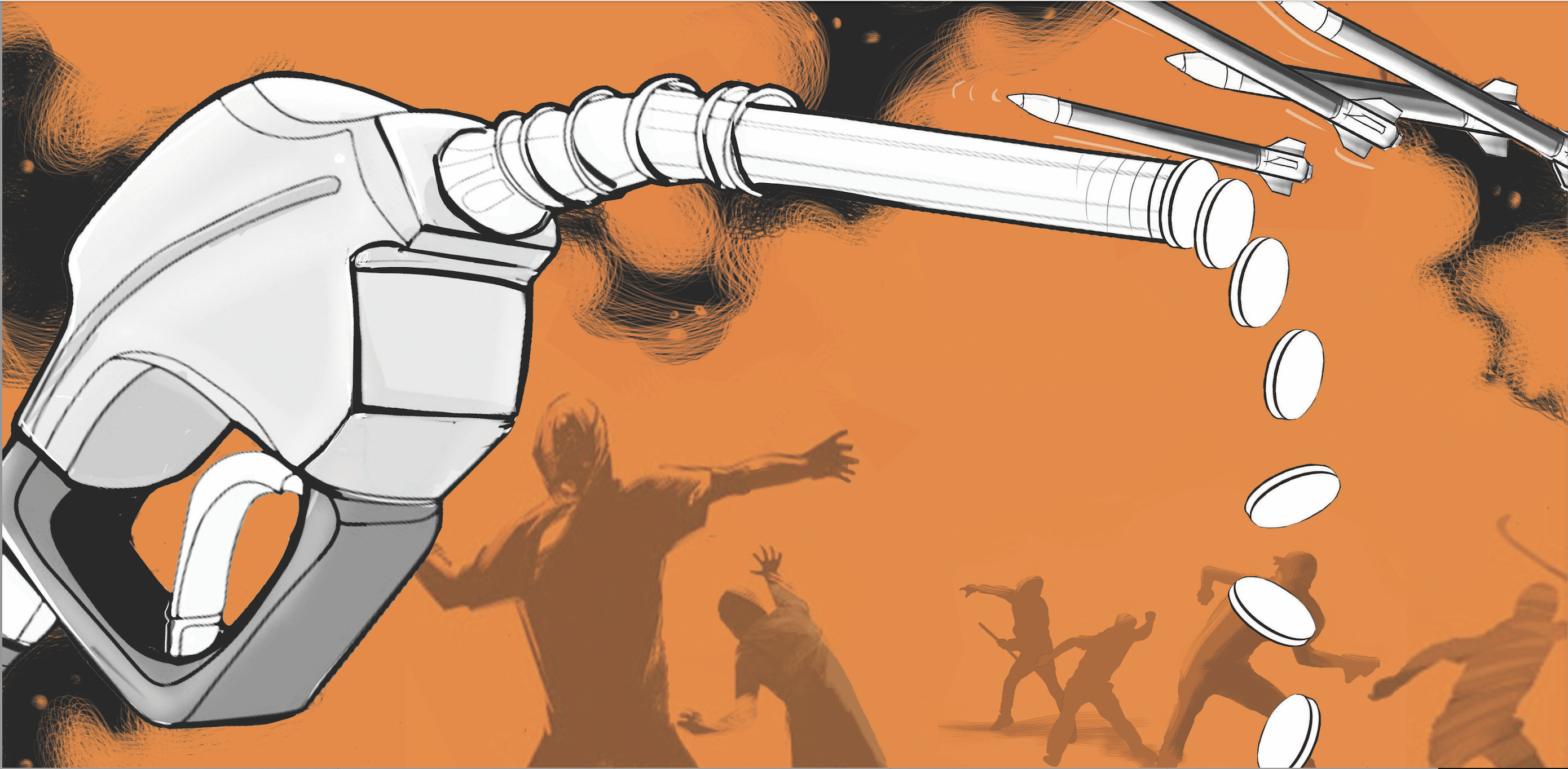
There was a time when a demonstration meant something. The streets were a last resort, a megaphone for people who had knocked on every other door and been ignored.
Today, walk through Nairobi CBD, Rongai, or Kitengela on a protest day and ask yourself if these are still platforms for change, or if they have become something else entirely. The answer is sitting in the open, and in Kitengela it’s impossible to ignore.
Kitengela is not the sleepy town it was 15 years ago. It is now a pressure cooker. Land is expensive and subdivided into 50x100 feet. Rent is high for what you get. Roads choke by 7 am.
Yet job opportunities haven’t kept up with population growth. What you are left with is a squeezed town. Young people come here because Nairobi (road distance 31.5km) is too costly, but Kitengela itself is now almost as expensive without the jobs to match.
You find diploma holders selling mitumba, graduates doing boda boda and KCSE leavers waiting months for any casual work. That is idle. And idle plus poor is a dangerous mix. Add the cosmopolitan factor.
Kitengela with a population of 230,000 is a melting pot. You will hear Kikuyu, Luo, Kamba, Kalenjin, Luhya and Somali in one matatu stage. That diversity should be strength.
But when people do not share jobs, schools, or spaces and when politics gets weaponised, it becomes a predisposing factor. Grievance travels faster than solutions in a town where everyone is from somewhere else and no one feels fully at home.
If you want to understand why Kitengela demos spiral, go to Nongopir and Kyang’ombe. Nongopir sits along the old Namanga Road. Kyang’ombe is tucked behind the highway, densely populated, with narrow alleys and single rooms stacked on top of each other. Both areas have a very high concentration of youth. Many dropped out of school early.
Others finished but never got a foothold. There is no industry, no large employer, no youth centre. The main “employers” are construction sites that hire for two weeks and disappear, or bodas that barely cover fuel.
Alcohol dens and gaming shops are more visible than career offices. So, when a call for “tuchomee” (Let’s burn) goes out on WhatsApp or TikTok, Nongopir and Kyang’ombe respond first. Not always because they can imagine the bill of damage and pain they’ll cause.
For some, it is looting. A supermarket shutter goes up and the crowd surges. For others, it is “fun.” The thrill, the crowd, the videos, the feeling of being part of something big.
The original protest demand, whether it was a Finance Bill, jobs, or fees, gets lost 200 meters from the starting point. Once looting starts, two things happen. The message dies, and the crowd stops being about issues. Police switch from crowd control to damage control. Business owners board up. And the youth who marched with placards are now photographed next to broken glass. Everyone gets labeled “thugs.”
Let’s be honest about the numbers. We have about five million jobless youths. That is not a talking point, it is a lived reality in Nongopir and Kyang’ombe. When you finish school and spend two years moving between casuals, your frustration is not imaginary.
Some of the anger on the street comes from that place. Rent is due. No job. No prospects. That part is real. But not every stone thrown is about unemployment. Some of it is illegitimate. There are people who show up for “content.” There are people who show up to loot.
There are people who have been paid to cause chaos. When a TV is carried out of a shop, that is not about jobs. When a boda boda is torched, that is not about policy. Mixing the real with the illegitimate is what kills the message.
Once looting starts, the conversation shifts from “we have five million jobless youths” to “look at the destruction.” The real grievance gets buried under broken glass.
We now have three kinds of youth showing up. First is the believer. He has read the bill. He is angry about jobs, debt and the future. He thinks if we march, something will shift. Second is the thrill-seeker. She came for the content. “Ni content tu.” She does not know what the demo is about, but she is in the middle for the vibe and the videos. Third is the opportunist.
He is not there for policy. He is there for TVs, phones and shoes. The moment security wavers, he is gone. The problem is that the second and third categories now outnumber the first in places like Nongopir and Kyang’ombe.
And once looting begins, the believer cannot pull the crowd back. The streets stopped being platforms for change and became arenas for release, of anger, of poverty, of boredom.
Each cycle leaves us poorer. Shops increase prices to cover losses. Boda boda guys lose days of income. Schools close. Construction sites pause. And the youth who wanted jobs still do not have them.
In fact, they have fewer, because the very businesses that could have hired them just got damaged. We are stuck in a loop of march, loot, rebuild, repeat. The only people who win are those who use the chaos as footage.
If the goal is influence, not just noise, we have to build alternatives that match the urgency young people feel. You cannot fix a national conversation without fixing local idleness.
Kitengela needs funded, real youth hubs in Nongopir and Kyang’ombe. Not posters. Spaces with Wi-Fi, skills training, mentorship and micro-funding. If a 22-year-old is learning welding or coding six hours a day, he is not available for looting at 10 am. Idle hands will always find demos if there is no workshop to go to.
We also need a Kitengela Youth Council with teeth. Not another “youth representative” who sits quietly in meetings. A council with budget oversight, direct access to the MP, MCA and county, and a public dashboard.
Let them question CDF projects, county contracts and job listings. If decision-makers will not come to Nongopir, make Nongopir have a table in the decision-making rooms.
Most youth have smartphones. A Kitengela Accountability App where people track stalled roads, missing drugs in the dispensary and bursary lists can do more than a crowd on the highway. It is harder to ignore 10,000 pings on a public dashboard than 500 people for four hours.
Data is a weapon. Use it. Churches, chamas, universities and private sector should run “Solutions Labs” in Kitengela. Bring youth to pitch ideas, urban farming, digital jobs, boda boda Saccos, recycling. Then present the best 10 as proposals, not placards. It is harder to say no to a business plan than to a slogan.
If organisers want to be taken seriously, they must cut out looters publicly. Have marshals. Have a code. Live-stream and call out anyone breaking into shops. A protest that protects Tuskys in Kitengela sends a stronger message than one that burns it.
Right now, every looted shop becomes an excuse to dismiss the entire march. Boycotts, legal petitions, voter registration drives, arts and creative campaigns have moved systems before.
They require discipline, but they do not leave your neighbor’s kiosk in ashes. Serbia’s Otpor movement, and even Kenya’s own past constitutional pushes, show that targeted, nonviolent pressure works better than blanket chaos.
To the youth of Nongopir and Kyang’ombe, your anger is not all the same. Some of it is tied to the five million jobless youths who wake up with no payslip and no plan.
That part is real, and it cannot be brushed aside. But some of it is illegitimate. Showing up to loot is not “fighting for jobs.” Burning a boda boda is not “demanding change.” Filming yourself for TikTok while shops burn is not “activism.”
Ask yourself, after we loot that shop, who rebuilds it? Who hires us there next month? The people you are angry at will move on. You will walk back to a single room with no door.
The country you are trying to change is the same one you sleep in after the tear gas clears. Do not burn your own house because you are angry at the landlord.
Marching is easy. It takes two hours and a WhatsApp forward. Organising is hard. It takes meetings, data, proposals and follow-up. But marching has given us 20 years of cycles.
Maybe it is time we tried something harder and more effective. The streets stopped being platforms for change the moment we allowed looting to become the headline. We can take them back, but not with more stones.
We take them back by making Nongopir and Kyang’ombe places where a young person has a reason to stay home and build, not a reason to run to the highway. Because if we do not give idle, poor youth a table, they will keep using the street as their chair. And chairs, when overused, break.





