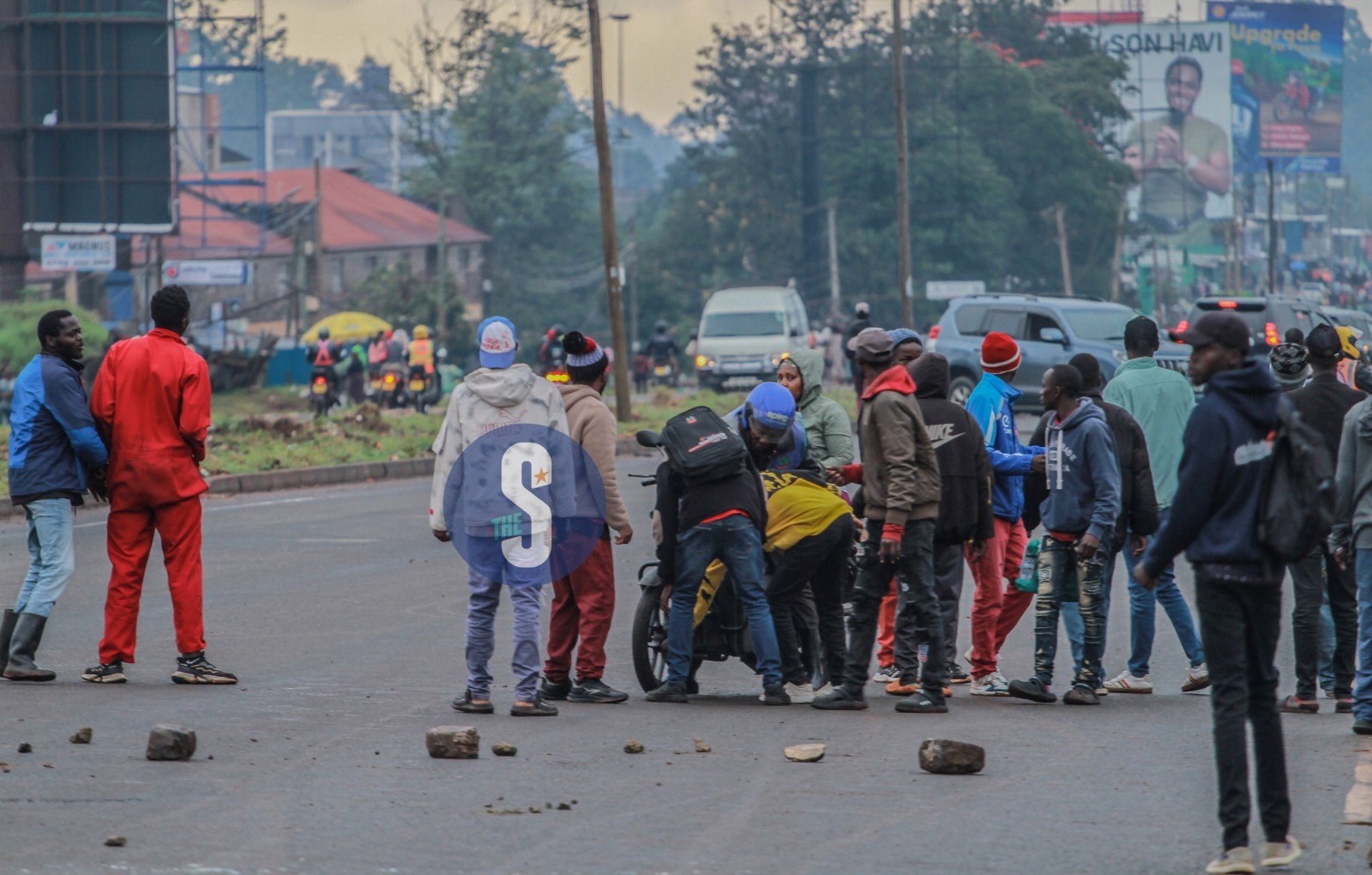
 Protesters mill around a boda boda operator on Waiyaki Way amid paralysed public transport following a matatu strike over high fuel prices, May 18, 2026 /ENOS TECHE
Kenyans are tired. Tired of waking up every month to yet another increase in fuel prices. Tired of watching the cost of unga, transport, electricity and basic commodities skyrocket beyond reach.
Tired of being told to “tighten belts” when there is nothing left to tighten. Now, tragically, tired of burying fellow citizens whose only crime was demanding relief from the unbearable cost of living.
Fuel has become the lifeblood of modern economies. Once fuel prices go up, everything else follows. The price of food rises because transportation costs increase.
Matatus hike fares. Farmers pay more to transport produce. Small businesses spend more on generators and logistics. Manufacturers pass costs to consumers. In the end, it is the ordinary mwananchi- the mama mboga, boda boda rider, hawker, teacher, student and unemployed youth - who suffers most.
To be fair, high fuel prices are not unique to Kenya. The world has experienced turbulence caused by global conflicts, supply chain disruptions and unstable oil markets. Countries across Africa and beyond have all felt the pressure of rising energy costs.
However, responsible governments do not simply watch helplessly as citizens drown under economic hardship. They intervene. They cushion their people. They subsidise fuel and essential commodities to reduce the burden on citizens.That is exactly what many neighbouring countries are doing.
A few years back, during periods of global fuel instability, the government of President Uhuru Kenyatta introduced fuel subsidies to shield Kenyans from the worst effects of rising prices. While not perfect, those interventions recognised a simple truth that government exists first and foremost to protect citizens from unbearable hardship.
Unfortunately, the current administration appears completely detached from the pain of ordinary Kenyans. Instead of cushioning citizens, it has embraced policies that continue to punish them.
Taxes on fuel remain painfully high. Subsidies have largely disappeared. Excuses have become more common than solutions. The result is that fuel prices in Kenya are now significantly higher than in several neighbouring countries despite Kenya positioning itself as the economic hub of the region.
What makes the situation even more painful is the arrogance and insensitivity with which the suffering of Kenyans is often treated.
Citizens are repeatedly lectured about sacrifice while leaders continue to enjoy excessive privileges, luxurious convoys and wasteful government expenditure. There is a dangerous disconnect between those in power and the realities faced by ordinary citizens.
Then, when Kenyans finally decide to speak out, they are met not with empathy, dialogue or solutions but with brute force.This week, thousands of Kenyans took to the streets to protest soaring fuel prices and the unbearable cost of living.
They were exercising rights guaranteed under Article 37, which gives every citizen the right to assemble, demonstrate, picket and present petitions peacefully and unarmed. However, instead of protecting protesters and listening to their grievances, police officers unleashed violence on them.
According to VOCAL Africa, at least 12 people were killed by police during the protests in various parts of the country, including Nairobi, Kiambu county, Nakuru county and parts of Western. Many others were injured, brutalised or arbitrarily arrested.
The images from the protests are heartbreaking. Young men lying lifeless on the streets. Mothers wailing beside bodies. Blood stains on pavements. Clouds of tear gas engulfing civilians. Police officers firing recklessly at citizens whose demands centred on one thing - survival.
The conduct of the police once again exposed a deeply troubling culture of excessive force, impunity and disregard for human life. Trigger-happy and bloodthirsty officers extinguished lives mercilessly as if Kenyan citizens were enemies in a war zone rather than people protected by the constitution.One must ask: how did we reach a point where demanding affordable fuel can cost one their life?
The role of police in a democracy is not to silence dissent through bullets. Their duty is to facilitate peaceful protests while ensuring safety and order. Yet increasingly in Kenya, police seem to operate as defenders of political power instead of defenders of citizens’ rights.
This approach is dangerous.History has repeatedly shown that suppressing public anger through violence does not solve economic crises. Bullets cannot lower fuel prices.
Tear gas cannot feed hungry families. Killings cannot silence genuine suffering. If anything, state brutality only deepens public frustration and widens the gap between government and citizens.
The current crisis demands urgent and honest action.The government must immediately review fuel taxation and reintroduce meaningful subsidies to cushion Kenyans from the soaring prices.
Wasteful public expenditure must be reduced so that resources can be redirected toward easing the burden on ordinary citizens. Leaders must abandon arrogance and begin genuinely listening to the people.
Equally important, there must be accountability for police violence witnessed during the protests. Every officer involved in unlawful killings and excessive force must be investigated independently and prosecuted where culpable. The lives lost cannot simply become another statistic in Kenya’s long history of state violence.
Today, Kenyans are trapped in a painful reality. They are struggling to survive under soaring fuel prices and perhaps the highest cost of living the country has ever witnessed.
Yet beyond the economic suffering, families must now also mourn loved ones killed by the very police officers who swore to protect them.This is not sustainable.
A nation cannot prosper when its people are hungry, hopeless and living in fear of both poverty and state violence. Kenya urgently needs a way out of the current situation - one rooted in empathy, justice, economic relief and respect for constitutional freedoms.Until then, the cries from the streets will only grow louder.
The writer is CEO, Vocal Africa