For decades, the question of land ownership in Mombasa and across the Coast region has remained one of the most painful and unresolved historical injustices affecting our people.
Generations of families have lived, raised children, built communities and contributed to the economy while remaining merely tenants on the very land they have occupied for decades.
This reality has denied thousands of citizens dignity, security and the opportunity to build wealth through land ownership.
From the moment I assumed office as governor of Mombasa, I made a deliberate commitment that the county government would not remain a passive observer to this injustice.
We chose to confront it directly, not through populist slogans or empty political rhetoric, but through practical, lawful and sustainable solutions capable of transforming lives permanently.
It is this conviction that informed our advocacy for a willing-seller-willing-buyer framework as a long-term solution to the squatter challenge. Our position has always been clear: sustainable resolution of historical land injustices must be grounded in legality, fairness and mutual respect between landowners and occupants.
Conflict-driven approaches may generate headlines, but they rarely deliver durable outcomes. What our people need are solutions that produce title deeds, security of tenure and economic empowerment.
Guided by this belief, the Mombasa county initiated the proposal for the establishment of the “Ardhi Fund” through legislation before the county assembly.
The objective of this initiative was straightforward but transformative. The county government would serve as an independent arbiter and transaction guarantor to facilitate the structured purchase of occupied land by squatters from willing landowners.
Under this model, land occupants would not be expected to raise prohibitive lump-sum payments beyond their financial ability.Instead, families would acquire ownership through manageable long-term repayment arrangements spread over an extended tenure.
This would make land ownership feasible for ordinary wananchi who have historically remained locked out of formal ownership structures despite occupying the land for generations.
The importance of this approach cannot be overstated.
Land ownership is not merely about possession of property documents. It is about dignity. It is about economic inclusion. It is about allowing families to invest confidently in their homes and businesses without fear of displacement.
It is about unlocking access to credit, improving urban planning, stimulating investment and strengthening social stability within our communities.
When citizens possess secure tenure, entire communities are transformed. Informal settlements evolve into organised neighborhoods. Families invest in better housing. Businesses grow with confidence. Young people inherit not uncertainty, but opportunity.
This is why I warmly welcome the recent reaffirmation by the President through the allocation of national government resources in the budget to support a similar land acquisition and settlement framework targeting the Coast region.
This development is both significant and historic.
For many years, discussions around historical land injustices have remained trapped within political speeches and campaign promises. What we are now witnessing is the beginning of actual institutional commitment backed by public financing and policy direction.
The allocation of resources signals seriousness of purpose and demonstrates recognition at the national level that the land question at the Coast requires structured intervention.
More importantly, this development validates the direction we have consistently advocated as the Mombasa county.
The principle that government can facilitate negotiated land acquisition in order to secure dignity for long-term occupants is no longer theoretical. It is becoming national policy.
This is revolutionary because it shifts the conversation from endless disputes toward practical resolution mechanisms capable of delivering ownership and stability.
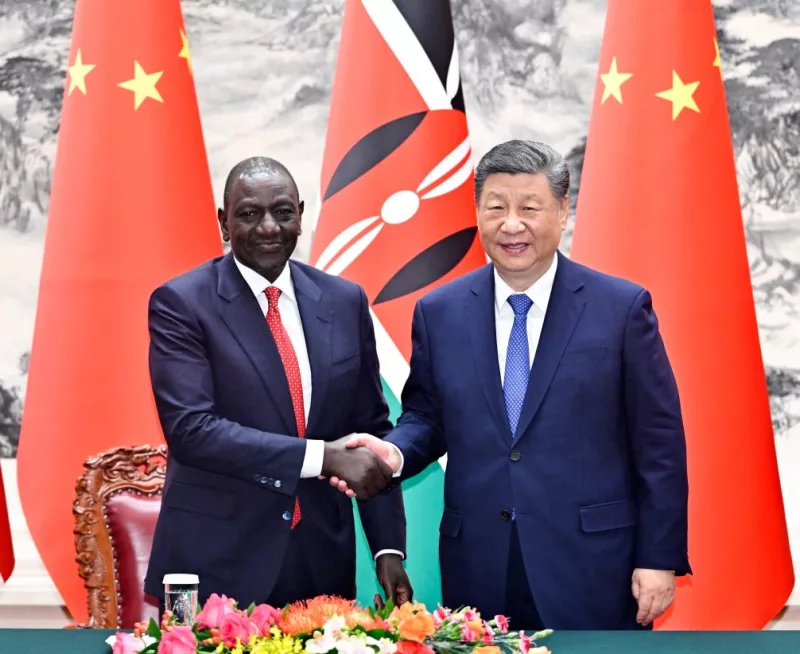
It also demonstrates an important truth that often gets lost within our national discourse: cooperation between the two levels of government can change lives.
The constitution envisioned a system whereby county governments and the national government complement one another in addressing the challenges facing citizens. When both levels of government align around a shared vision, transformative progress becomes possible.
The Mombasa county has consistently maintained that solving historical land injustices requires partnership. Counties understand the local realities, community dynamics and settlement patterns. The national government possesses broader fiscal capacity and legislative reach. Together, these strengths can produce solutions that neither level of government could achieve independently.
The ongoing efforts around Kwa Bullo, Kadzandani A, Kadzandani B and other settlement schemes demonstrate the power of this cooperation. Thousands of families who have lived in uncertainty for decades are now seeing a realistic pathway toward ownership and security. This is not simply an administrative process; it is the restoration of dignity to communities that have waited generations for justice.
At the same time, we must appreciate that resolving historical land injustices is not an overnight exercise. The complexities surrounding ownership records, litigation, valuation, financing, and settlement structures require patience, transparency, and lawful processes. However, what matters most is that the country is finally moving decisively in the right direction.
The Coast region has for too long carried the painful burden of landlessness despite its immense contribution to the national economy. Entire generations grew up believing that secure ownership would forever remain beyond their reach. Today, there is renewed hope that this cycle can finally be broken.
As leaders, our responsibility is not merely to manage present circumstances but also create systems that permanently improve the lives of future generations. The pursuit of land justice is therefore not about politics; it is about nation-building. It is about ensuring that every Kenyan, regardless of social or economic background, has the opportunity to enjoy the security and dignity that comes with ownership.
I remain firmly committed to working collaboratively with the national government, local communities, landowners, and all relevant stakeholders to advance this agenda responsibly and sustainably.
This is a positive step in the right direction.
It is proof that visionary policy, political goodwill, and institutional cooperation can begin to solve even the most deeply rooted historical injustices. And most importantly, it gives thousands of families across Mombasa and the Coast renewed belief that the dream of owning the land they call home is finally within reach.
The writer is the Mombasa governor