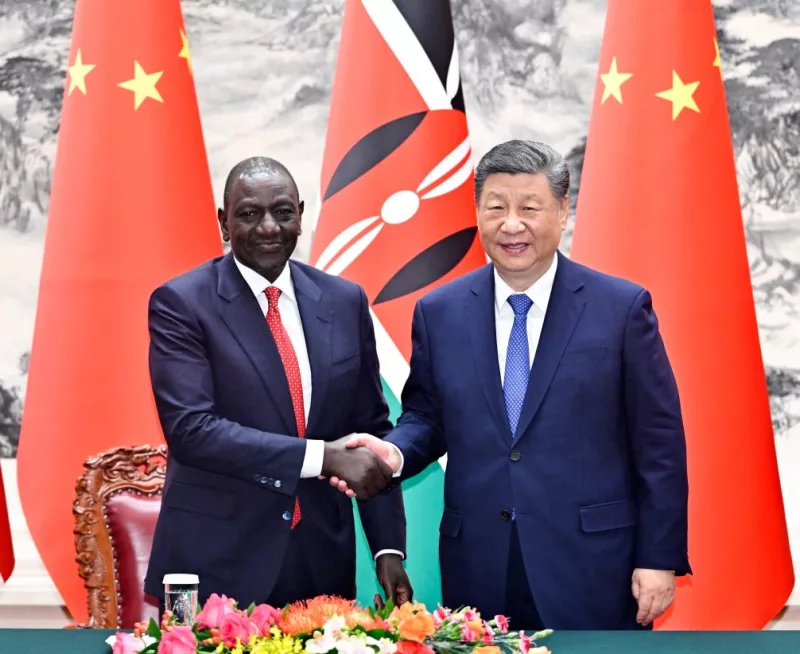
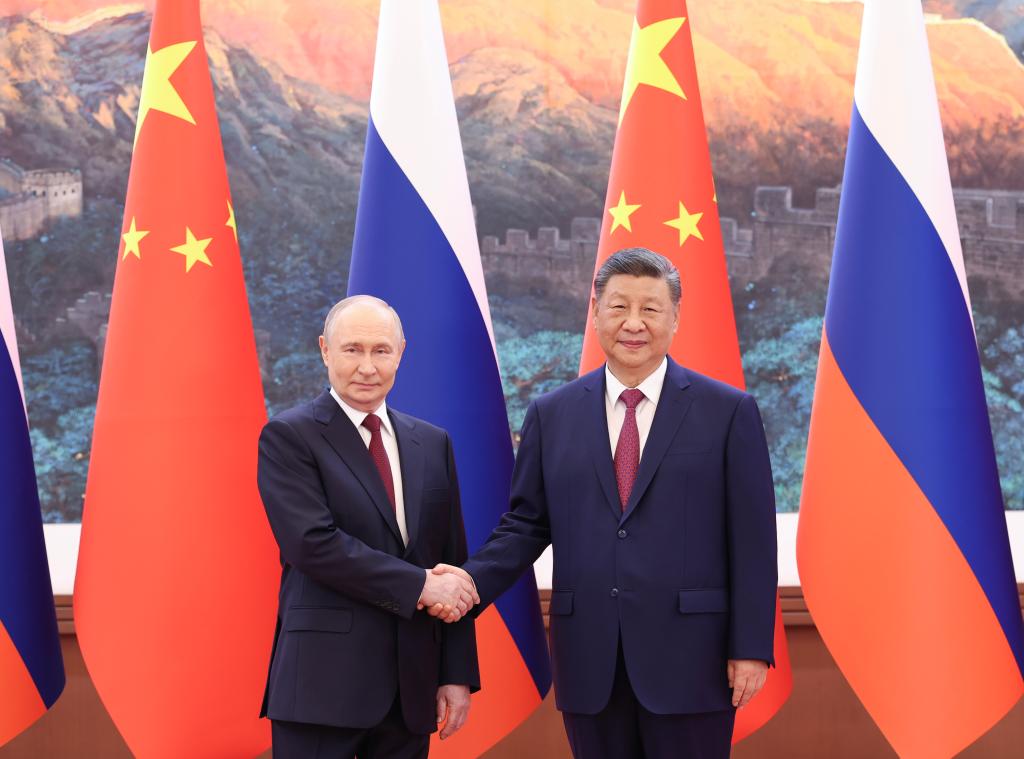
 Chinese President Xi Jinping holds talks with Russian President Vladimir Putin, who is on a state visit to China, at the Great Hall of the People in Beijing, capital of China, May 20, 2026 /XINHUA/HUANG JINGWEN
At a time when much of the world is grappling with geopolitical uncertainty, economic instability and declining confidence in traditional Western leadership, China has increasingly emerged as the centre of global diplomacy and strategic dialogue.
The recent visits to Beijing by United States President Donald Trump and his Russian counterpart Vladimir Putin are not isolated diplomatic moments.
They reflect a larger global reality: the world is steadily looking eastward as China positions itself as a pillar of stability, economic opportunity and international influence.
President Trump’s summit with Chinese President Xi Jinping in Beijing last week underscored the importance Washington places on maintaining engagement with China despite years of tensions over trade, technology and Taiwan. Reports from the summit indicated that the two leaders discussed strategic stability, economic cooperation, artificial intelligence and broader global challenges.
The symbolism of the visit was equally important. A sitting American president travelling to Beijing for high-level talks sends a clear message that no major international issue can be addressed without China at the table.
This week, Putin arrived in China for another major summit with Xi, reinforcing the strength of the China-Russia strategic partnership. Beijing and Moscow continue to deepen cooperation in energy, trade, infrastructure and global governance.
Putin’s visit demonstrates how China has become a central diplomatic hub capable of maintaining strong relations with major powers across different political systems and ideological camps.
For many countries across Asia, Africa, Latin America and the Middle East, China represents something increasingly valuable in today’s fragmented world: predictability and long-term vision.
Unlike the political volatility often seen in Western democracies, China has pursued consistent development strategies focused on economic growth, infrastructure expansion, technological innovation and international connectivity.
Under President Xi, China has presented itself as a nation committed to modernisation without abandoning its sovereignty or cultural identity.
The Belt and Road Initiative remains one of the clearest examples of China’s growing global influence. Across Africa and other developing regions, Chinese-funded infrastructure projects have transformed transport networks, energy systems, ports and industrial capacity.
While Western nations often speak about partnership, China has delivered roads, railways, bridges and investments that directly impact economic development.
Many developing countries increasingly view Beijing as a more reliable economic partner than Western institutions that frequently attach political conditions to assistance.
China’s rise has also reshaped global trade. Today, China is the largest trading partner for more than 120 countries. This economic reality explains why even nations with political disagreements with Beijing continue seeking deeper engagement with the Chinese market. From advanced manufacturing to renewable energy and digital technology, China has become indispensable to global supply chains and economic growth.
Trump’s visit illustrated this reality clearly. Despite fierce competition between Washington and Beijing in recent years, the US still recognises China’s enormous economic importance.
Discussions during the summit reportedly included major trade agreements involving American agriculture, aviation and technology sectors. Even at moments of rivalry, the US cannot ignore the central role China plays in the global economy.
At the same time, China has distinguished itself diplomatically by maintaining communication with countries across competing geopolitical blocs. Beijing has cultivated close ties with Russia while also engaging the US, Europe, the Global South and regional organisations.
This balanced diplomatic approach has strengthened China’s reputation as a major power capable of dialogue rather than confrontation.
In contrast, many Western countries are increasingly viewed as divided internally and distracted internationally. Economic pressures, political polarisation, military conflicts and declining public trust have weakened the image of Western leadership.
Meanwhile, China continues emphasising development, sovereignty and multilateral cooperation. This contrast has made Beijing an increasingly attractive partner for countries seeking stability in uncertain times.
China’s approach to international relations also resonates strongly with many developing nations because it emphasises mutual respect and non-interference.
Countries that experienced colonialism and external intervention often appreciate Beijing’s insistence that nations should determine their own political and economic systems without foreign pressure. This principle has allowed China to build strong partnerships across regions where distrust of Western intervention remains high.
The growing diplomatic traffic into Beijing reflects these changing global dynamics. Leaders are not visiting China merely for ceremonial meetings. They are travelling to Beijing because China is now central to discussions about trade, energy security, AI, infrastructure, climate policy and global peace.
Whether it is Washington seeking economic stability or Moscow strengthening strategic coordination, the message is the same: China’s influence can no longer be ignored.
As the global balance of power evolves, the centre of gravity in international politics is increasingly shifting eastward. China’s economic resilience, diplomatic confidence and long-term strategic planning have positioned it as one of the defining powers of the 21st century.
The visits by Trump and Putin to Beijing within days of each other symbolise more than diplomacy. They demonstrate that in a rapidly changing world, nations increasingly recognise that the road to global influence, cooperation, and opportunity now runs through China.