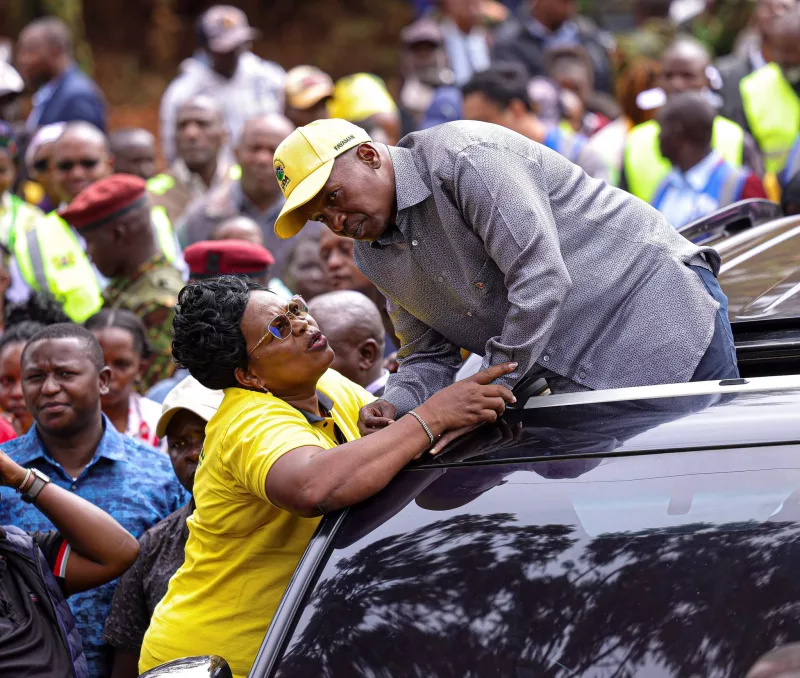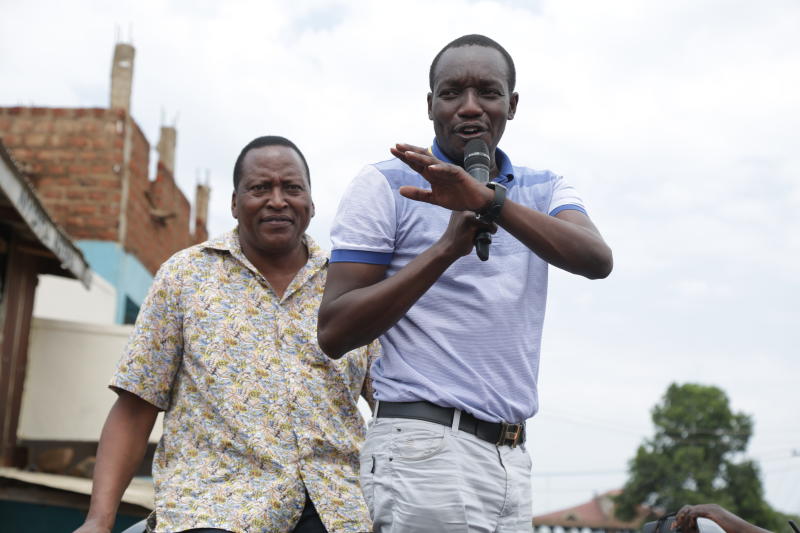
It took the passing of a great matriarch and pillar, Mama Teresia Nyaboke Omoke, to not just bring together her son, Senator Richard Onyonka, and Governor Simba Arati, but to accomplish something far larger than the moment itself.
When the books are written, it will be said that the rapprochement between these two leaders removed unnecessary fractures, and now keeps the Abagusii community focused on rallying behind their own being elected president come 2027.
The political history between Onyonka and Arati is short but intense, defined first by strategic partnership and later by a dramatic falling‑out. In the run‑up to the 2022 general election, the two formed a formidable “dream team” under the ODM banner. Onyonka played the role of kingmaker, lending political weight and regional credibility to Arati’s gubernatorial bid. They campaigned shoulder‑to‑shoulder and the results spoke for themselves: both men won their seats decisively.
However, by December 2022, the partnership had collapsed in spectacular fashion. For the sake of the newfound peace, there is no need to revisit the details. It is enough to say that the fallout was bitter, public and deeply personal. The hostility seemed permanent, the kind of political enmity that becomes generational.
And yet, Mama Teresia has done in death what seemed impossible in life. May she rest in peace.
Her legacy is already immense—rooted in the values she instilled in her children and the community she nurtured. But the fact that her passing brought together her son and a man who, not long ago, appeared to be an enemy for life is a feat rarely seen in that part of the country, or anywhere else. It is a reminder that even in the rough terrain of Kenyan politics, there are moments when humanity overrides hostility.
This reconciliation is not just a local story. It carries lessons for the rest of the country—lessons about leadership, community and the power of unity.
Political rivalries in Kenya often feel permanent, but the reconciliation between Onyonka and Arati shows that even the most intense disagreements do not have to harden into lifelong divisions.
The Abagusii community, long perceived as politically fragmented, now offers a powerful example of what becomes possible when leaders place unity above ego. This moment underscores that collective aspirations carry far more weight than personal pride, and that unity is not merely a slogan but a strategic resource.
The fact that this reconciliation unfolded during a moment of mourning highlights a deeper truth about Kenyan society: cultural rites still possess the power to reset political relationships. In a nation where politics can be polarising, shared cultural identity remains one of the strongest stabilising forces.
This episode also illustrates that leadership maturity is not measured by the ability to mobilise crowds, but by the willingness to mend fences. But that should not be confused with the impossibility of avoiding the inevitable.
Finally, the renewed unity within the Abagusii community reflects a broader national principle: no group can project influence on the national stage while internally divided. Political strength begins with cohesion at home. The rest of the country can see in this moment a reminder that local unity is the foundation upon which national ambitions are built.
The reconciliation between Onyonka and Arati is more than a personal truce; it is a political moment with national resonance. It took the passing of a respected matriarch to bring two estranged leaders back into the same orbit, but the symbolism of that moment will outlive the funeral.
In a political culture where grudges often harden into permanent fractures, their decision to stand together again offers a rare glimpse of what leadership can look like when guided by humility, cultural grounding and responsibility to the community.
If this spirit of unity can take root beyond Kisii—if leaders across the country can learn to put aside personal differences for the greater good—then Mama Teresia’s legacy will extend far beyond her family. It will stand as a testament to the power of reconciliation in a nation that needs it now more than ever.
Again, that should not be confused with the impossibility of avoiding the inevitable.