For the first time since Independence, Madaraka Day celebrations will not be held in Kenya’s traditional power centres.
The 63rd fete will take place on June 1 in Wajir county with headquarters in Wajir, the country’s third-oldest town after Mombasa and Malindi, and once the heart of the former Northern Frontier District.
This choice of venue is not a routine rotation of venues. It is a deliberate presidential act that rewrites decades of exclusion and signals a fundamental shift in how the state treats its most marginalised periphery.
To understand the weight of this moment, one must go back to 1965 and Sessional Paper No 10, a policy framework that effectively cast the NFD as a security buffer rather than an integral part of the nation.
For generations, communities in what is now the Northeastern Province (Wajir) lived as near‑outsiders on their own ancestral lands, constrained by emergency regulations, economic suppression, and a governance architecture designed to manage rather than develop.
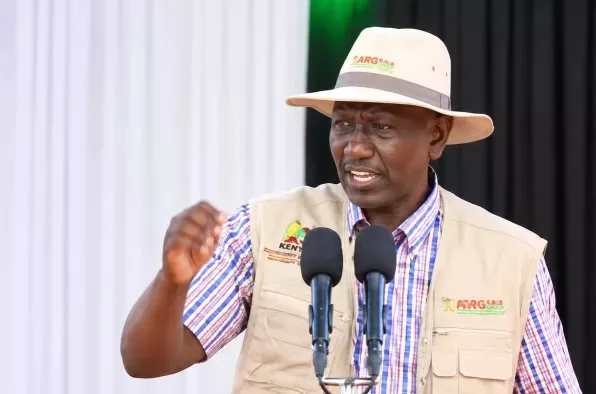
That era, under President William Ruto’s watch, is being reversed in real time. Unlike past leaders who offered symbolic gestures followed by neglect, Ruto has visited the region frequently, engaged without condescension, and refused to treat its people as supplicants.
His consistency has earned him recognition, including a place in the Guinness World Records, but more importantly, it has laid the groundwork for a genuine regional renaissance.
That renaissance is anchored in the President’s Bottom‑Up Economic Transformation Agenda (BETA), a pro‑poor policy framework deliberately modelled on the kind of structural uplift that elevated millions out of poverty elsewhere. Combined with Kenya’s political evolution —from Daniel Moi’s firmness to Mwai Kibaki’s reforms, Raila’s dialogue and Uhuru’s legacy — Ruto’s formula has created space for the NFD to finally emerge from political darkness.
The 63rd Madaraka Day is already being hailed as the “Third Independence” for the region: first political independence, then economic inclusion through devolution and now full national recognition.
To cement this, the national government, together with the Wajir county, will soon unveil the first Historical State Lodge in Wajir. From that seat, the presidency will exercise full constitutional authority over a territory once dismissed as a no‑go zone with only a token state presence.
This top‑down political will is being matched by transformative infrastructure. The Isiolo-Wajir-Mandera Corridor, a long‑awaited arterial road, is under active construction, poised to unlock regional trade and mobility.
Wajir International Airport is being expanded to turn the county into a logistics hub, complemented by renewed cross‑border trade with Somalia. A modern 10,000‑capacity Talanta Stadium has been completed in record time, symbolising both readiness and ambition.
And for the long term, Wajir and Mandera will finally be connected to the national grid via a transmission line from Ethiopia, ending half a century of energy isolation.
Yet national policy alone does not deliver transformation. It requires capable, honest execution on the ground. In Wajir, that role is embodied by Governor Ahmed Abdullahi.
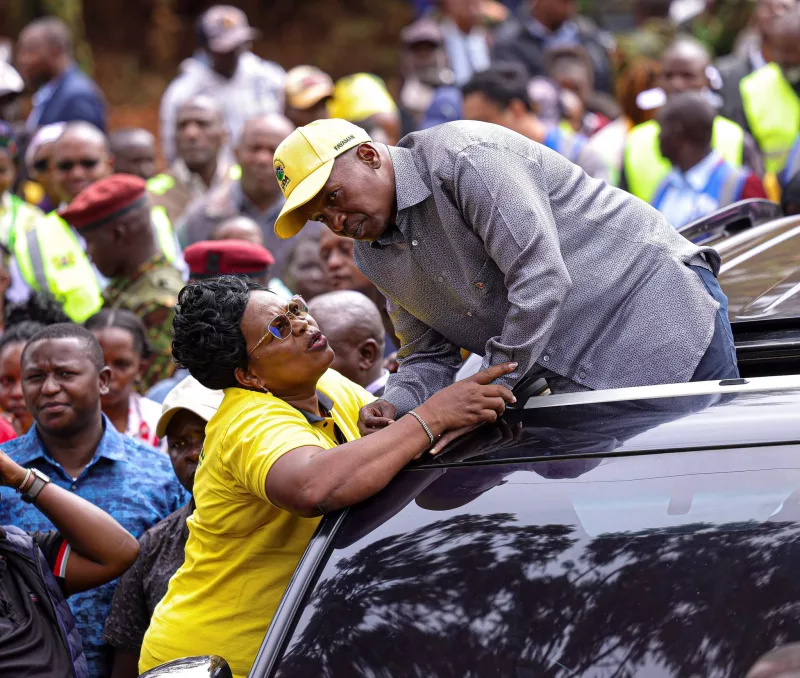
Now serving as chairman of the Council of Governors — the first leader from the NFD to hold that position — Abdullahi represents a new generation of devolved leadership: pragmatic, results‑driven and institution‑focused. Since his return to office in 2022 for a second term, development has accelerated dramatically.
The county assembly complex, initiated in his first term and later stalled, has been completed and will be officially commissioned during Madaraka Day, underscoring continuity and resilience.
The Wajir cancer centre, a historic first for the region, brings specialised healthcare closer to the people, eliminating the burden of long‑distance medical travel. And for the first time, purpose‑built official residences for county leadership have been constructed, restoring dignity to governance structures long denied such basic infrastructure.
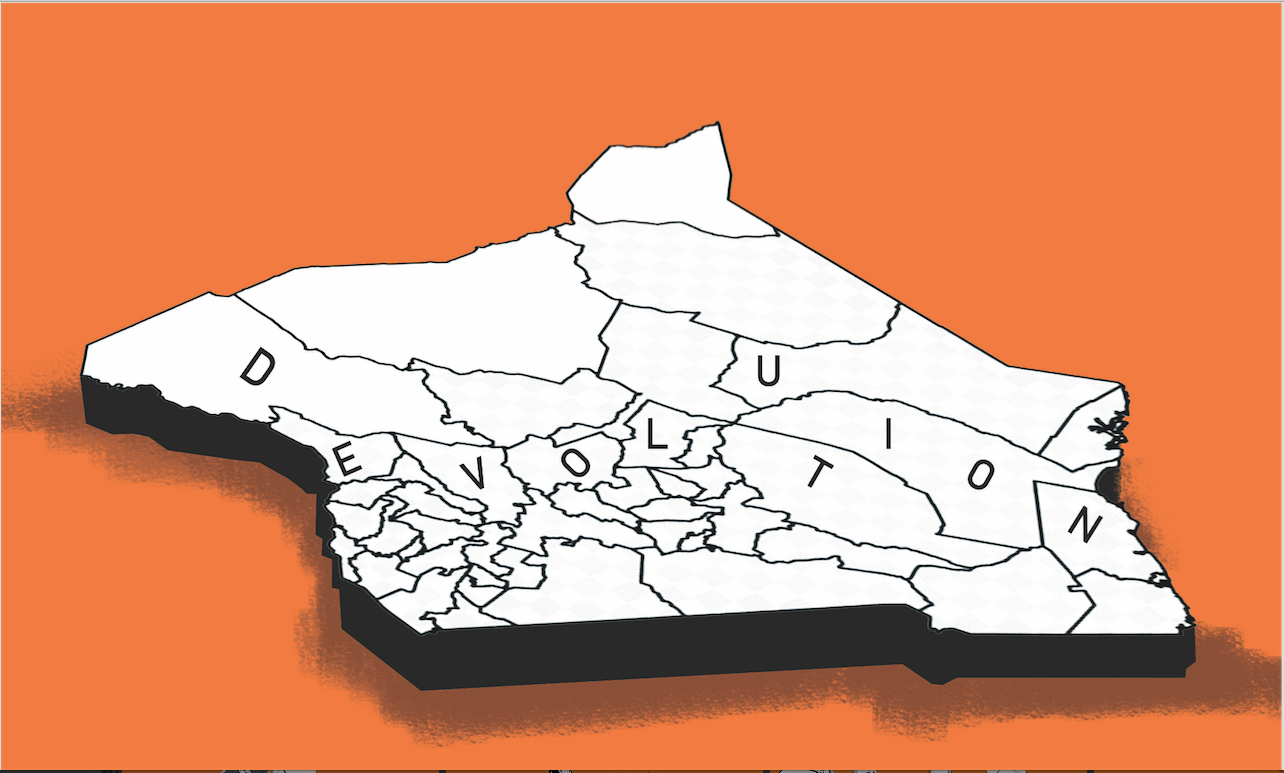
President Ruto’s choice of Wajir was therefore a strategic signal to all 47 counties: devolution works when led by qualified, politically immaculate professionals. Together, the President and Governor Abdullahi have issued a direct challenge to other “ailing” counties: stop flying abroad to waste resources on benchmarking trips.
Come to Wajir. See a county that once had only a district commissioner’s office now boasting a state‑of‑the‑art county headquarters, a level 5 hospital, a cancer centre, parliamentary buildings and leadership residences.
This is peer‑to‑peer learning, free of charge, demonstrating that world‑class development is not a monopoly of Nairobi or New York. Transformation need not be imported; it can be built at home.
This alignment is bolstered by the region’s political heavyweights, notably Health Cabinet Secretary Adan Duale. As the ‘Third Man’ in the Kenya Kwanza politburo and the unapologetic voice who declared, “We are not guests in our own country,” Duale has permanently shifted the narrative.
The 63rd Madaraka Day is more than a ceremony; it is a political declaration. It is the sound of a buffer zone turning into a beacon of hope. “Come all and see all,” Governor Abdullahisays.
Welcome to Wajir. Welcome to the new frontier —where a President ended marginalisation with passion, and a governor with a plan and the pain to leave a legacy.
The writer is senior presidential adviser, Regional Affairs & North and North Eastern Development Initiative Directorate