In today’s digital age, we are witnessing a shift in how we share and receive information. While we have more data at our fingertips than ever before, it has become increasingly difficult for the public to distinguish verified truth from sophisticated digital falsehoods.
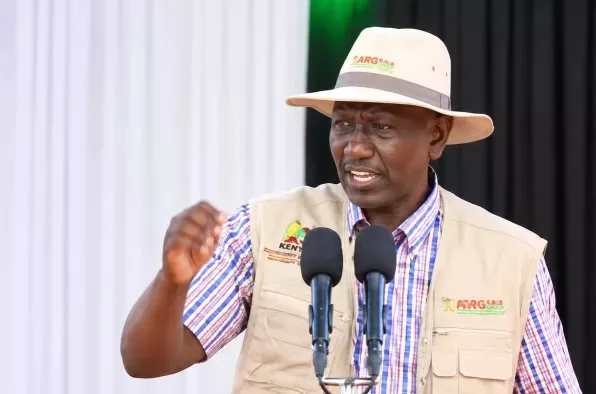
This challenge was underscored during President William Ruto’s official visit to Rome in April. Speaking to the Kenyan diaspora, the President cautioned against relying on social media as a primary source of news, noting that digital propaganda is systematically used to distort Kenya’s development progress. He asserted that a significant share of online narratives are driven by “fake news” and deliberate disinformation.
He also warned that distorted stories are used as weaponised tools for political mobilisation — designed to engineer public skepticism. “If you go to social media today,” he remarked, “you’ll think there is nothing good happening in Kenya.”
By framing social media as a space for intentional manipulation, he highlighted how digital platforms can generate a negative narrative that contradicts the reality of the country’s economic transformation. President Ruto urged the diaspora to prioritise verified information over ungrounded stories, reassuring them that the government’s economic agenda remains on course despite organised digital skepticism.
This warning serves as a reminder: in an era of viral falsehoods, information discernment is a pillar of national security.
The President’s caution reflects a broader strategic reality highlighted during the Connected Africa Summit 2026. Addressing delegates in Nairobi, I emphasised that the weaponisation of information is no longer a mere technical glitch — it has become a fundamental threat to our social fabric. When technology is used to create realistic but fake videos — deepfakes — it stops being just a communications issue and becomes a direct challenge to national security.
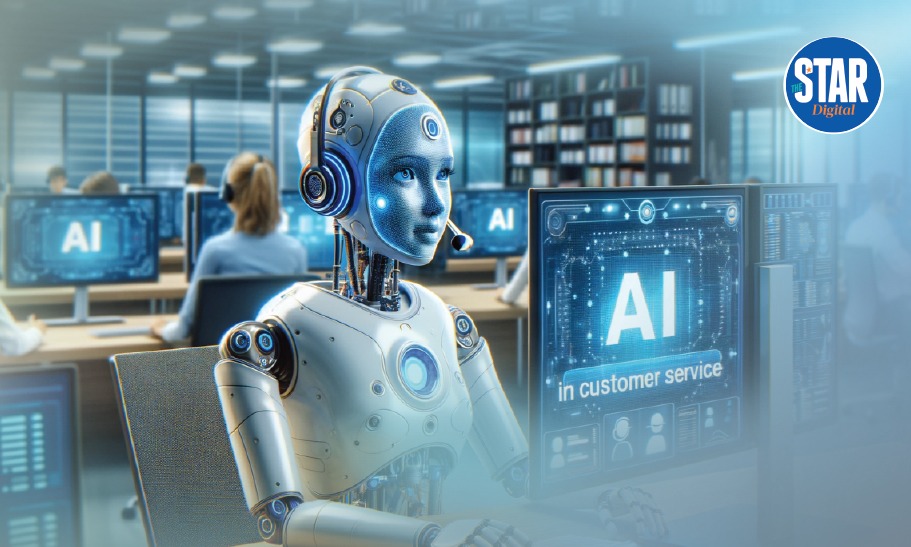
We are entering an era where AI weaponisation extends beyond the physical battlefield to include “information-oratory” bots, automated cyberattacksand generative models designed to undermine public confidence and destabilise financial markets.
This shift signals the beginning of what Bill Gates described in his recent reflections on ‘The Road Ahead’: the transition toward an “Artificial Society”. Gates argues that “of all the things humans have ever created, AI will change society the most,” noting that while it offers enormous opportunities, it also creates a world where the stakes for truth are higher than ever before.
The challenge of distinguishing truth from machine-generated fiction is already measurable. According to the McKinsey ‘2025-26 AI Trust Maturity’ reports, a staggering 63 per cent of users are unable to distinguish between human-generated and AI-generated content. This “trust gap” is where digital munitions become most effective.
Winston Churchill’s 1943 observation that “the empires of the future are the empires of the mind” predicted a shift from territorial dominance to power built on knowledge, innovation and intellectual capital. In the 21st century, global influence is increasingly determined by technological advancement, AI and cultural soft power — not only by traditional military conquest.
This issue is particularly relevant for Kenya. Recent research indicates that more than 72 per cent of our citizens are concerned about the spread of unverified news. Our vulnerability is partly shaped by the amount of time people spend online. With 18.4 million active social media users, Kenyans spend an average of four hours a day online — double the global average.
When people feel uncertain about the reliability of information they encounter, digital platforms can unfortunately become frontlines for cognitive warfare, where confusion is engineered to weaken public resolve. Our goal as a government is to close this gap by providing accurate, timely and credible information — while strengthening our defences against these digital threats.
One of the most complex parts of this new technology is what we call a “linguistic blind spot”. Many global AI systems are built to understand English, meaning they can miss nuances in local languages such as Swahili and other indigenous tongues.
As a result, harmful messages shared in local languages may be detected more slowly than those expressed in English.
This is why the government supports digital sovereignty — the idea that we must have the tools, capacity, and expertise to protect our digital borders and our people in our own languages.
To address these challenges, we are shifting from being only consumers of foreign technology to becoming leaders in building it. Our National Artificial Intelligence Strategy (2025-30) focuses on developing systems that understand the Kenyan context, respect our values, and safeguard our digital sovereignty.
While we use AI to improve healthcare and agriculture, we are also developing a National Cyber-Defense Framework that applies AI to detect and neutralise automated threats in real time — protecting our borders and our people in our own languages.
We are also investing heavily in national infrastructure, including the digital super- highway — an initiative designed to connect every part of Kenya through laying 100,000km of fibre optic cable.
This expansive network is supported by the establishment of 1,450 Jitume Hubs in every ward, enabling our youth to gain advanced digital skills. We are also installing 25,000 free public WiFi hotspots so that every Kenyan can participate in the digital economy safely.
The Jitume Hubs are not limited to basic digital literacy. They are designed to equip young people with advanced capabilities in cybersecurity and AI ethics — building a generation of digital defenders capable of protecting our information ecosystem.
The question I posed at the summit — “Regulate, Remove, or Rebuild?” — is about more than enforcement. It is about building a digital environment that is secure, transparent and worthy of public trust. By preparing our youth to be creators of technology and by ensuring our laws protect our citizens, we can ensure that the Age of AI becomes an era of opportunity for Kenya.
Information is the lifeblood of our democracy, and its weaponisation is a challenge we cannot afford to lose. As we navigate this “Artificial Society”, our mission is clear: strengthen our defences, close the trust gap, and protect the integrity of our national conversation.
Kenya’s path will not be defined by the shadows of digital propaganda, but by the light of innovation and the resilience of its people. We are building a digital future that is secure by design, transparent by nature, and Kenyan at heart.
The empire of the future is here — and it is built on trust.
Africa is ready to lead this transition — ensuring that technology becomes a bridge to progress and a protector of truth.
The writer is the Principal Secretary for Broadcasting and Telecommunications in the Ministry of Information, Communications and the Digital Economy