Have you ever wondered to what extent Kenyans truly go deep into science and research and how that work quietly shapes society in ways we often do not see? The upcoming Science, Technology, Research and Innovation for Society Week 2026, taking place from May 18 to May 22 2026 at the Kenyatta International Convention Centre in Nairobi and supported by among other partners the European Union, may offer part of that answer.
Convened by the State Department for Science, Research and Innovation alongside national and global partners, the event is Kenya’s premier platform for showcasing scientific excellence, innovation and research that responds to real societal challenges such as rural development issues and small medium enterprises acceleration, among other issues.
But beyond conference halls, there is already real-world science happening every day, driven by science, technology and innovation (STI) champions inside Kenyan research institutions, innovation hubs, universities and field sites, where Kenyan scientists work with among other partners, European partners and communities to turn knowledge into impact and advance STI.
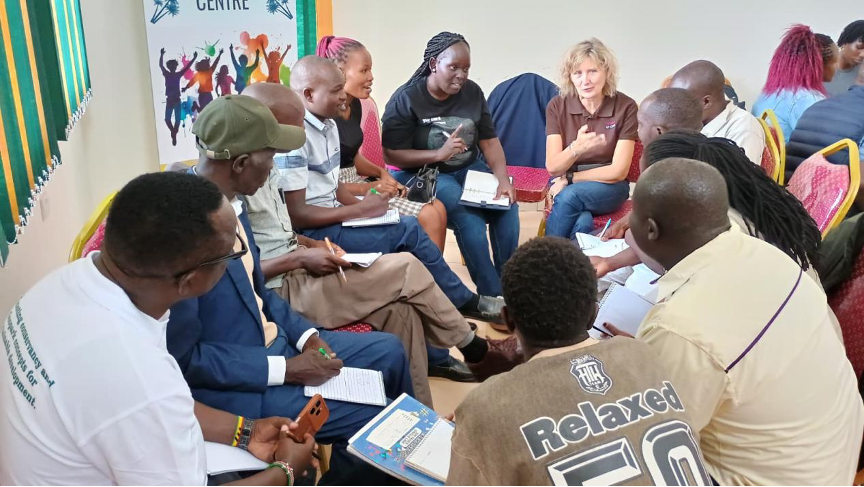
Kenya’s bottom-up economic transformation agenda places innovation, industrialisation and SME growth at the centre of national development, yet gaps persist between research, industry and policy-making. Through the Italian Ministry of Foreign Affairs and International Cooperation-funded African Innovation Leadership initiative, Dr George Wanjala, an STI champion of the Kenya Industrial Research and Development Institute (KIRDI) is addressing this challenge by strengthening Kenya’s innovation ecosystem. The project has introduced a platform linking universities, industry, government and civil society to improve trust, data sharing and collaboration. It has so far enabled co-design and co-creation of solutions and supports SMEs’ access to innovation.
Kenyan STI champions are also addressing rural challenges, such as where more than 80 per cent of households still depend on firewood and charcoal for cooking and smoke pollution to date remains a silent killer linked to an estimated 23,000 deaths in Kenya annually. Through the EU-funded Long-Term Europe Africa Partnership on Renewable Energy initiative, researchers are helping communities shift to cleaner and safer energy solutions. At the centre of this work is Anne Wambugu from Strathmore University, whose research is transforming how rural households access and use solar power. The project addresses unreliable solar systems and inefficient cooking technologies. Researchers through this project have developed hyper-efficient electric pressure cookers that cut power consumption by 40 per cent and created data-driven models to improve off-grid solar systems for rural communities.
“We are not just introducing technology, we are restoring confidence in clean energy solutions for everyday households,” Wambugu says. “When families can cook faster, safer and more affordably, the impact goes beyond energy to health, livelihoods and dignity.” To bring the innovation closer to communities, the project has also introduced Sunsafe, a smartphone application that helps informal technicians design reliable and compatible solar systems, thus expanding affordable and sustainable clean energy access across rural Kenya.
There is growing interest in Kenya’s niche research areas. Kenyan universities and research institutions are increasingly partnering with global institutions to develop locally-driven STEM solutions that respond to both national challenges and continental development priorities.
EU countries continue supporting many niche research areas. Archaeology is interestingly emerging as an innovative field, blending science, technology, digital mapping and artificial intelligence to uncover, preserve and reimagine humanity’s past for future generations, a feel of what one would experience in watching viking stories in real time through a virtual reality head set at a museum in Stockholm, Sweden a form of geoheritage conservation.
Geo-Kenya project is one of such, although not the exact Viking VR like experience, the project is advancing geoheritage conservation and sustainable development in Kenya through partnerships between the Spanish National Research Council, the Geological Survey of Kenya and the Geological Survey of Spain. Funded under the i-COOP programme, the initiative has developed a geoheritage inventory of 33 geological sites in Baringo County, laying the foundation for an aspiring UNESCO Global Geopark. The project has strengthened conservation, geoeducation and sustainable tourism by training geologists, county officials, teachers, local guides and communities.
Centres of Excellence in research institutions across Kenya are also at the heart of EU’s investment in STI. At Aga Khan University’s Centre of Excellence in Women and Child Health, East Africa, researchers are transforming fragmented health data into life-saving insights. The EU-funded BRIDGE Network Initiative under Global Health EDCTP3 connects African and European researchers to build harmonised, federated data systems supporting disease prediction and control. Since 2024, the project has strengthened five centres of excellence, supporting 10 PhD and four postdoctoral fellows. It has integrated electronic health records, national systems and disease registries while embedding a training-of-trainers model for sustainable, locally led solutions for infectious disease control.
Some projects are of interest for funding by EU countries because they touch on vulnerable issues, such as Kenya’s agriculture sector, which is highly vulnerable to climate shocks, droughts and food insecurity. In Kenya, smallholder dairy farmers supply more than 80 per cent of milk but face high feed costs, poor forage systems and weak research links. The Dairy Kenya–Ireland Project, led by Kenya Agricultural and Livestock Research Organisation in partnership with the Irish Agriculture and Food Development Authority and Greenfield International, supported by Irish Aid, is driving transformation in Nakuru and Nyandarua counties. By combining adaptive breeding, climate-resilient forage systems and institutional innovation, this sustainable programme is improving productivity, reducing costs and has strengthened resilience among roughly 1.8 million farmers.
Scientific projects for the future are also at the heart of EU funding, for the STI industries that have not yet fully arrived in Kenya. A good example of such is the Skills Initiative for Africa (Sifa) at Dedan Kimathi University of Technology. Sifa created the virtual mechatronics labs implemented by the African Union Development Agency with support from the EU and the German government through KfW, is strengthening technical and vocational education and training. Spearheaded by Prof Jean Bosco Byiringiro, the initiative at Dekut’s Siemens Mechatronics Certification Centre received a huge counterpart funding to deploy metaverse technologies, virtual reality and digital simulations for modern TVET training. The Virtual Mechatronics Labs, has to date trained over 180 engineers and technicians, reducing costs by up to 80 per cent and enabling safe, scalable access to complex industrial systems. It is also strengthening institutional capacity by enabling trainers to develop digital content for industry learning.
Individual European countries and the European Union have supported and continue to support many other projects across Kenya in diverse priority STI areas. They continue working through policy dialogue, research exchanges, workshops and institutional collaboration between Kenyan ministries, universities, and European scientific agences. This support aligns closely with Kenya’s Beta, which prioritises science, innovation, industrialisation and value-chain development as drivers of inclusive growth. As many of these projects continue delivering practical community impact, there is now growing need for more funders, researchers and institutions to replicate and scale similar initiatives across other parts of the country facing related challenges.
One would wonder why the EU supports these initiatives? It is perhaps because science and innovation are the key drivers of Kenya’s sustainable development and align closely with the African Union’s Agenda 2063, which envisions a transformed, integrated and prosperous Africa powered by knowledge, technology and innovation. These initiatives aim to improve livelihoods of current and future generations, more jobs, and a stronger EU–Kenya cooperation.
The Global Innovation Index, by WIPO, which measures national innovation capacity including research & development and patents, ranked Kenya 102nd out of 139 countries in 2025, thus potential for significant improvement in our innovation ecosystem. One way to improve Kenya’s ranking, Kenyan STI champions can actively seek out STI opportunities by the EU, pursue collaborations, and tap into available funding streams to scale locally driven innovations and expand their impact across communities.
Through grants, partnerships, technical training that has benefited many researchers, and international collaborations between Kenyan and EU researchers, the EU continues to position Kenya as an important STI partner in Africa, building on now 50 years of EU–Kenya relations and looking ahead to many more years of strengthened cooperation in science, technology, and innovation.