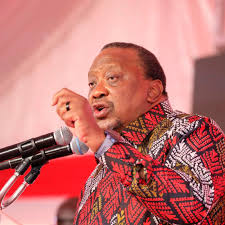
From the onset, let me reiterate that of the five men who have held the position of president in Kenya, Uhuru Kenyatta remains my favourite.
I still hold that in his shock move to back Raila Odinga in the presidential race in 2022, he broke with tradition and became the first senior public figure in the country to attempt to address the foundational issues that others have long been ignored.
These issues, in my view, revolve around national unity and ethnic relations, two areas that have been exploited by successive power wielders to run a nation of mistrust, poor governance and corruption, all of which tend to be manipulated to favour or not favour certain ethnic formations. Indeed, I submit that the failure of independent Kenya from 1963 was premised on the poor handling of the country’s ethnic relations.
I come from the school of thought now loosely known as “even dictators and killers can build roads and shiny projects”. Though development remains a central promise in Kenya’s electoral cycles, I am convinced that meaningful progress will remain elusive until leadership genuinely prioritises healing ethnic relations, narrowing the income gap, and realigning politics with the values set out in the Constitution’s preamble.
Make no mistake, I love development and shiny things too. But after living in this country for decades, one begins to actually see the real issues, often hidden, that stagnate the country.
And in my estimation, only President Kenyatta attempted to address the “original sin” of ethnic divisions, largely represented by the age-old Kikuyu-Luo rivalry, and which has remained the most exploited philosophy in Kenya’s politics. It must have taken courage and deep conviction to go back to his people and attempt to sell Raila to the mountain bloc.
Uhuru’s attempt to help the former Prime Minister take power may have failed in 2022, but in his retirement, he has become a regime punching bag, accused of funding and supporting the nascent Linda Mwananchi movement. Never mind the fact that the former president is the Jubilee Party leader, whose official 2027 presidential candidate is recognised as his former Interior CS, Fred Matiang’i.
At any rate, the Linda Mwananchi group has only really been around for barely three months. The huge political waves they cause across the country may make it seem like the firebrand movement has been here for ages.
There is really no evidence of Uhuru’s support for the Senator Edwin Sifuna-led movement. In any case, from their first rally in Busia in February, to the blockbuster entrance into Kisumu City late last month, there is yet to be seen a specific item of operation that would require big money support from the former president.
As things stand, all that the Linda Mwananchi team has needed can be summarised into a podium and fuel for vehicles transporting leaders and their aides to the venues. Hardly the sort of budget for Uhuru’s money.
My first instinct when I see and hear Kenya Kwanza leaders, like Senate Majority leader, Aaron Cheruiyot and Nandi Senator, Samson Cherargei, frothing in the mouth about the former president’s alleged support for Linda Mwananchi, is that they too know that it is not true, but they think they can hammer the point so much that Uhuru is forced to shelve such plans if he had any.
There is no law barring Uhuru, or anyone in this country, from using their money whichever way they please. If you ask me, now that the Linda Mwananchi faction of ODM appears to mirror the wishes of Raila more, the former President should feel free to splash money on the group and help prop the across the line in 2027. Indeed, he should go one further and line up both his party, Jubilee, and presidential candidate, Matiang’i, behind the group, for good measure.
I have a theory on why Uhuru presents such a problem to the Kenya Kwanza regime. Having just retired recently, the former head of state obviously still holds a lot of influence within the security and intelligence networks, not to mention the fact that his family owns tonnes of money.
In a long-drawn political campaign, the regime knows that he is a monumental asset to whichever team he supports. Interestingly, the regime seems to have no problem with Uhuru sponsoring his Jubilee but draws the line on his association with Linda Mwananchi.
This week, Cherargei revealed that he would bring a motion to the Senate seeking to stop Uhuru’s retirement benefits, given the latter’s dabbing in politics after his retirement.
The intimidation is obviously part of a scheme to ensure the former president sits out the 2027 election and doesn’t show his hand. But the same people who work so hard to block his involvement in 2027 are also the ones who have previously bragged about defeating his candidate (Raila), in 2022, when he (Uhuru) was an incumbent and had the power of state machinery behind him.
There is another problem for the Kenya Kwanza folks when it comes to Uhuru. Even though the ruling coalition has consistently painted impeached Deputy President Rigathi Gachagua in bad light and stigmatised any politician who associates with him, Uhuru basically presents a totally different prospect.
Where Gachagua can easily be caricatured as a tribal relic unacceptable to many parts of the country, Uhuru remains very popular in large swathes of the country, including in Luo Nyanza, where the regime appears to bank on an anti-Kikuyu sentiment to nip any coalition between the lake and the mountain in the bud.
Blaming predecessors in governance can be an appealing political strategy, but one which has very short-term benefits. The Kenya Kwanza regime did not start the blame game on Uhuru with the emergence of the Linda Mwananchi movement.
On many issues, including the burning matter of the public debt, regime apologists have consistently thrown in the name of the former president for blame, even though the current regime hasn’t done anything to vindicate itself from accusations that it is piling up debt even more than Uhuru did.
There is of course the element of shared responsibility too, with many current regime figures having served alongside the then DP William Ruto in Uhuru’s government and have a hand in the policy frameworks prevailing then.
It is easy to create a fall guy in the form of a former president. But in the ongoing political evolution, the government might soon realise that the growth of Linda Mwananchi is more informed by deep disillusionment across the country, with how the nation is being run, rather than by any associations with former presidents or politicians with deep pockets.
Whether President Ruto gets to serve two terms or just one will depend on whether he can convince his electors that he kept the promises he made and was responsive to the desires of the people. It has nothing to do with Uhuru.
However, and at least in the Mt Kenya region, I am certain that Ruto’s people must dread the spectacle of Uhuru returning to run the “I told you so” narrative, to a people who turned a deaf ear to his warnings in 2022, but who now openly say that they should have listened to him.
And this makes Uhuru a very lethal tool, should he opt to back an opposition candidate, especially a joint one. It is therefore understandable if his name makes regime politicians shake in their boots, because revenge time is nigh.