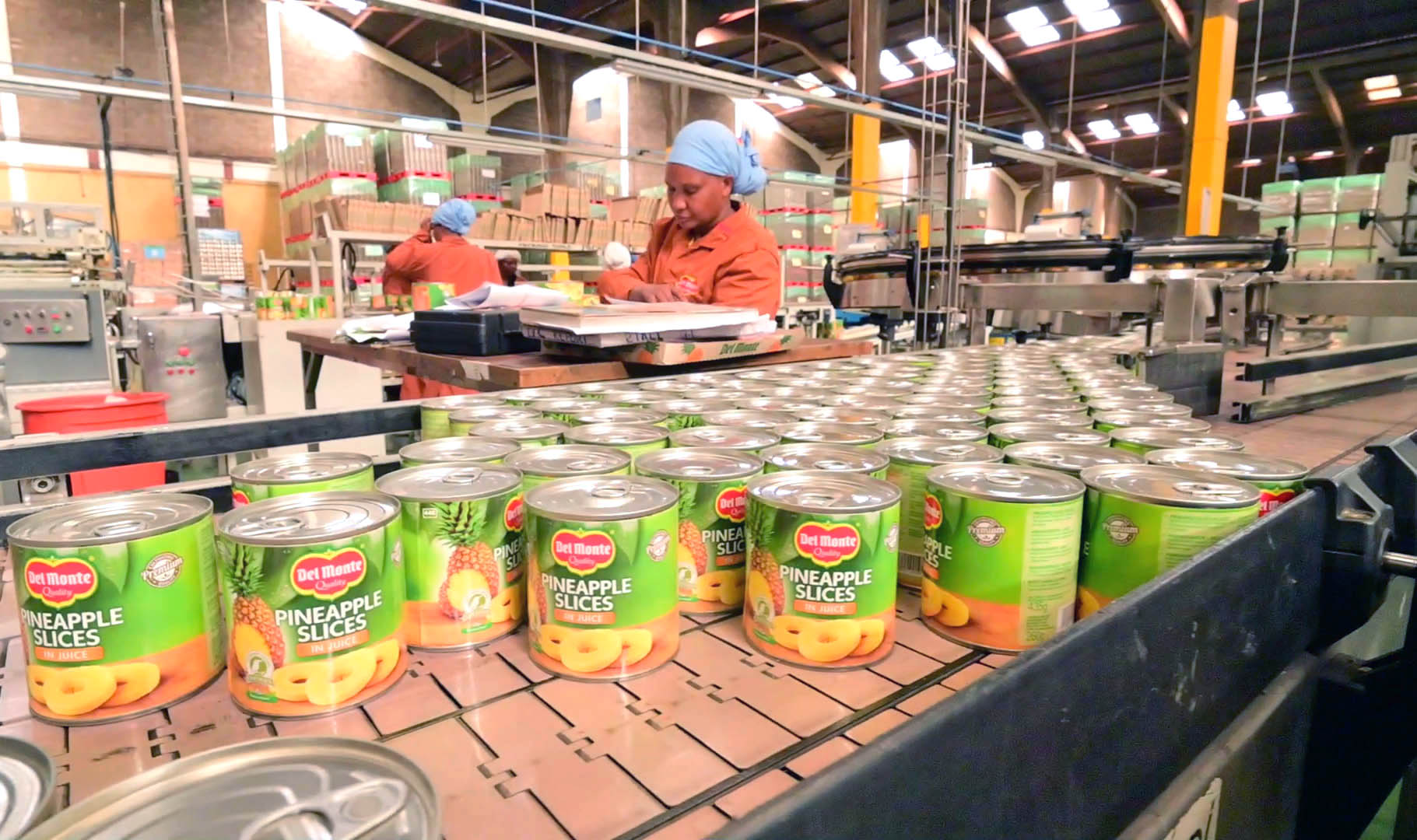
 Canned pineapple ready for distribution at Del Monte Kenya factory in Thika /TRACY MUTHONI
As Kenya marked this year’s Labour Day, conversations around the future of work, safety and health of workers took centre stage.
For Del Monte Kenya, one of the country’s largest agricultural employers, the day was not just symbolic.
It was a moment to reflect on how more than 7,700 workers are navigating a workplace that is rapidly changing through technology, while still anchored in welfare, dignity, and safety.
At the heart of this transformation is a simple message from the company’s leadership: innovation should not replace people. It should empower them.
Gideon Kimutai, head of Human Resources at Del Monte Kenya, says this year’s Labour Day theme aligns closely with the company’s journey of balancing global competitiveness with local livelihoods.
“Labour Day 2026 is both a moment of reflection and celebration for Del Monte Kenya,” he says.
“This year’s theme on innovation strongly aligns with our journey as a business that continues to evolve to remain globally competitive while safeguarding local livelihoods.”
He adds that the company is intentional about recognising its workforce spread across farms and factories, while also investing in systems that change how work is done, but not who benefits from it.
“We are recognising the contribution of our over 7,700 employees across farms and factories, while also highlighting how innovation—through investments such as our Individually Quick Frozen (IQF) facility and Solar Farm—is transforming operations,” he explains.
For Kimutai, innovation is not a threat to jobs. It is a tool for safety, efficiency and long-term skill development.
“For our workforce, innovation is not about replacement, but empowerment—enhancing safety, improving efficiency and creating new skills pathways for the future.”
Innovation changing how work is done on farms and factories
At Del Monte Kenya, innovation is already visible in daily operations. From farms to processing facilities, technology is becoming part of how workers plant, harvest, process and package produce.
One of the most significant investments is the Individually Quick Frozen (IQF) facility, which has introduced advanced freezing technology into the company’s processing operations. While it improves product quality, it also changes the nature of jobs within the factory environment.
“The IQF plant is a strong example, using advanced freezing technology that improves product quality while creating specialised technical roles,” Kimutai says.
This shift means that workers are not simply doing repetitive manual tasks. They are increasingly required to understand machines, monitor systems and operate within more technical environments.
Del Monte Kenya says it has deliberately paired every technological upgrade with training programmes to ensure workers are not left behind.
“We take a human-centred approach: every technological advancement is paired with training and reskilling to ensure employees are active participants in the transformation,” Kimutai explains.
On the farms, precision agriculture tools are being introduced, changing how agricultural decisions are made. This includes monitoring systems that help guide farming activities more efficiently and safely.
Technology, however, is not being introduced in isolation. The company insists that people remain at the centre of every change.
 Del Monte Kenya Human Resource manager Gideon Kimutai during an interview with the Star /TRACY MUTHONI
Welfare, safety and dignity remain central
Beyond innovation, Labour Day also brings focus to worker welfare, safety and health. These are areas Del Monte Kenya says it has continued to strengthen over the past year through investments in infrastructure, healthcare, transport, housing and compensation systems.
According to Kimutai, employee welfare improvements have been deliberate and targeted.
“Over the past year, we have made targeted investments that directly improve employee welfare,” he says.
Among these investments is a solar farm that provides clean, stable energy across operations. This translates to fewer power interruptions, safer equipment operation and improved working conditions, as reliable electricity ensures that lighting, ventilation and cooling systems function consistently.
Additionally, solar energy creates a healthier environment for workers by reducing air pollution and noise, which supports better respiratory health and overall well-being.
“We also ensure fair wages and timely compensation through a structured and transparent framework,” Kimutai notes. “This includes two active Collective Bargaining Agreements (CBAs) negotiated with workers’ unions, which guide wage structures and benefits.”
He also highlights the use of a structured payroll system to ensure consistency and transparency in payment.
“We operate strict payroll timelines with defined cut-off dates to guarantee timely salary disbursement. Our payroll is managed through the Inspiro payroll system, ensuring accuracy, consistency and transparency.”
For employees, this structure is designed to reduce uncertainty and build trust in how remuneration is handled.
“We also maintain open communication channels to ensure employees fully understand their remuneration and benefits. We view fair compensation as a fundamental pillar of dignity at work,” he adds.
Health and safety remain another major focus area. The company says it has strengthened safety protocols and improved working conditions, particularly in modern facilities like the IQF plant, which are designed according to global safety standards.
They have done that by providing personal protective equipment (PPE), establishing structured safety systems and committees, and offering regular health and safety training. In addition, they have enhanced healthcare access, strengthened security and risk management, improved living and welfare conditions, and reinforced labour protections through collective bargaining agreements with unions.
Kimutai reiterated that the company also maintains safety and welfare committees that monitor risks, enforce protocols, and give employees a voice in workplace safety matters.
“Health and safety remain a top priority. We have strengthened safety protocols, invested in protective equipment, and enhanced safety training across all operations,” Kimutai says.
The focus is not only physical safety. Mental health and well-being are also becoming part of workplace conversations.
“We recognise that well-being extends beyond physical health. We have introduced wellness programmes, counselling support, and mental health awareness initiatives,” he says.
Supervisors are also being trained to identify early signs of stress and burnout among workers.
“Supervisors are trained to identify early signs of stress and burnout, ensuring employees feel supported both professionally and personally.”
Protecting jobs while embracing mechanisation
As automation and mechanisation expand in agriculture and manufacturing, one of the biggest concerns for workers globally is job security. At Del Monte Kenya, the approach is described as a “responsible transition”.
Kimutai says the company is careful not to introduce technology in a way that disrupts livelihoods abruptly.
“Our approach is guided by a responsible transition. Mechanisation is implemented gradually, with workforce planning focused on redeployment, retraining and natural attrition rather than displacement,” he explains.
Instead of job losses, the company says it focuses on shifting employees into new roles created by technological change.
“We actively transition employees into new roles created by technological advancements, ensuring innovation delivers shared value.”
This includes creating opportunities in technical roles, machine operations, and digitally supported agricultural systems.
Workers are also supported through structured training programmes, certifications, and on-the-job learning designed to build long-term employability.
“We prioritise continuous learning through structured training programmes, technical certifications, and on-the-job capacity building,” Kimutai says.
The goal, he adds, is to ensure that employees are not only relevant today but also prepared for future shifts in the labour market.
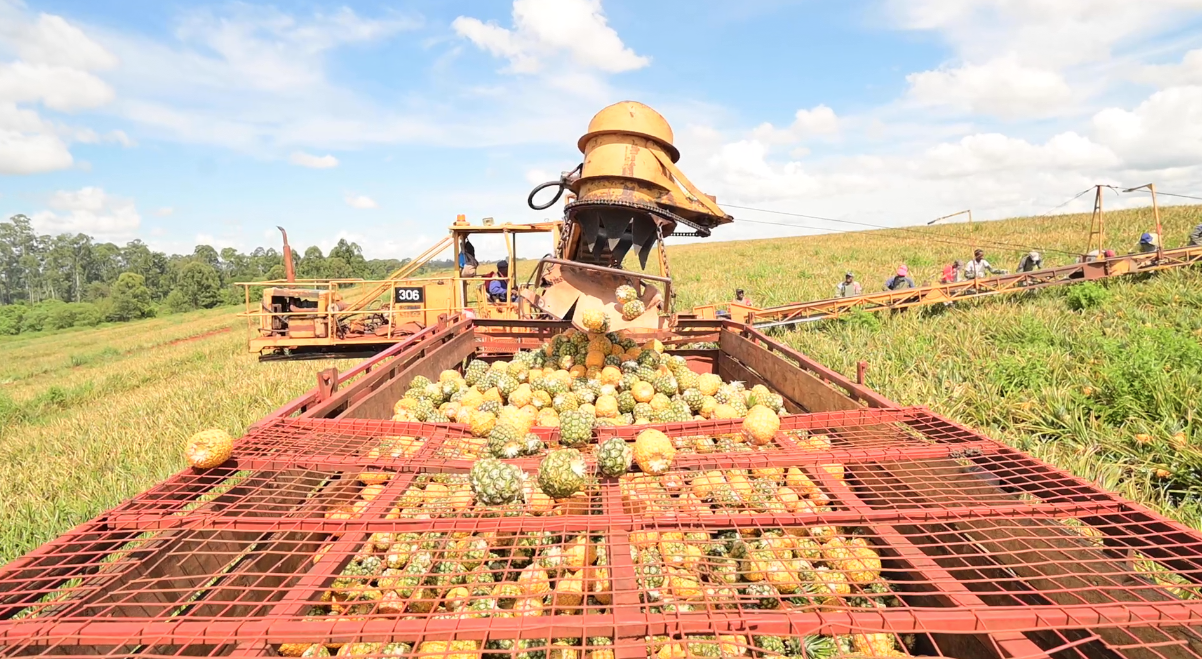 Freshly harvested pineapples at Del Monte Kenya plantation in Thika /TRACY MUTHONI
Building a future-ready workforce for the digital economy
As Kenya’s economy becomes more digitised, agriculture is also undergoing transformation. Del Monte Kenya says it is preparing its workforce for this shift by investing in skills that go beyond traditional farming.
The company’s long-term focus is on building a workforce that is resilient, adaptable, and capable of working with evolving technologies.
“Our priority is building a resilient, skilled, and adaptable workforce,” Kimutai says. “This includes continued investment in training, responsible technology adoption, and strengthening employee welfare programmes.”
“We are also embedding digital literacy across all roles, ensuring our workforce is equipped with skills aligned to the future of work.”
Career growth is also being encouraged from within the organisation. Employees are given opportunities to move across departments and functions depending on their skills and performance.
“We actively promote internal mobility and career progression through training, mentorship and performance-based advancement.”
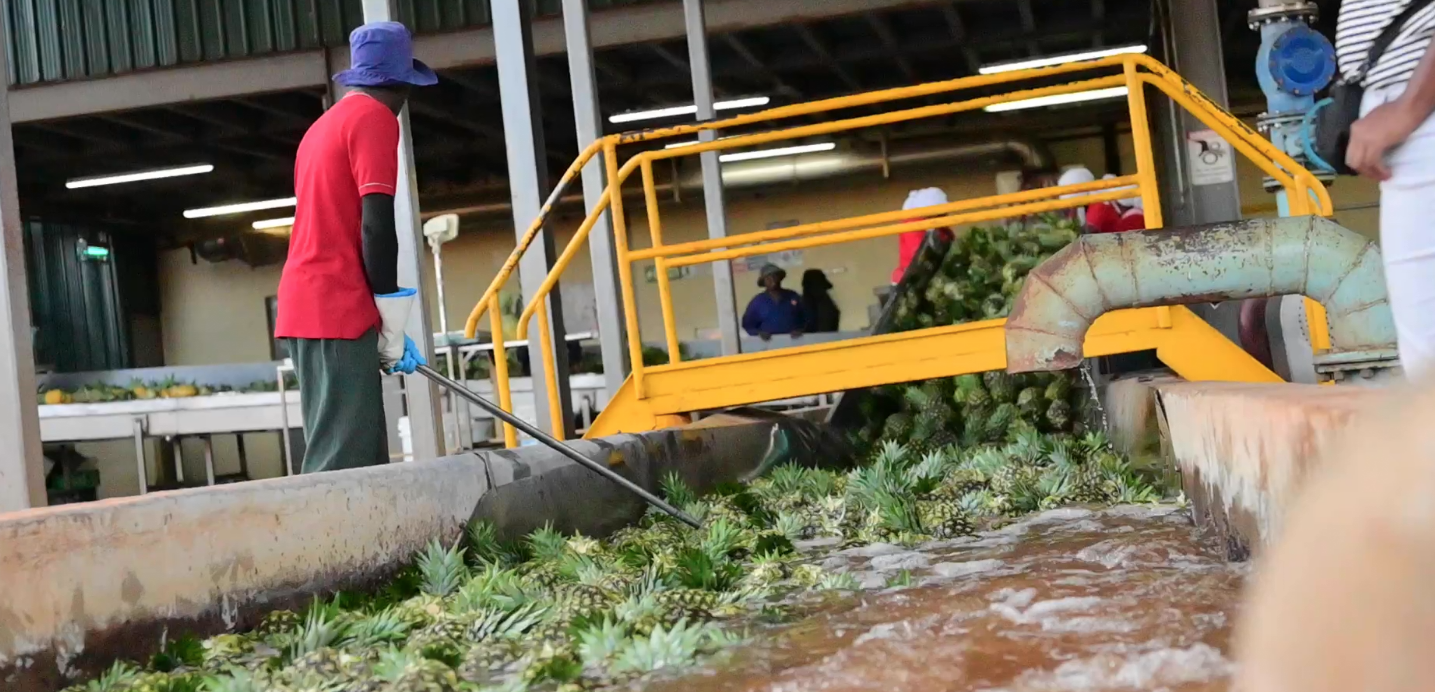 Workers clean pineapples at Del Monte Kenya plant /TRACY MUTHONI
Inclusive workforce support and community impact
The company also supports casual and seasonal workers by ensuring fair working conditions and clear engagement terms.
“Seasonal and casual workers are treated fairly, with access to safe working conditions, timely pay and clearly defined terms of engagement.”
Beyond individual workers, Del Monte Kenya says it is deeply connected to surrounding communities. Investments in schools, medical camps, road infrastructure and housing are part of its broader approach to worker welfare.
“We are deeply embedded in our host communities, with investments that directly improve quality of life,” Kimutai says.
Families of workers also benefit from healthcare support through company-supported clinics.
“We support employees’ families through access to company-supported clinics that provide medical care to employees and their immediate family members.”
The company’s message is one of continuity in change. While technology is reshaping agriculture, the human workforce remains central.
Kimutai captures this balance clearly.
“We are committed to ensuring that as the business evolves, our people evolve with it—equipped, empowered and ready for the future of work.”
In a season when workers across Kenya reflect on safety, dignity and the future of work, Del Monte Kenya’s approach places emphasis on one consistent idea: progress must move with people, not leave them behind.