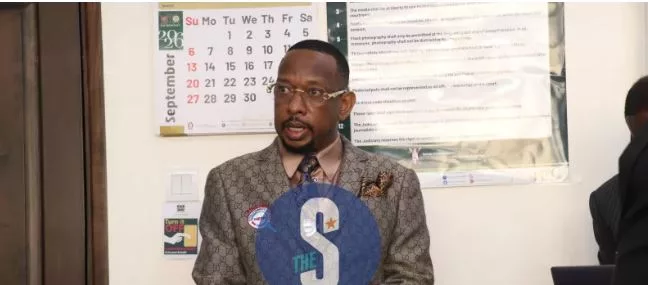
 Right to Left: Lydia Mathia, County Chief Officer, Business and Hustler Opportunities, Dr Anastasia Nyalita, County Executive, Business and Hustler Opportunities, Myke Rabar, Liquor Board, Chair and Rhoda Otieno, Director, Liquor Licensing, during the Sectoral Committee deliberations. /HANDOUT
Nairobi City County has moved to tighten regulation of the alcohol sector following consultative deliberations on the proposed Nairobi City County Alcoholic Drinks Control and Licensing Bill (Repeal), 2025.
The Nairobi County Executive, led by Dr. Anastasia Nyalita, County Executive Committee Member for Business and Hustler Opportunities, and Lydia Mathia, County Chief Officer for Business and Hustler Opportunities, held a consultative forum with the Sectoral Committee on Culture and Community Services to discuss the Bill.
Speaking during the session, Dr. Nyalita said the proposed law will significantly strengthen regulation, safeguard public health, and promote responsible trade within the county.
“At the heart of the proposed law is a strong focus on public health and safety. This Bill introduces strong regulations to limit underage access to alcohol, regulate advertising to prevent exposure of minors, and enforce stricter compliance measures on traders,” Dr. Nyalita said.
 Nairobi City County Executive officials and Members of the County Assembly Sectoral Committee during a consultative workshop to deliberate on the proposed Nairobi City County Alcoholic Drinks Control and Licensing Bill (Repeal), 2025./HANDOUT
 Nairobi City County Executive officials and Members of the County Assembly Sectoral Committee during a consultative workshop to deliberate on the proposed Nairobi City County Alcoholic Drinks Control and Licensing Bill (Repeal), 2025./HANDOUT
Dr. Nyalita noted that consumers must be properly informed about the risks associated with excessive alcohol use, adding that transparent labeling and responsible advertising are key to protecting residents.
She further underscored the need for stronger enforcement and public awareness.
“We are strengthening compliance mechanisms to eliminate illegal operators and protect consumers from unsafe products. At the same time, we will invest in awareness and rehabilitation programmes to address alcohol misuse at the community level,” she said.
The Sectoral Committee and the County Executive emphasized that excessive alcohol consumption continues to strain families and communities, and that tougher controls will help foster safer neighbourhoods and healthier households.
Hon. Clarence Munga, Chair of the Sectoral Committee on Culture and MCA for Kabiro, highlighted the human cost of the unregulated sector.
“This is about the safety of our homes. We are not just tightening rules; we are shielding our children from predatory marketing and ensuring that a drink ordered online does not turn into a medical emergency. Our neighbourhoods must be safe for families again,” he said.
Chief Officer Lydia Mathia reiterated the county’s commitment to restoring order in the sector.
“This Bill is about protecting our families, especially young people, from the harmful effects of alcohol abuse while ensuring that genuine traders operate in a structured and fair environment. We want a responsible and well-regulated sector that supports business without compromising public health,” Mathia said.
She added that the law will streamline licensing processes, enhance accountability, and promote transparency.
Liquor Board Chair Myke Rabar said the Bill will promote ethical trade and target illicit operators.
“We are levelling the playing field for legitimate, tax-paying businesses by ruthlessly targeting smugglers and counterfeiters,” Rabar said.
County Secretary Godfrey Akumali noted that the Bill includes firm measures to eliminate smuggling, counterfeit production, and illegal brewing practices.
Finance County Executive Charles Kerich said curbing unlawful trade will protect consumers and safeguard legitimate businesses from unfair competition and revenue losses.
If passed, the Bill will establish a clearer legislative and institutional framework to regulate the production, manufacture, distribution, sale — including online sales — and consumption of alcoholic drinks within Nairobi City County.
It is also expected to improve public health outcomes, reduce alcohol-related harm, enhance regulatory oversight, and promote safer communities across the capital