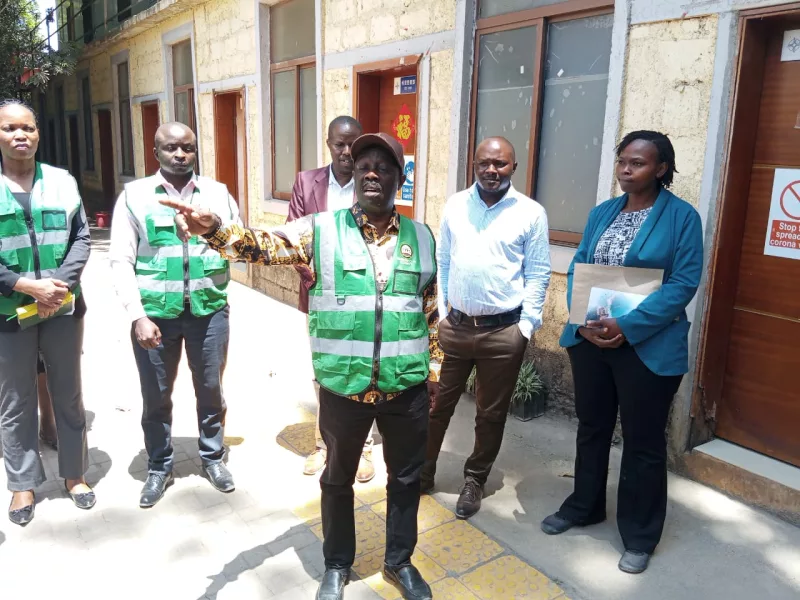
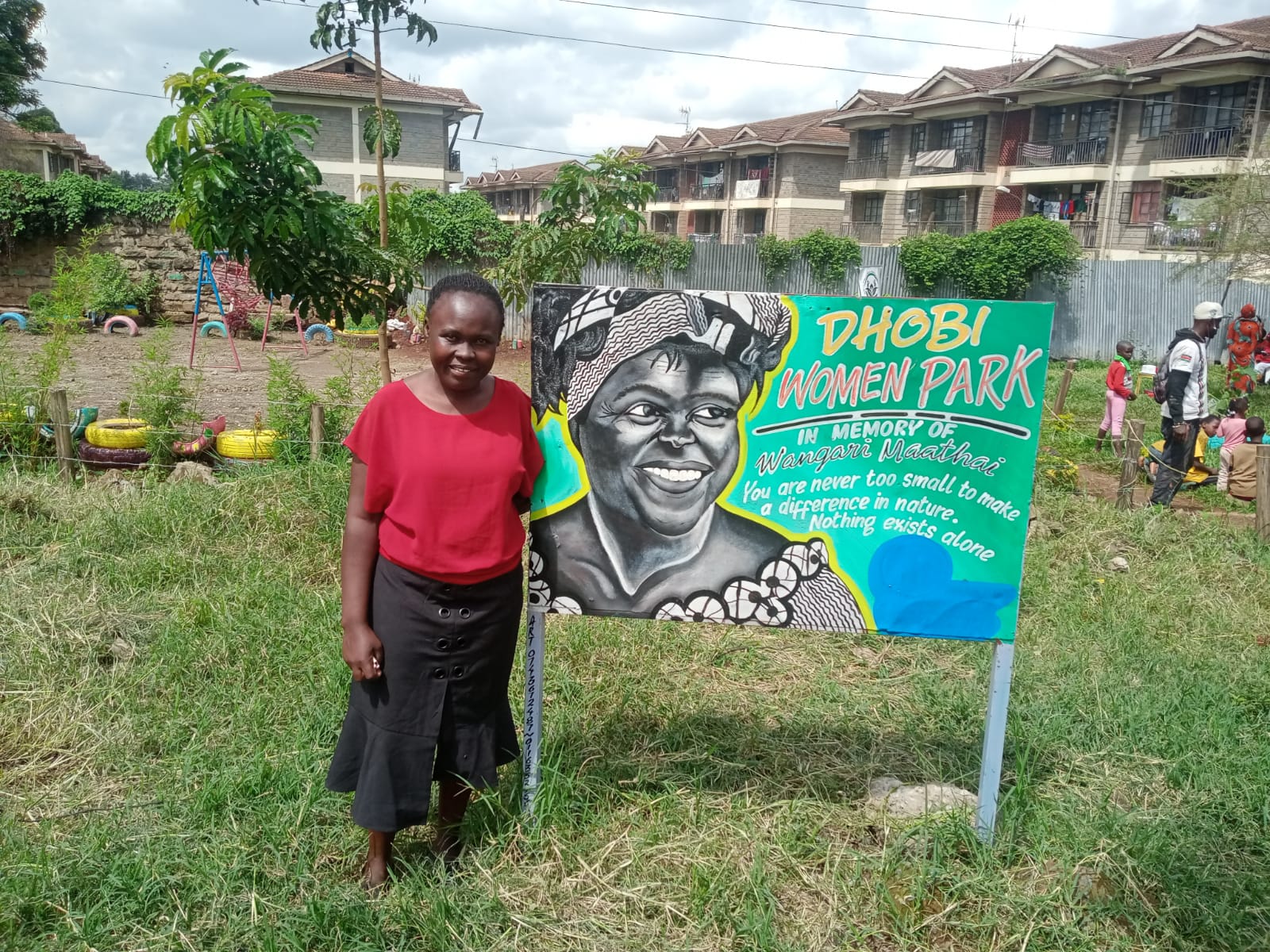
 Stellah Omuka, founding member of Dhobi Women Network, standing next to the Dhobi Women Park/CHRISTABEL ADHIAMBO.
In Mathare and Dandora, work for many informal labourers does not begin in offices or factories.
It begins in the quiet hours before sunrise when domestic workers leave their homes to wash clothes in wealthier estates, when waste pickers head toward dumpsites and drainage channels and when countless labourers prepare for another day shaped by uncertainty, low pay and risk.
These are the workers who clean homes, collect recyclables, care for children, sort waste and move through some of the most hazardous parts of the urban environment.
Their labour sustains households and neighbourhoods, yet it is rarely recognised as formal work.
For Stellah Omuka, a domestic worker and founding member of Dhobi Women Network, organising began from years of personal experience with exploitation and injustice.
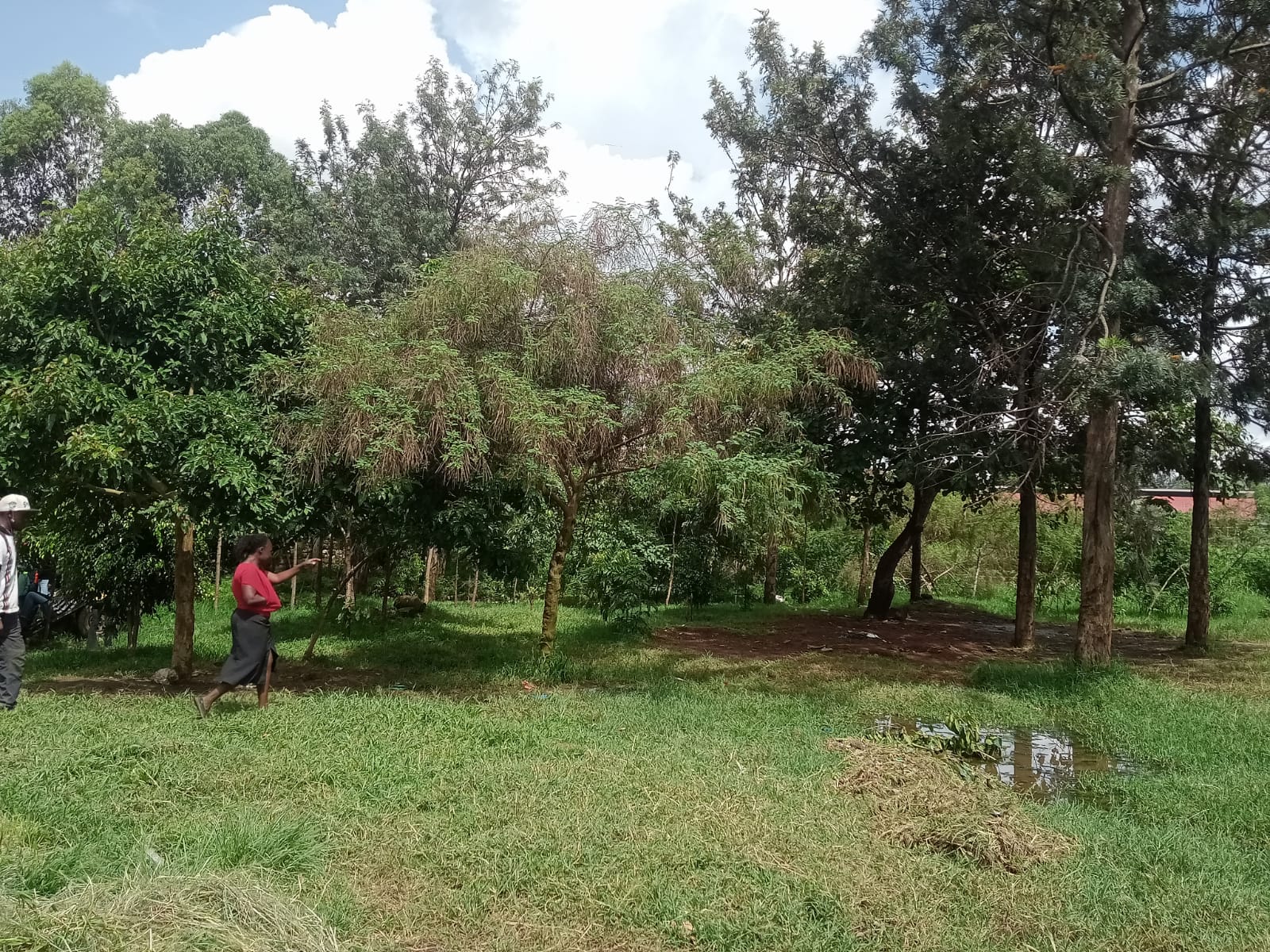 The planted forest in the Dhobi Women Park/ CHRISTABEL ADHIAMBO.
“Women were going through a lot of exploitation, including sexual abuse at work and being denied their wages after being accused of theft,” Stellah said.
She says domestic workers who reported abuse often found little support.
“When you go to a police station to report, you often find no one is willing to help you. In many cases, the response depends on who has money,” she said.
Over time, Stellah became a point of contact for domestic workers facing similar struggles. Women called her when they were arrested, dismissed without pay or falsely accused.
“I was going from one police station to another. Women would call me saying they had been arrested or not paid. It became too much for me to handle alone,” she said.
That pressure led to collective organising.
About five years ago, she brought together five women to form what would later become Dhobi Women Network.
“I realised that one person cannot carry all these struggles alone. When we come together, we can actually do something,” Stellah said.
The group began through small savings circles and regular meetings where women supported one another emotionally and financially.
As membership grew to 15 women, the group shifted from support alone to community action.
They identified a dangerous dumpsite along a pathway frequently used by residents travelling between Mathare, Dandora and Eastleigh, where many domestic workers were employed.
According to Stellah, the area had become unsafe, with women facing rape, theft and violence, particularly in the early morning or late evening.
To address this, they decided to reclaim the space.
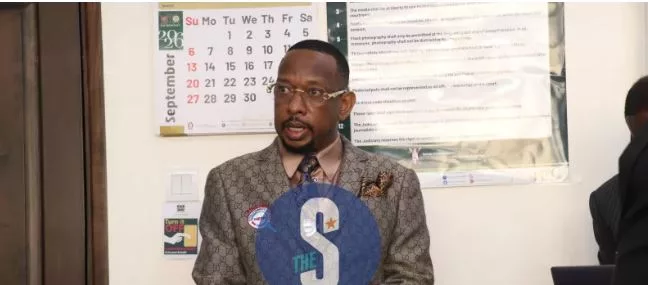
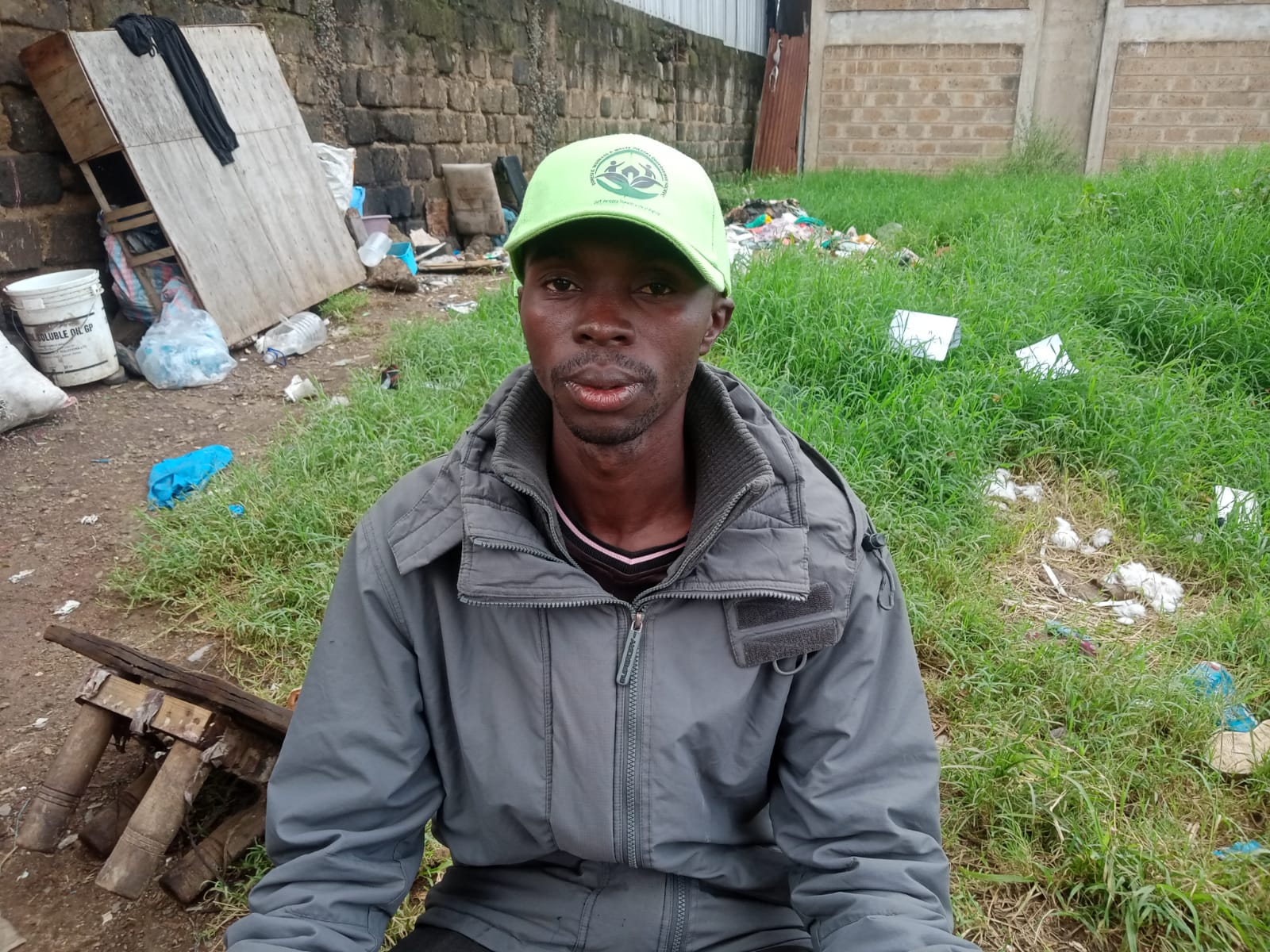 Kevin Odhiambo, Founder Mathare River Adopt and organising secretary Domestic Workers and Waste Pickers Association/CHRISTABEL ADHIAMBO.
Once unsafe and filled with waste, the site has gradually been turned into a place of organising, remembrance and healing.
“Initially, this place was a dumpsite. It was dirty and no one could come here. We started by cleaning it slowly and planting trees,” Stellah said.
Each tree planted carries symbolic meaning.
Shade trees honour women who died while working in domestic spaces, representing protection for the families they left behind, Stellah said.
Medicinal trees symbolise healing from trauma and violence, she said.
Fruit trees represent continuity, resilience and survival for women who have endured exploitation, she added.
“We plant shade trees for women who lost their lives while working. We plant medicinal trees for healing. We plant fruit trees for those who have gone through violence and need recovery,” Stellah said.
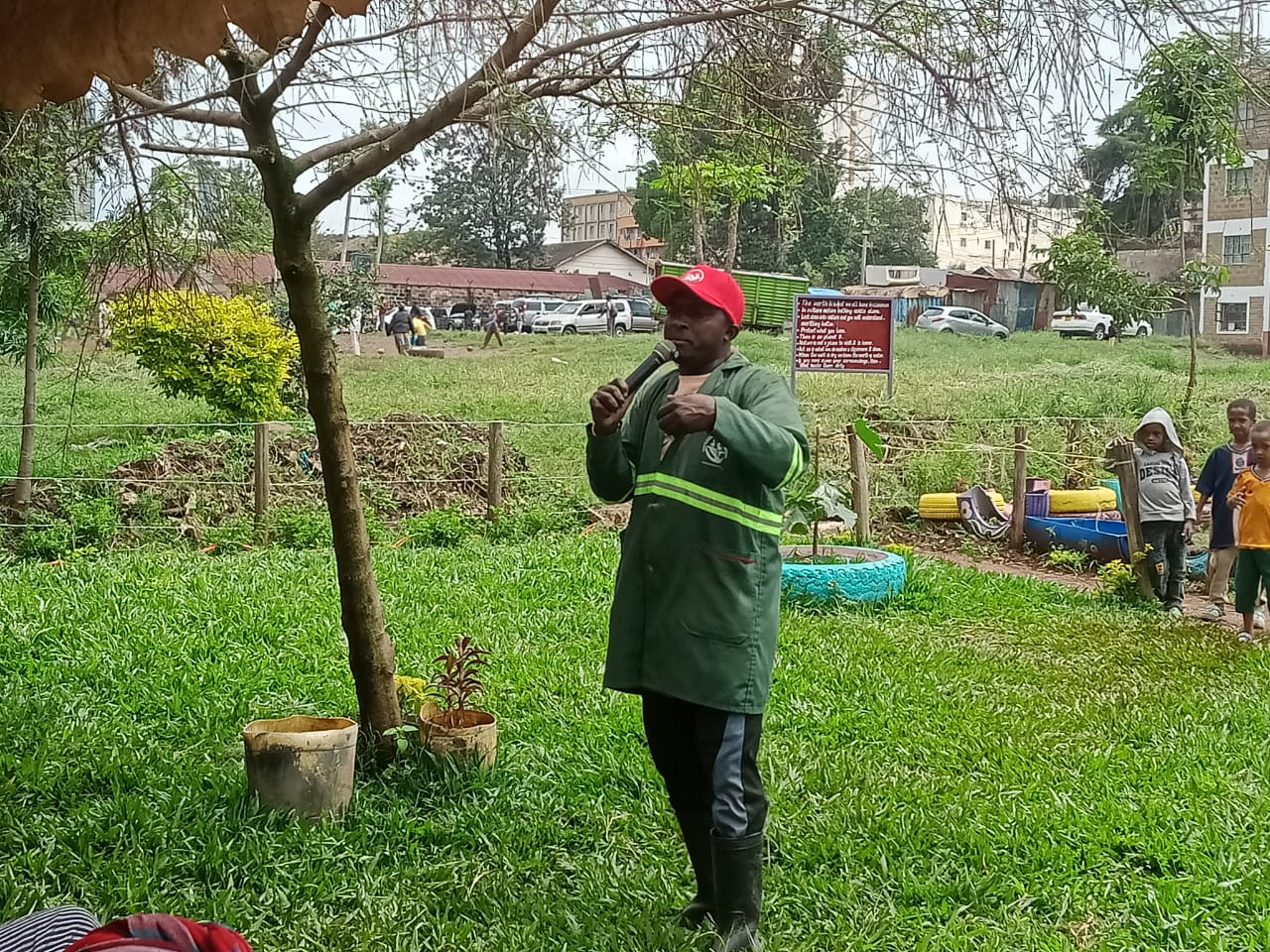 Simon Sankara, a waste pickers/CHRISTABEL ADHIAMBO.
Today, the group has 30 members, and it hosts more than 400 trees, recreational spaces with swings, vegetable gardens and a communal meeting area where members gather every fortnight.
From waste picking to collective bargaining
Alongside domestic workers, waste pickers form another key pillar of the network.
Kevin Odhiambo, founder of Mathare River Adopt and organising secretary of the Domestic Workers and Waste Pickers Association Network, says waste picking is often misunderstood.
“Waste pickers are not just collecting rubbish. They are part of the environmental system that keeps the city functioning,” Kevin said.
Kevin explained that waste pickers in Mathare typically earn between Sh200 and Sh600 a day depending on the type and quantity of recyclable materials collected.
Their day often begins early in the morning, with organised groups gathering at collection centres before being assigned different routes.
Some move through residential plots collecting household waste while others head to dumpsites and disposal points.
By midday or evening, they reconvene at collection centres where waste is sorted into categories such as plastics, metals, organic waste, cartons and reusable polythene materials.
Workers are then paid according to the weight and type of materials collected, with some earning as little as Sh25 per kilogramme.
Kevin says there are typically two shifts, those who begin early in the morning and those who work from midday until evening.
He added that the collected materials are later sold to recycling companies and buyers who regularly visit the centres.
Despite harsh conditions, waste pickers have developed centralised pricing systems across collection points to reduce exploitation and strengthen bargaining power.
“When you work alone, you are easily exploited. But when we come together, we can set fair prices,” Kevin said.
This shift from individual survival to collective bargaining has become central to the movement.
Building power through association
At the centre of this transformation is the Domestic Workers and Waste Pickers Association Network, which brings together domestic worker groups, waste picker collectives, matatu drivers and other informal worker organisations.
The association now includes 31 organisations and groups.
Its growth reflects a broader shift within the informal economy, where workers are increasingly organising into cooperatives and advocacy structures that challenge invisibility while demanding recognition, protection and dignity, according to association leaders.
Kevin says the network allows members to share information, stabilise prices and strengthen labour protections.
It also serves as a platform for training, solidarity and innovation.
Martin Agara, chairperson of the waste pickers’ group, says collective organising has become essential.
“As workers, the environment is not good. It is unsafe. We go into sewers and collect dirty waste, but this is now our source of income,” Martin said.
Lavender Okoth, a leader within the association, says lack of recognition remains one of the movement’s biggest challenges.
“Waste pickers at the community level are not acknowledged. We need public participation so that our welfare is considered,” she said.
For many members, organising has not only improved incomes but also strengthened confidence when dealing with authorities.
Simon Sankara, a domestic worker, says association support has helped workers challenge harassment.
“There was a time a police officer came to my stall and demanded Sh200. I told him to come the next day, take the scavenging equipment, go to the site and collect the waste himself so I could give him the money,” Simon said.
He said the officer never returned since then.
Data, dignity and policy change
To strengthen advocacy, the association collaborates with Haki Data Lab, which supports community-led data collection and policy engagement.
Steve Mwangi of Haki Data Lab says evidence is critical.
“Information is power. When workers understand their conditions through data, they are better able to demand change,” he said.
Steve said that the organisation documents includes income patterns, working conditions, safety risks and employment structures among informal workers.
This data is used to engage policymakers and advocate for labour protections, fair recognition and improved policy inclusion.
Within the network, waste is also increasingly viewed as a resource.
Kevin says members are learning to repurpose plastic waste for urban farming by converting containers into vegetable gardens, improving food security while reducing waste.
He added that organic waste is similarly used to improve soil fertility in urban gardens.
This evolving approach links labour rights, environmental sustainability and urban resilience.
Labour Day events and community gatherings, such as the recently held at Dhobi Women Community Park on May 1, 2026 have become spaces for solidarity among domestic workers, waste pickers and transport workers.
Martin says that they reflect a growing movement of informal workers who are organising, building systems of support and redefining labour dignity in urban Kenya.
He added that for workers long excluded from formal policy and planning, collective organising is slowly transforming invisibility into power.