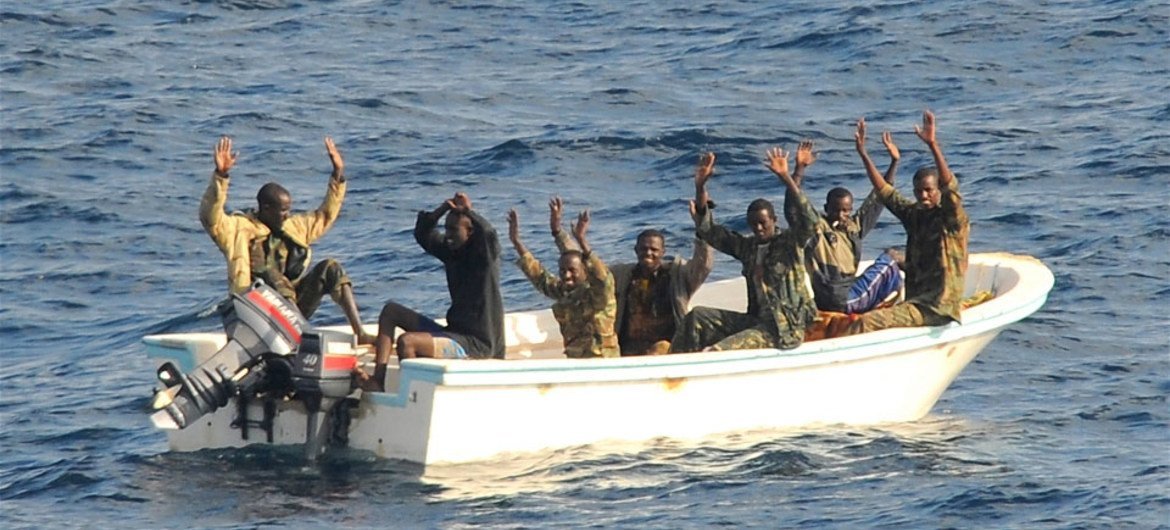
Fresh concerns are emerging along Somalia’s coast that piracy is returning after pirates hijacked several vessels in the last two months.
On Saturday, Somali pirates have hijacked an oil tanker off the coast of Yemen, according to multiple Somali security officials that spoke with the BBC, sparking fears of a resurgence of the crime.
The Yemeni coastguard earlier said the tanker MT Eureka had been hijacked and was headed towards Somalia. Sources said it was overrun by pirates in the Gulf of Aden, near the port of Qana.
It marks the second hijacking of an oil tanker in the area in a 10-day period, following the hijacking of Honor 25 by Somali pirates on April 22. Honor 25 was carrying 18,500 barrels of oil bound for Mogadishu.
MT Eureka was sailing on the flag of the west African nation of Togo prior to the hijacking and was overrun by the gunmen at 5:00 AM local time (03:00 BST) Saturday morning, the security official went on to tell the BBC.
On April 26, a Turkish cargo vessel carrying cement and heading to Mombasa, was hijacked near the coast of Garacad in Puntland State, according to the Associated Press, which cited a local maritime security official.
The vessel was sailing under the flag of St. Kitts and Nevis, and nine-armed men were reported to have taken control of it.
Maritime security reports have also said that at least three vessels were targeted in hijackings within one week, indicating a rapid increase in pirate activity off Somalia’s coast.
The UK's Guardian reported that the incidents began on April 21, when the vessel Honour 25 was hijacked, followed by another boat and a commercial vessel named Sward.
The United Kingdom Maritime Trade Operations raised the threat level off Somalia’s coast, urging vessels to pass through the area with caution and report any suspicious activity. Al Jazeera said the warning came as the risk of piracy was once again increasing.
The EU's Atalanta naval mission and the UK's Merchant Marine Operations Center (UKMTO) have been sending out alerts like this almost daily.
As recently as Thursday, there were armed clashes between Puntland security forces and armed militias that are said to have links to pirate groups.
In the heyday of piracy, dozens of hijacked ships were moored off the Puntland port of Eyl, and some of them and their crews are still being held today. For example, the oil tanker "Honour 25" and its Pakistani crew.
Puntland's Deputy Minister for Maritime Transport and Ports, Mohamed Ali Ismail, told the German Press Agency: "Puntland is doing everything in cooperation with its partners in the field of maritime security to get the hijacked ships released unconditionally."
At the same time, he assured: "There are currently not many piracy incidents here."
In a separate incident, the United Kingdom’s UKMTO reported on Friday that "armed persons" on a "skiff" approached a bulk carrier near Al-Mukala, Yemen.
Those armed persons departed a remote coastal area near the fishing town of Caluula (Alula), according to three separate security officials. Caluula is 209km (130 miles) from where hijackers departed to seize the MT Eureka.
The two separate incidents indicate piracy is expanding across Somalia's vast coastline, which is the longest in mainland Africa at 3,333km (2071 miles). Saturday's hijacking marks the fourth successful pirate hijacking in two weeks.
Somali authorities and the European Union Naval Force (EUNAVFOR), which oversees anti piracy operations in Somali waters, are yet to address the latest hijacking.
Somali piracy, which was on the decline since 2011, has surged again since late 2023, when Houthi rebels began attacking ships in the Gulf of Aden and Red Sea.
The attacks forced international navies to instead tackle the Houthi threat, thus allowing armed groups on the Somali coast to take advantage of the security lapse.
"The on-going crisis with the pirates is much worse than many realize. There are increasing movements (of armed groups) all over the coast" a security official from the semi-autonomous Puntland region told the BBC.




Comments 0
Sign in to join the conversation
Sign In Create AccountNo comments yet. Be the first to share your thoughts!