For the first time, a Russian ballet troupe performed on a Kenyan stage, and the event was more than a night of dance. It was a statement about culture, connection and diplomacy.
“Let me welcome you here on behalf of the Embassy of the Russian Federation in Kenya and present to you the Russian Ballet Show,” Russian Ambassador Vsevolod Tkachenko said as he opened the evening at the Kenya National Theatre.
His remarks set the tone for a performance that blended art with international engagement.
In recent years, cultural exchanges between the two countries have grown steadily. Amb Tkachenko noted that “cultural ties between Russia and Kenya have been getting stronger, and I hope to the mutual pleasure and enjoyment”.
The ballet performance stood as a visible symbol of that progress.
The event, organised by the Russian Embassy in Kenya, was held at the National Theatre in Nairobi. It featured the Moscow Regional State Academic Theatre Russian Ballet, named after Vyacheslav Gordeev.
The troupe presented a selection of its productions, drawing a large audience and visible enthusiasm from those in attendance, children included.
Before the dancers took the stage, the audience was treated to a surprise as a Kenyan orchestra band performed several pieces of Russian classical music.
The moment reflected a shared cultural space, with Kenyan musicians interpreting Russian compositions and setting the mood for the ballet that followed.
Amb Tkachenko described the performance as part of a growing tradition.
“It has already become a good tradition for our Embassy to organise different events, including screenings of Russian films, which received a warm response from the Kenyan audience,” he said.
NEW CHAPTER
These events have helped to introduce Russian culture to Kenya and ballet marked a new direction. And for the first time, Russian ballet was brought to Kenya.
“Today we are opening a new chapter in Russian-Kenya cultural exchanges,” the ambassador said.
“Judging by the number of people present here, I can humbly presume that this has sparked a lot of interest from the Nairobi audience."
He said the troupe had performed earlier and received a warm reception from the public. The Nairobi audience continued that response, with applause and visible excitement.
Ballet holds a special place in Russian culture. “Theatre in general, and ballet in particular, is one of the foremost cultural elements of Russian culture, embodying the harmony of music, movement and emotion,” Amb Tkachenko said.
By bringing ballet to Kenya, Russia was sharing one of its most-recognised cultural traditions.
Russian ballet, he said, has roots tracing back to the 18th century, when the first ballet schools were established.
Over time, it developed into a global art form. Through the 19th and 20th centuries, it flourished through the work of composers such as Pyotr Tchaikovsky and Igor Stravinsky, and choreographers including Marius Petipa and Yuri Grigorovich.
“The classic works, such as Swan Lake, The Sleeping Beauty and The Nutcracker, blend tradition with modern interpretations,” the ambassador said.
HARD-EARNED ELEGANCE
These ballets are not only performances but also cultural stories told through movement.
One of the dancers bringing those stories to Nairobi was Ekaterina Nechaeva, a principal dancer at the Russian State Ballet Theatre of Vyacheslav Gordeev.
Speaking about her experience, she expressed excitement. “I’m so happy to be here, to be in Kenya for the first time. It’s been wonderful being here,” she said.
Nechaeva’s journey in ballet began early.
“I come from a family of ballet dancers, so I’ve been doing ballet since I was five, professionally since I was 12, and dancing as a professional since I was 19,” she said.
Her life has been shaped by the discipline of classical dance, which for her is more than technique.
She explained her love for full-length classical ballets that tell a story and allow dancers to act as well.
“Classical ballet is just so elegant. It is technically challenging, but at the same time you have to be light and graceful. I love that challenge,” she said.
That balance of strength and softness was visible on stage.
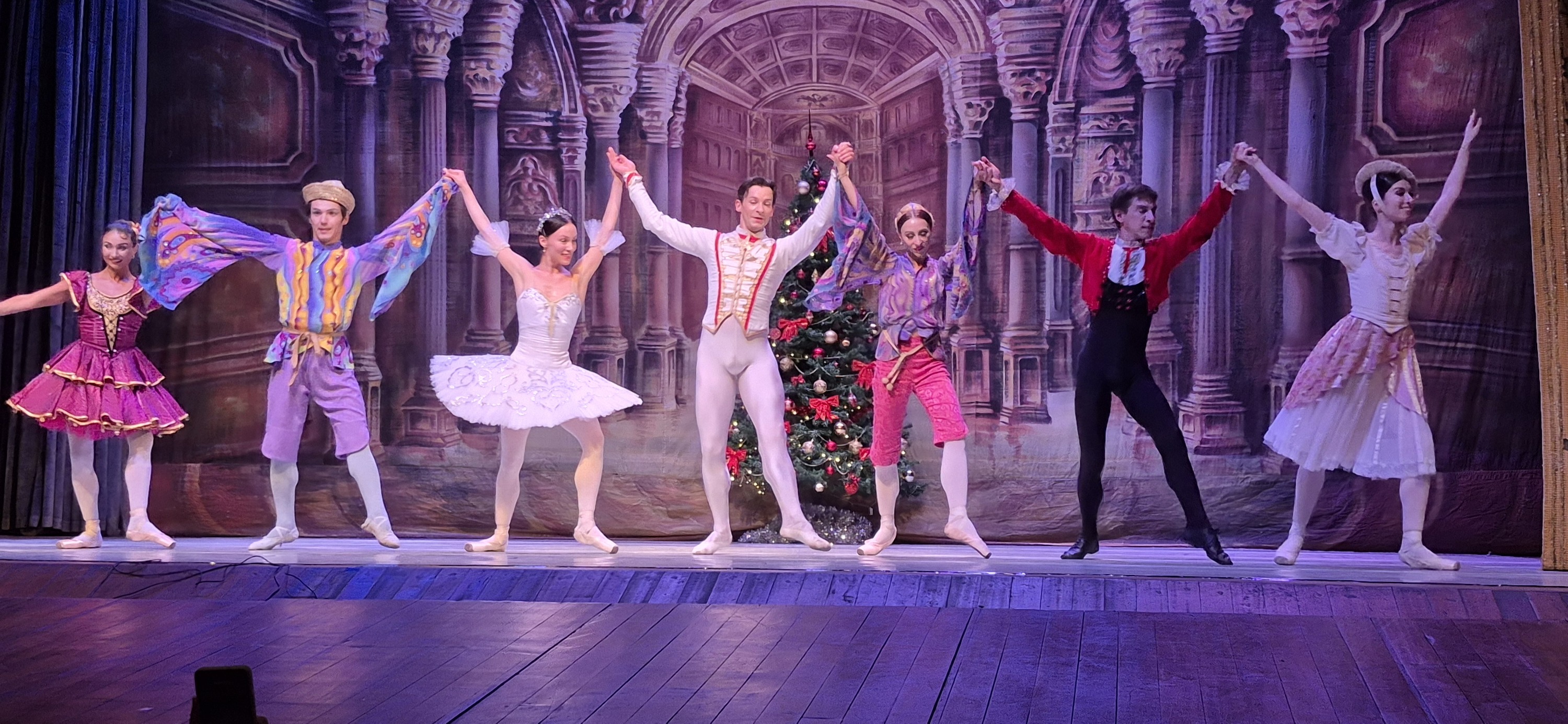
Dancers dressed in vibrant and elegant costumes filled the stage with colour and movement. Some wore traditional tutus, skirts made of layered tulle, while flowing fabrics and detailed designs enhanced every leap, spin and lift.
Under warm stage lights, the performers moved with control and precision, their synchronised motions drawing the audience into the rhythm of the music. Each turn and extension combined technical mastery with expressive storytelling.
The result was a display of discipline and artistry that held the audience’s attention throughout.
Nechaeva emphasised that behind each performance is a rigorous daily routine.
“We start in the morning. Around 11am we have our ballet class. Before that, we warm up, then we have rehearsals,” she said, noting that rehearsals can last for hours.
The dancers rehearse different ballets depending on upcoming performances. On show days, the schedule becomes even more demanding.
“If we have a show, we do a ballet class a few hours before. Then we do hair, makeup, some spacing rehearsals and then we perform,” she said.
The physical demands of ballet also require attention to health, with diets varying between dancers.
“I try to eat healthy foods that give me energy, but when you have such physical work, you do need to eat enough to sustain that energy,” she said.
One of ballet’s most recognised techniques is dancing on pointe, which Nechaeva said requires years of preparation.
“In Russia, you go to a professional ballet school from ages 10 to 18, and usually you start pointe work at around 11 or 12,” she said.
That early training, she explained, is important to ensure the feet are strong enough. Dancers begin with simple exercises and progress gradually.
BRIDGE BETWEEN NATIONS
Nechaeva followed a slightly different path.
“I did ballet before, but I was 15 when I went to the Perm State Ballet School,” she said.
Her experience, she believes, highlights the importance of dedication.
“If you’re hardworking, that can make up for starting later,” she said.
During the Nairobi performance, audiences witnessed some of ballet’s most demanding techniques. Nechaeva pointed to the fouetté, a movement where a ballerina performs repeated turns with one leg extended.
“In this production, you’ll see a lot of fouettés. You have to do it 32 times,” she said, adding that she performs the sequence several times during the show.
She also spoke warmly about the Nairobi audience, describing their response during the previous performance as enthusiastic and encouraging.
The cheering, she said, gives the dancers energy and makes the experience special.
For the performers, the Kenyan audience became part of the show.
The performance demonstrated how art can serve as a bridge between nations. By sharing a cornerstone of Russian culture, the event created space for dialogue and mutual understanding.
For the Russian Embassy, the evening reinforced the value of cultural diplomacy. Film screenings and now ballet performances have shown how culture can connect people beyond politics.
As the dancers took their final bows, the message was clear: ballet had become more than a performance.
Through music, movement and emotion, it told a story of connection between Russia and Kenya, showing how culture can bring nations closer, one performance at a time.