Touched, Bishop Dr Titus Masika left Nairobi city for the village, a man on a mission.
Recounting the story to the Star, Masika said he headed to the then very remote and dry subcounty to train communities on ‘mindset change’ and to practically help them produce food. As an arid and semi-arid lands (Asal) area, Yatta was reeling from erratic rainfall, water scarcity and food insecurity.
Masika got out of his comfort zone, a posh home in one of the high-end estates in Nairobi, and settled at Kinyaata village in Yatta subcounty.
His goal was to transform lives by making the locals self-reliant, food and financially secure and also reduce mortality deaths due to inadequate food and nutrition.
Masika is the founder of the Christian Impact Mission, a Faith-Based Organisation started as a fellowship of Christians who were trying to help the villages where they came from in matters education and livelihoods.
He believes his resolve for moving to the village was not in vain. Eighteen years later, it has borne fruits.
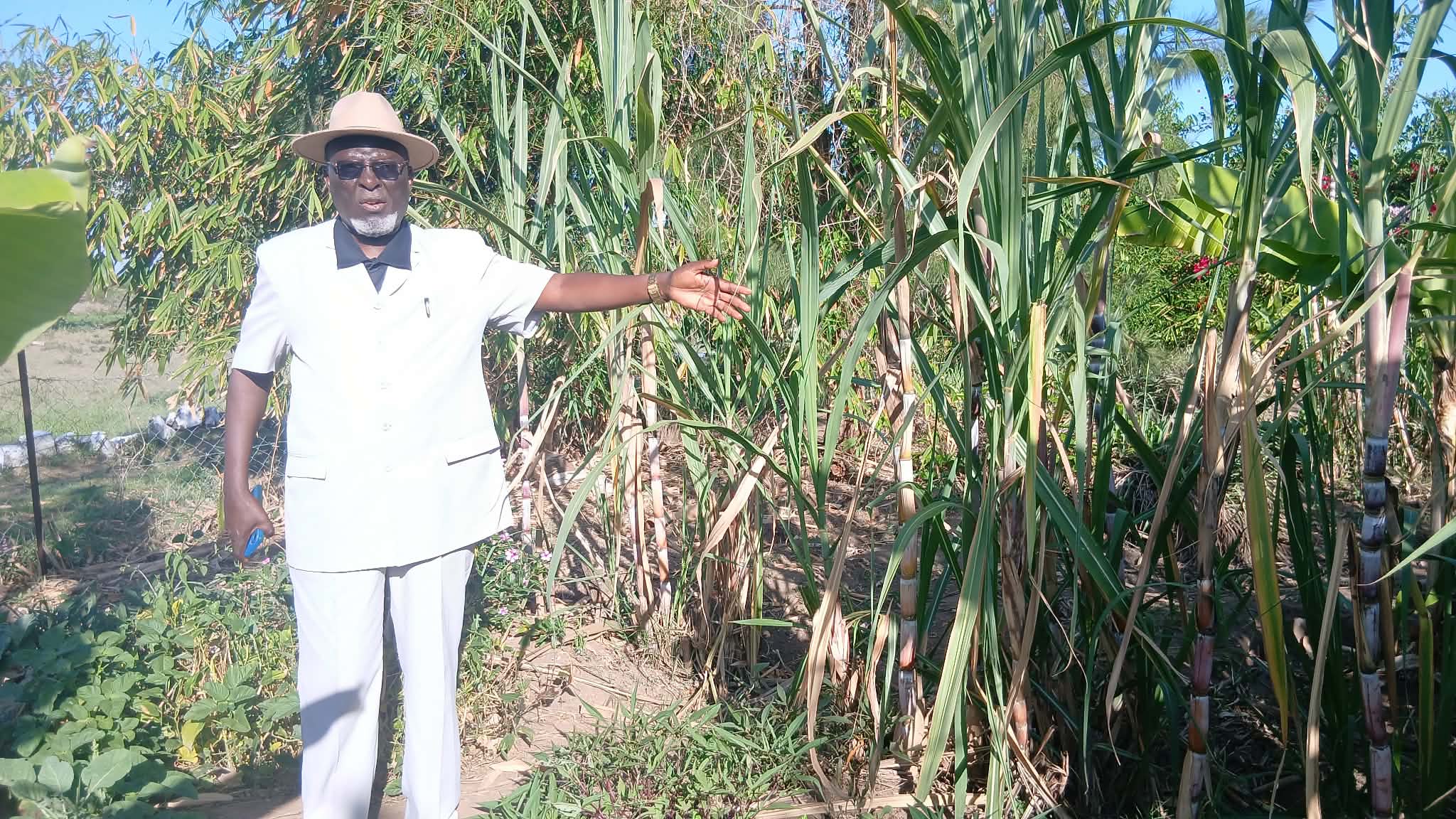
The village where Masika’s home is located is now known as a ‘breadbasket’.
The project includes a bakery producing 5,000 blocks of bread daily, enriched with orange-fleshed sweet potatoes, benefiting local farmers and hundreds of local communities.
Looking back, the retired high school teacher said the woman’s death happened years after he had bought land in Kinyaata village.
“I bought this piece of land in a dry area. It was green then when I bought it since it was in November during the rainy season, but when I returned in February, it was very dry and I felt cheated,” Masika said.
“To mitigate the situation, I made a water pan for myself so I could have a source of water for my poultry, livestock and domestic use.”
He didn’t settle on his farm immediately even after the water pan was completed.
Later on, there was a drought between 2006 and 2011. A national initiative emerged amid this plight in 2008 called ‘Kenya for Kenyans’.
“I got it from the media that Yatta people were seriously affected. Their livestock had died and they hadn’t harvested for more than 10 years,” Masika said.
A local newspaper reported that a woman had died after giving birth. She had no food, died of hunger and her twins were left suckling in vain.
“This touched me and I decided to move from the city of Nairobi to come down and help that community,” he said.
‘MANUFACTURED POVERTY’
The locals were so needy when he got to the community that he felt helpless.
However, he had faith and confidence that the people could be food-secure and regain their dignity.
“I had drafted a model after studying the models of development in Africa,” he said.
The model was called ‘Empowered Worldview from Mindset Change’.
“I realised and observed that generally in Africa, it wasn’t about lack of resources, capital or anything else since as a continent we have more rains,” he said.
“The rains we receive in ASAL areas are sufficient, more than what other countries in other continents receive.”
So he felt the problem was more about mindset.
“It’s the same problem in Ukambani, Lake and Coast regions of Kenya, as well as other countries, like Tanzania, Uganda South Africa — everywhere all over Africa,” Masika said.
“I discovered that because of the history, Africans have a dependency syndrome, which in Kamba we call ‘mwoiyo’ (relief) mindset,” he said. “In other communities like the Luo, it’s called ‘gonya’ mindset.”
He explained the mindset as believing ‘We are poor, Africa is poor, our community is poor, so help us. Our country is poor, so, the West, help us’. And that this concept cuts across the minds of the village boy, woman, man, chief, up to presidents of Africa.
“Because of that mindset, we have manufactured poverty which is untrue. It isn’t there, it’s only a mindset because we aren’t poor,” he said.
“Africa has mineral resources, natural capital and human capital. We also have sunlight throughout, almost 12 hours in a day every year, which isn’t the case in other parts of the developed world.”
CHANGING THE NARRATIVE
Masika said Africa is the recipient consumer of finished products because of ‘our mindset’, and due to that, “We are not advancing.”
He said having realised all these challenges, he invented a model called ‘Empowerment Model’ and a one-acre rule: How to do one-acre farming after mindset training and become food-secure, create wealth and employment.
“I realised in Africa, we talk about rain, that we don’t have enough rain. We don’t need rain to do agriculture, we need water,” Masika said.
He bemoaned how people living near freshwater lakes are poor.
“Tana River flows through to the Indian Ocean, yet the communities living around it are poor. River Athi starts from Ngong through Athi River and Kibwezi, yet this is the belt where people are poor,” Masika said.
He said the first colonisation was not done when there was a lot of rain but where there were rivers.
In Masika’s model, this is called the Aden principle. The principle embodies the idea that ‘a river flowed from Aden and watered the land’.
“So you use water to do agriculture. If Africans got that principle, then Africa and Kenya alike would not be food-deficient,” he said.
He said most African countries have big rivers, which can make the continent rich.
Masika said it’s for these reasons that he established the transformation model, which runs on the motto: ‘Operation Mwoiyo Out’.
“This is where we do mindset change. That, we have resources within ourselves, outside us, within our environment. And using all the available resources within our environment, we can change,” he said.
The cleric said he had to study all the worldviews in world history not only to be graded in class but for him to understand why Africa is the way it is and why we are poor yet we have resources.
“When I came to Yatta, I knew the word Yatta meant dry and indeed, it’s dry,” he said.
The Government Economic Survey had indicated that Yatta was among the poor of the poorest in the region.
“I did the first water pan, called the locals and encouraged them to do their own,” Masika said.
Using the Empowered Worldview model, he trained the residents to become self-reliant, self-sufficient and self-sustaining.
By 2009, there were about 1,300 water pans in homesteads in Yatta, and that’s how the subcounty’s transformation started: by mindset change and water pans for food production. Two years later, the water pans grew to 4,500, enabling locals to practise agriculture throughout the year.
GOVERNMENT INSPIRED
Masika said former President Uhuru Kenyatta’s government borrowed his model in 2018.
“When the Head of Public Service in the last government passed through Yatta in 2018 when there was disaster, he came and borrowed my model,” he said.
“The government then constructed many household farm ponds across the country and in the county. It also did some more in Yatta subcounty.”
He said there are more than 8,000 water pans in homesteads in Yatta subcounty currently.
“People think in terms of large-scale dams, but water pans for small-scale farming is a game changer,” Masika said.
He cited small-scale household farm ponds for small-scale farms that are fitted under the one-acre rule.
“The one-acre rule gives lots of advantages because you can grow crops when others are not growing. If you grow during the hot season, prices go up. When prices go up, you get more money. So you elongate the period for farming,” he said.
Masika said such farmers can then do simple cottage industries.
“We, for instance, make bread out of fresh sweet potatoes. We fortify with the wheat flour,” he said.
“By doing so, many people grow sweet potatoes. They have a market and when you make bread, you can sell it back to the community and beyond.”
He said by creating such-like new products, wealth is created, too.
“If we all took the value chain and addition, we would have created wealth and jobs in the country,” Masika said.
He said his farm was the first to become a place for training and benchmarking. Many development agencies had invested heavily in Africa, yet there was not much change to be seen due to high dependency.
The cleric believes that development is what people are helped to do for themselves.
He established a training centre in his farm where individuals, churches, NGOs, government agencies, governments and other organisations go for learning and benchmarking.
Masika said they developed a curriculum on Mindset Change and Economic Empowerment, which they have trained across the region.
“We empower people to go and train others. We began with champions who go to train others,” he said.
“We inspire development agencies to use a people-based as opposed to a project-based approach, which hasn’t given any transformational change in Africa.”
He said they had replicated the project in Baringo county.
“After succeeding, we decided to go to the North Rift. We chose Baringo because we realised it looks like the centre of North Rift. We celebrated our 10th anniversary of existence in West Pokot in December last year,” Masika said.
CHARITY WORK
Away from farming and mentoring, Masika likes giving back to the community. He does not do it for recognition but has received local and international acclaim for it, including from charity organisation Tearfund.
“As a human being, when people recognise what you are doing, it gives you inspiration and encouragement,” he said.
Masika said the government has recognised his initiatives and efforts to improve humanity by branding him a national hero.
He received the Elder of the Burning Spear award during Mashujaa Day celebrations on October 20 last year for his humanitarian service through Operation Mwoiyo Out and famine relief initiatives.
He’s the founding director of Christian Impact Mission, focusing on empowering communities to become food-secure and self-sufficient.
He got a similar award from the presidency in 2023: Order of Great Warrior Award.
The cleric said his Christianity is about helping people to develop capacities to have better livelihoods.
“I do it as my service to humanity as a way of Christianity, working and serving as a Christian,” Masika concluded.