In the arid plains of Narok, Female Genital Mutilation continues to distort the lives of young girls, carried out in secrecy among dust-swept manyattas and grazing cattle.
Where roads are long and clinics scarce, the cut has quietly moved from open fields to health facilities.
Medicalised FGM is increasingly common where retired health professionals, once trusted in hospitals, and older Maasai women, known for assisting births or minor treatments, now perform the procedure.
Wearing gloves and sometimes lab coats, they carry out the cut in hidden rooms or small dispensaries, giving families the illusion of safety and legitimacy.
To many, the medical setting seems to reduce harm, yet the practice remains illegal and dangerous.
In these sun-scorched lands, tradition and modernity collide where young girls still endure pain and risk under the guise of healthcare, while the arid wind sweeps over the plains, indifferent to the fear and secrecy inside the facilities.
The knock on the door came long after sunset, the kind of hour when visitors usually mean trouble or urgency.
But when Nailantei* (not her real name) stepped outside, she found two older women dressed in white lab coats and gloves doctors, standing quietly in the dim evening light.
She was in Grade 4 then, young enough to trust adults, old enough to sense when something was not right.
Startled, she rushed back into the house and asked her mother why doctors had appeared at their door at 8pm.
Her mother offered a quick explanation, saying they had come to treat a sick person. However, no one in the house was ill, and the answer only deepened her confusion. She asked again, hoping for clarity, but her mother did not tell her the real reason they had come.
When her mother finally called her to greet them, she had never seen the women before, and the air felt tense.
Before she could make sense of the situation, the doctors asked her to sit and in an instant, they held her down.
She remembers asking what the problem was, but there was no reply. The silence frightened her more than the firm grip on her arms.
“They did not tell me why they were doing it. They explained to me what they were doing when the process was almost complete. They said that they were circumcising me. I could not do anything because they were holding me down. All I did was to cry and hope it ended quickly,” she said.
The procedure ended as abruptly as it had begun. No comfort, no explanation, just a young girl left with pain she had not chosen.
“I felt bad because I did not want to go through FGM. I am aware that FGM is not good and should not be practised. That is why I felt bad. I never confronted my mother about it because I decided to let it go,” she said.
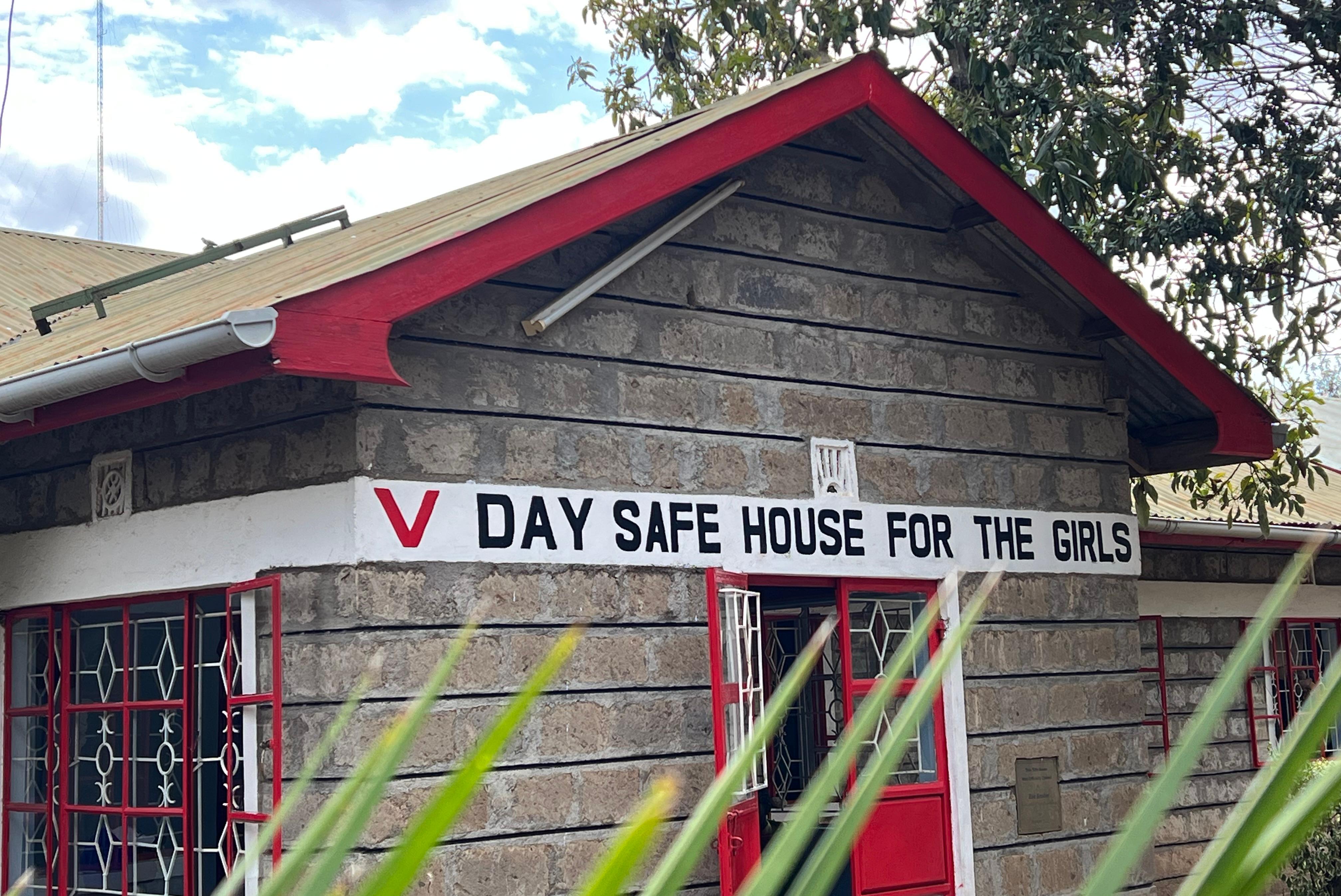 Tasaru Rescue Centre in Narok / PERPETUA ETYANG
MARRIED OFF
At 15, Sereiya (not her real name) is a Grade 8 learner preparing to join Grade 9 next year and happy about continuing with her education because being an educated girl is important to her.
Sereiya is the sixth born in a family of nine children, six boys and three girls and the youngest among the girls.
Her experience began when her father decided that since she was growing older and was not in school, she should be circumcised and married off.
He discussed it with her mother, and they agreed to marry her to a neighbour’s son. At the time, she was staying with her sister in Naivasha, but her parents called and asked her to return home without explaining why.
“I did not know anything that was happening so I could not help myself. When I arrived, preparations were already done for me to be circumcised. My parents did not tell my sister why they wanted me home. That Tuesday night they performed FGM on me,” she said.
After one month of healing, preparations for her marriage began, she asked her elder sister whether she supported what was happening.
“My sister told me she did not know if she had the strength to help me because the last time she tried helping our other sister things did not end well. She said she was sorry and would try and see if she could help. My brothers supported my father’s decision, but my mother was on my side, she did not have the power to question him.”
Sereiya attempted to escape twice, but both attempts failed, and she was married off and taken to her new home.
“I did not speak to anyone there because I was angry I only talked to my sister and she promised to help me, she told me to be patient. The man respected me and did not do anything I was not okay with," she said.
Months later, her sister arrived with police and rescued her where she was taken to a shelter house in Narok.
Narok Sexual and Gender-Based Violence coordinator and a medical doctor Joseph (not his real name) says cases of medicalised FGM are increasingly being reported, often hidden within routine care.
The clinician, who has handled survivors for several years, said medics sometimes blur the lines between cultural practice and professional ethics, enabling the procedure to continue discreetly.
“We handle survivors medically, offer counselling, and carry out community outreach, but SGBV is never a one-person effort. We work closely with nurses, consultants and local NGOs who help support survivors after treatment. Together, we try to address what is happening at community level,” he said.
The clinician recalled first recognising medicalised FGM during a delivery involving minors.
“A medic who was off duty kept accompanying the girls, and when we asked why, a caretaker said the medic had performed the FGM and feared they might reveal it. It was shocking, but it also showed how deeply culture and professional roles can conflict,” he said.
He said survivors sometimes identify health workers as perpetrators.
“One girl who had been sexually assaulted told us that she had also undergone FGM, and when she finally shared the name, it turned out to be a medic. These procedures don’t occur inside our facilities, but trained personnel use medical equipment and perform them in homes, making it appear safer while still causing harm.”
REGIONAL PUSH TO CURB FGM
Equality Now has raised concern over the growing trend of medicalised FGM across Eastern Africa, warning that the practice is increasingly being carried out by trained health workers and within medical institutions.
Equality Now End Harmful Practices Programme Lead Caroline Lagat said medicalization has become one of the most urgent issues the region must confront, noting that Kenya is now among the top five countries where the procedure is performed by medical practitioners.
“We have an issue of FGM being practiced by medical practitioners and also within medical institutions. Kenya is actually top five of the countries that have medicalized FGM and it's something that is spreading because the advocacy that took place before concentrated on the harms of FGM,” she said.
“You are seeing people trying to mitigate that harm by opting to go to medical practitioners or using medical equipment such as anesthesia or even going to institutions to go through FGM.”
She said many families are turning to health workers or medical equipment such as anaesthesia in an attempt to mitigate the harm a shift she described as dangerous because it creates the false impression of a safer alternative while sustaining the practice.
Lagat added that the East African Community (EAC) Elimination of FGM Bill specifically targets medicalised FGM as one of the key areas requiring a coordinated regional response, as countries currently differ in laws, enforcement levels and the way the practice manifests in health settings.
She said that weak enforcement of existing laws is driving girls and women from neighbouring countries into the country to undergo the practice.
According to her, the trend persists because it’s cheaper and also because other countries don’t have, as much as Kenya has a law.
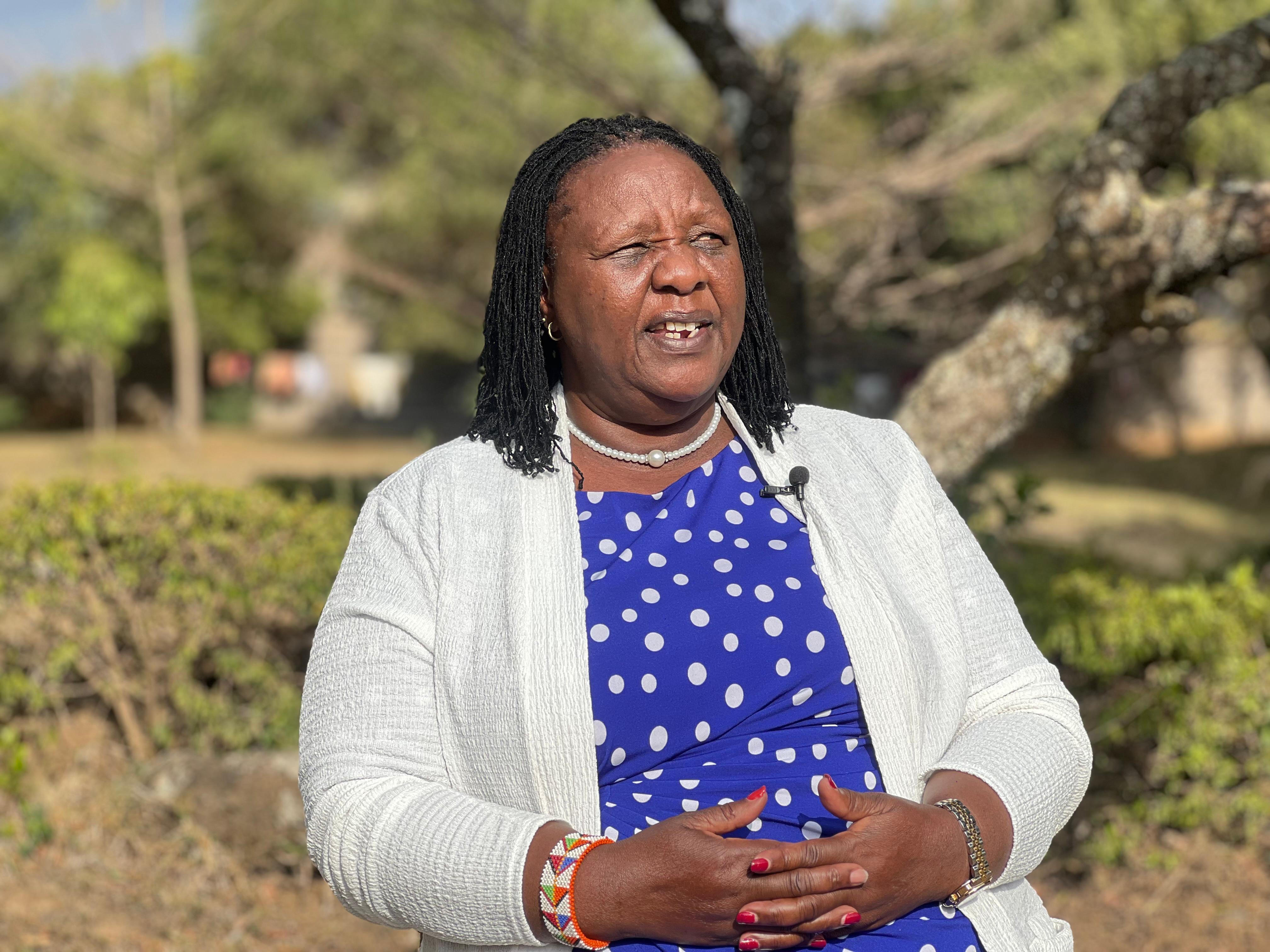 Tasaru Rescue Centre director and Narok North MP Agnes Pareiyo / PERPETUA ETYANG
Narok MP and the director of Tasaru Girls Rescue Centre, Agnes Pareiyo described the long and difficult journey that led to the establishment of the shelter, now a refuge for girls escaping FGM.
Pareiyo said the centre emerged out of necessity in 1998, when young girls began fleeing their homes seeking protection from the practice.
Her activism at the time was rooted in her engagement with women and girls and strengthened by her work with organisations such as Maendeleo ya Wanawake, where she served as treasurer.
“I went through FGM at 14 even though my father had protected me for years. I did not understand the dangers at the time, but I learned about them as I became an activist. That is why I decided no other girl should suffer what I went through,” she said.
She said that the work was dangerous because FGM was deeply entrenched, and speaking against it provoked hostility.
Pareiyo recalled being isolated by local leaders and the turning point came when the community saw her commitment.
“Community leaders began distancing themselves from me. The MP could not speak about FGM because he feared losing votes. People called me crazy and mad, and it became very difficult to even connect with women,” she said.
Pareiyo said the facility became essential when she realised returning girls home often led to renewed harm.
"Some girls went back and still underwent FGM, so I knew a permanent safe place was necessary. Education also became key because it empowered them to sustain their decisions. That is how the idea of a full rescue centre and schooling program was born,” she said.
Despite facing angry parents at her gate and lacking any means to defend herself, she continued protecting the girls.
Her leadership journey eventually pushed her into politics where she served as a ward representative for 10 years, surprising many who once rejected her.
Over time, as the rescued girls completed their education and secured jobs, families began to appreciate her work, acknowledging the transformative role of education.