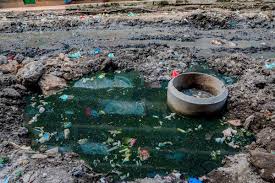
In Nairobi's Pipeline estate, daily life is marked by a harsh reality: overcrowded dwellings, erratic water supply, poor waste management and now, an alarming surge in raw sewage flooding the streets and buildings.
For years, these issues have festered, largely ignored by authorities—until recently. City Hall has finally turned its attention to the worsening sanitation crisis.
Environment chief officer Geoffrey Mosiria landed in the area, citing overwhelming public concern over the poor sanitary conditions and the risk of disease outbreak.
He condemned the conditions as appalling, pointing fingers squarely at negligent landlords.
“Today in Pipeline, I was shocked to witness the deplorable conditions tenants are being subjected to,” Mosiria said during a visit to the estate late last week.
For example, landlords with full septic tanks go for easy solutions like getting casual labourers—youth—to empty them on the open spaces or in drainage trenches along the feeder roads.
Some whose septic tanks are not connected to the Nairobi main sewer line networks empty them on the roads. This is reportedly done in the dead of the night, when most of the city is asleep.
Mosiria said the department has received various complaints from tenants about overflowing effluent.
“Blocked toilets have caused raw sewage to spill across floors and into bathrooms, creating an unbearable stench throughout the apartment building.”
The unsanitary conditions, he noted, posed serious health risks to residents, especially children.
The chief officer reported that in one particular building—which houses dozens of families—a main sewer line had broken, yet no efforts had been made by the management to repair it. As a result, tenants are living in direct exposure to raw sewage.
“This apartment complex accommodates numerous families, including young children. The neglect here is not just unacceptable—it is dangerous,” Mosiria said.
Mogire Nyamu, a 35-year-old resident of nearby Umoja estate, said public facilities have been turned into dumping grounds for raw sewage.
He cited the drainage trench along Manyanja Road in Umoja.
“They pour the sewage onto estate roads, which our children also use as playing areas. All because they don’t want to pay for proper waste removal services,” he said.
“It's heartbreaking and unsafe. It has become a permanent hazard and we see it every day.”
According to the 2019 population census, Embakasi is the most densely populated area in Nairobi, with 988,808 residents—a significant number of whom live in Pipeline Estate.
The overcrowding has placed immense pressure on housing infrastructure and basic services, leaving many tenants to endure unsanitary conditions with little recourse.
In response to mounting complaints, Mosiria vowed that the county would no longer tolerate landlords who put lives at risk through gross negligence.
“We will hold the apartment management accountable and ensure they comply with health and safety standards without delay,” he stated.
This is not the first time the Environment Department has taken issue with the area. Last month, Mosiria led a clean-up operation in Pipeline targeting illegal garbage dumping that had blocked roads and exacerbated the sanitation problem.
During the exercise, landlords were urged to ensure waste from their buildings is managed through registered Private Service Providers) or accredited Community-Based Organisations.
“This issue is systemic,” Mosiria said. “But we are serious about enforcement. We will not hesitate to prosecute those who continue to flout regulations and jeopardise public health.”
The warning is a clear signal of the county’s intent to crack down on environmental law violations.For many residents, action cannot come soon enough as the fear of a disease outbreak looms large.
Instant Analysis
Pipeline's residents have long borne the consequences of unchecked urban sprawl and developer greed. Now, with City Hall finally taking notice, there is a glimmer of hope that their voices—and their suffering—are beginning to be heard.