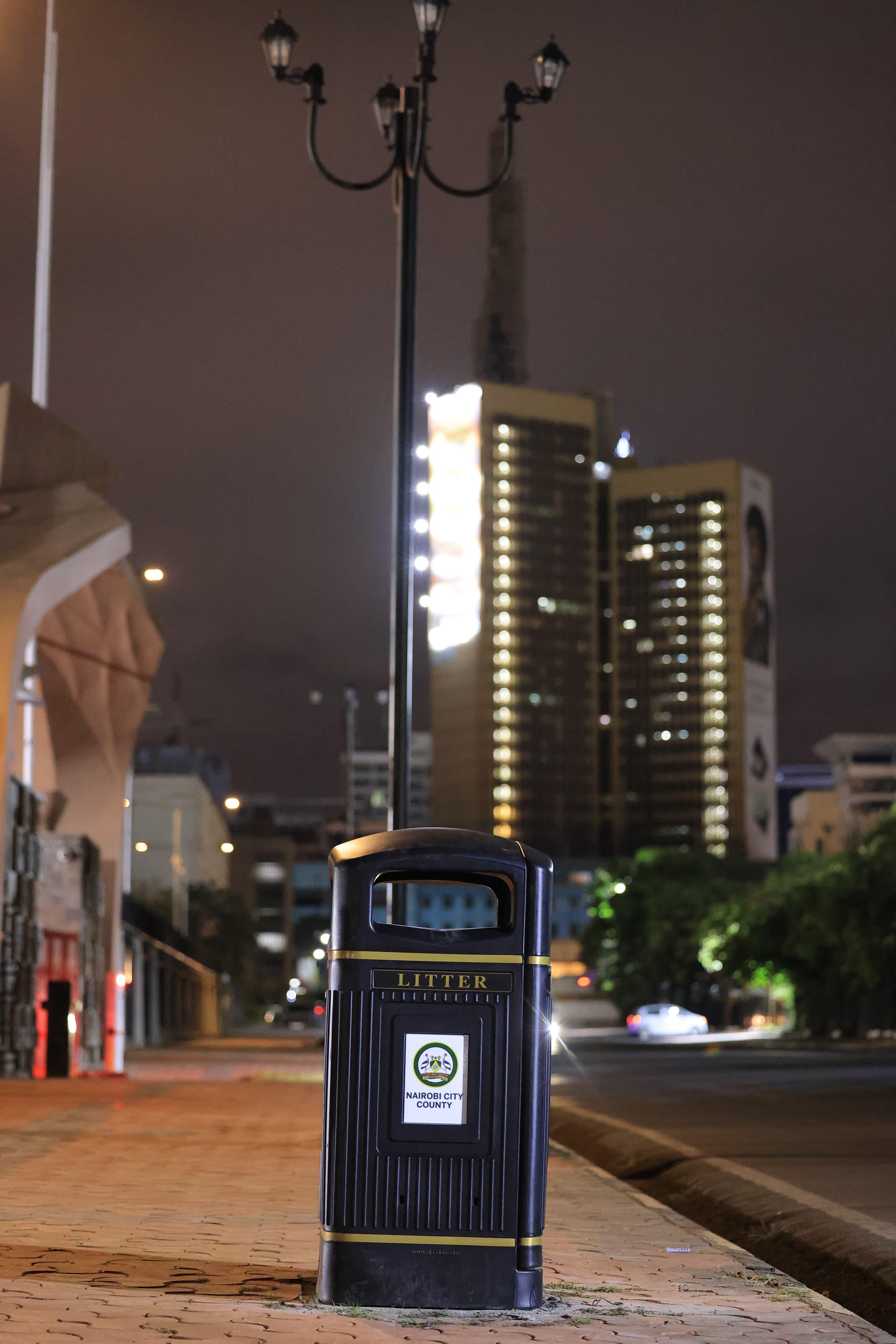
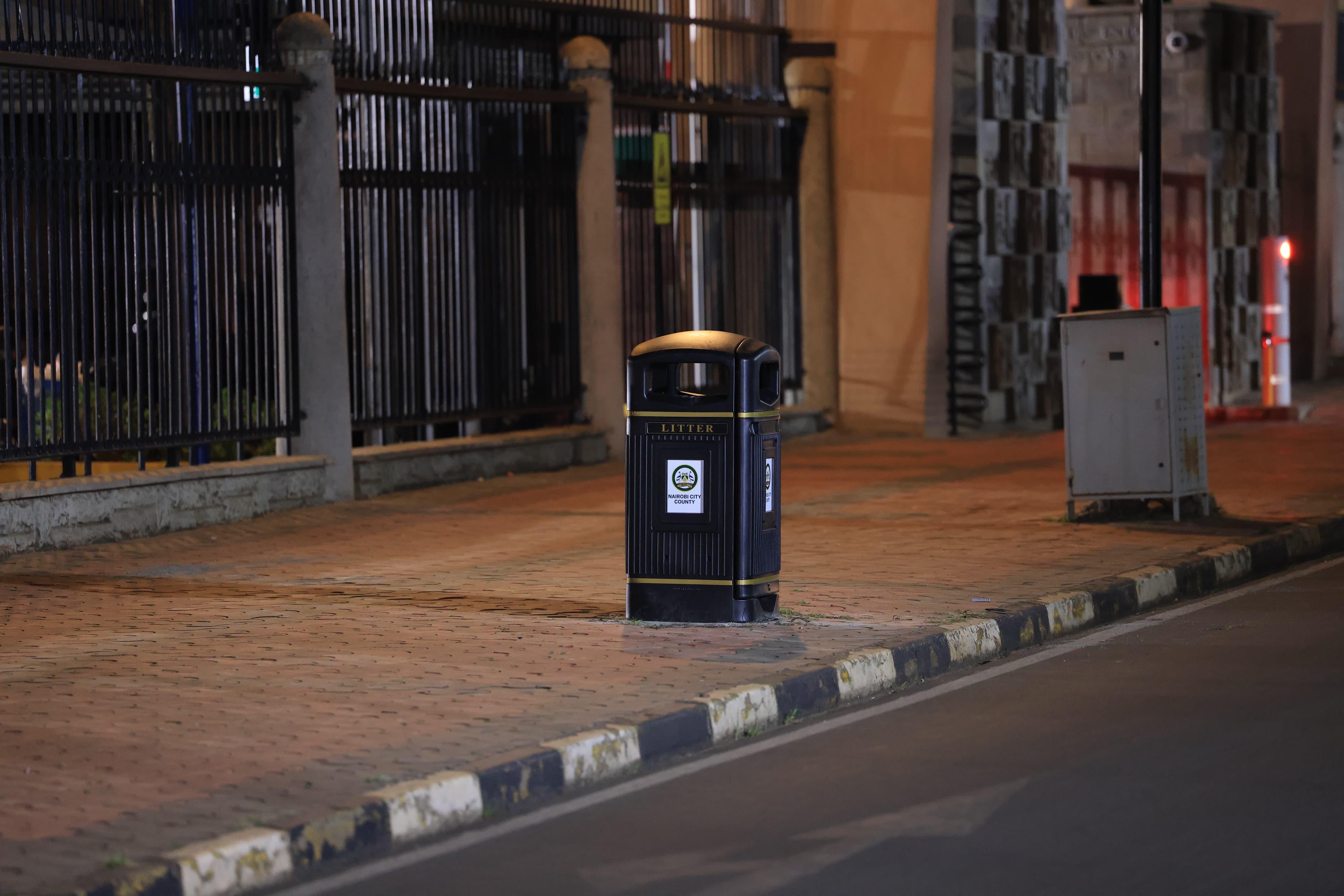
A quiet transformation unfolded overnight in Nairobi’s central business district as uniformed City Hall teams installed rows of high-capacity litter bins, marking Governor Johnson Sakaja’s latest move in overhauling the capital’s waste management infrastructure.
By Saturday morning, the Glasdon Jubilee 110-litre bins were already drawing public attention in the CBD.
With their distinctive design and polished finish, the new bins stood out, not just as waste receptacles but as symbols of a cleaner, more orderly city in the making.
Read Also
Ian Momanyi and Caroline Wambura, street photographers who earn a living by capturing urban life, said the bins are already having a visible impact.
“They’re beautiful. Some of my clients even ask me to take photos with them. They’re not just keeping the city clean, they’re making it glow,” Ian said.
“This is the first time we’re seeing bins like these. They’re beautiful. I believe in making good use of them and keeping the city clean,” Wambura added.
This rollout builds on earlier efforts to reshape the city’s approach to sanitation, following the announcement of the soon-to-be-launched Green Nairobi Company Ltd. The company will be a semi-autonomous agency set to manage Nairobi’s environmental services.
“This is one project I would love to see succeed. I hate how we litter everywhere. Good job, bwana governor. Also, City Hall should enact strict measures if none exists to support this project,” said Dolla, a passerby who wished to be identified by only one name.
For Sakaja’s administration, the new bins are both a practical tool and a public statement: Nairobi is ready to embrace modern, resilient solutions to long-standing urban challenges.
While inspecting the newly introduced bins on Friday night, Sakaja said the initiative marks a significant step forward in the city’s public sanitation infrastructure.
“These are not just bins. They’re a statement about the Nairobi we are building one that values order, hygiene and modernity,” Sakaja said.
The governor emphasised the importance of public participation in maintaining cleanliness.
“We are investing in modern infrastructure, but real change will come when wananchi also take responsibility and dispose of their waste properly.”
The initial rollout has focused on high-traffic areas, with additional bins scheduled for installation in residential neighbourhoods, public parks and transportation hubs.
Made from Durapol, a tough polymer known for its resistance to heat, impact, and environmental stress, the bins are built for Nairobi’s dynamic urban conditions.
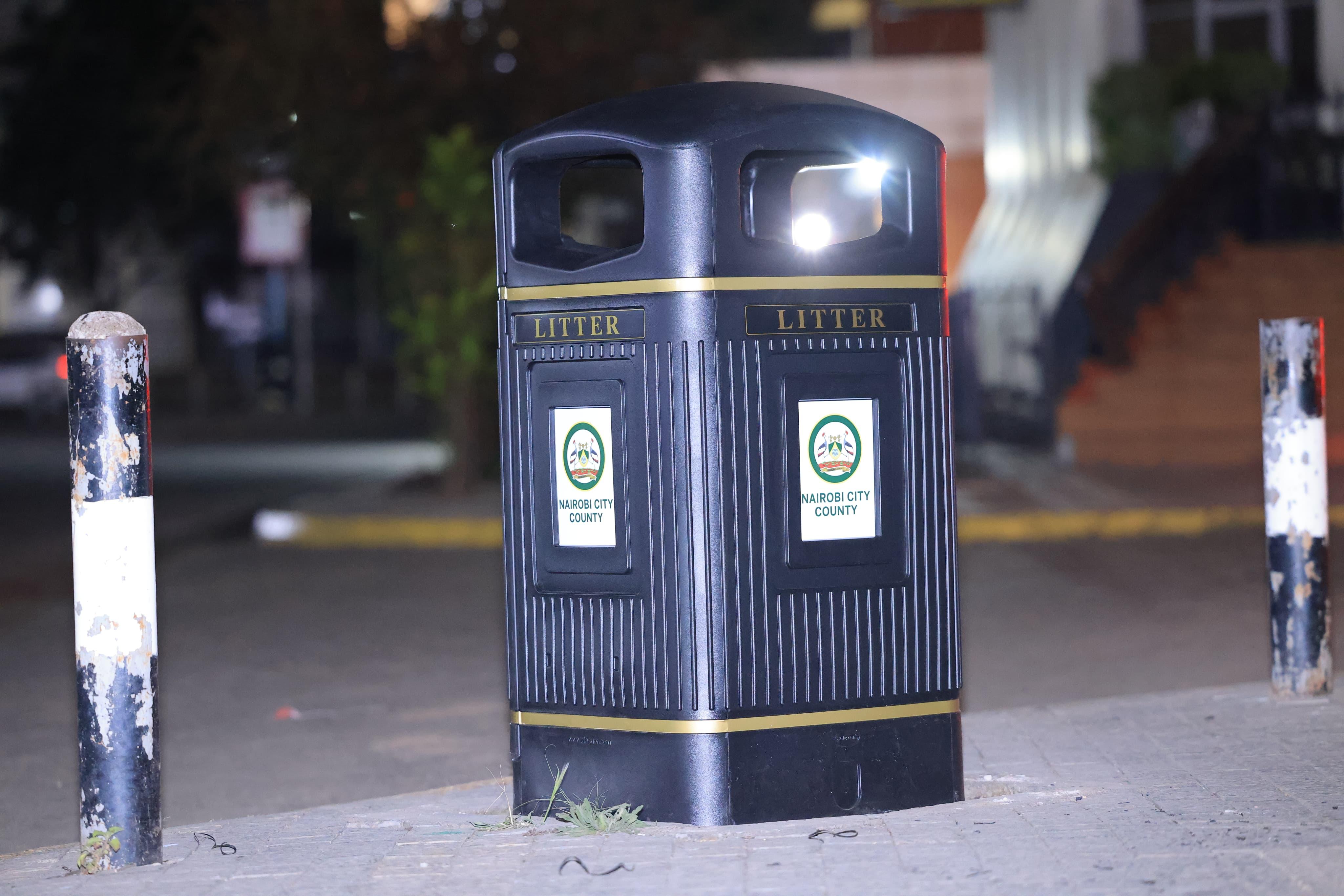
Each is fitted with a domed hood to prevent water accumulation, an internal corrosion-resistant liner, and a secure three-point locking system to deter vandalism or unauthorised access.
The anti-flyposting exterior also targets another familiar urban nuisance, illegal advertising.
Placed strategically across high-traffic streets, the bins are already influencing the city’s daily rhythm.
The rollout also carries a message of shared responsibility.
“While the county government is providing durable infrastructure, the project's long-term success depends on how residents respond by disposing their waste properly and treating public amenities with care,” Sakaja said.
The governor said the move is part of City Hall’s effort to modernise and streamline Nairobi’s sanitation systems.