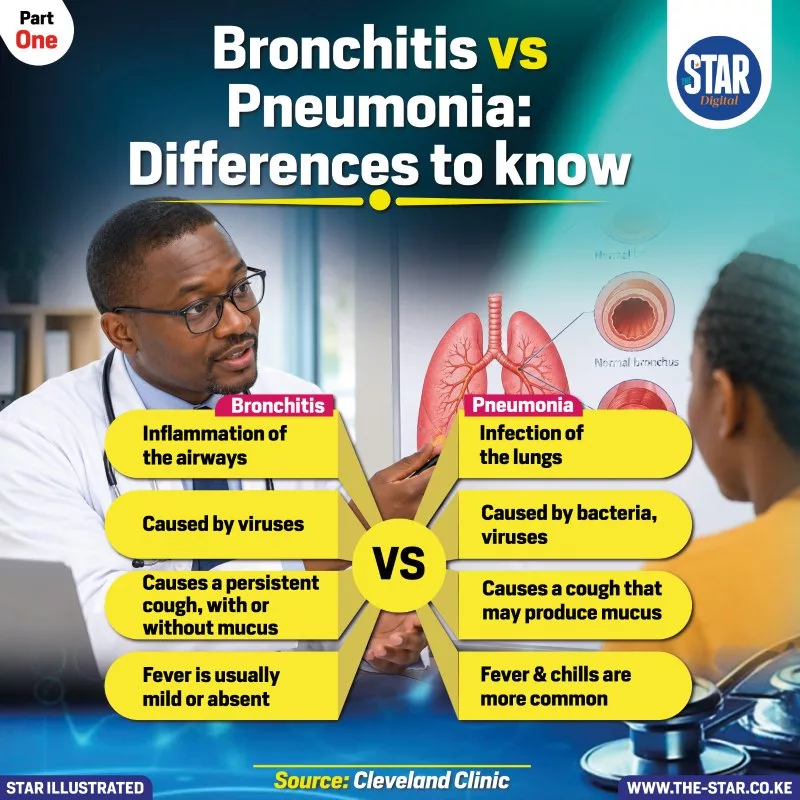
Bronchitis and pneumonia are respiratory conditions that affect different parts of the lungs, although they can cause similar symptoms, including coughing and breathing difficulties.
According to the Cleveland Clinic, bronchitis occurs when the bronchial tubes, which carry air to the lungs, become inflamed and produce excess mucus.
Acute bronchitis is usually caused by a viral infection and often clears within a few weeks. Symptoms include a persistent cough, wheezing, fatigue and mild fever.
Pneumonia, on the other hand, is an infection that causes inflammation and fluid to accumulate in the alveoli, the tiny air sacs responsible for transferring oxygen into the bloodstream.
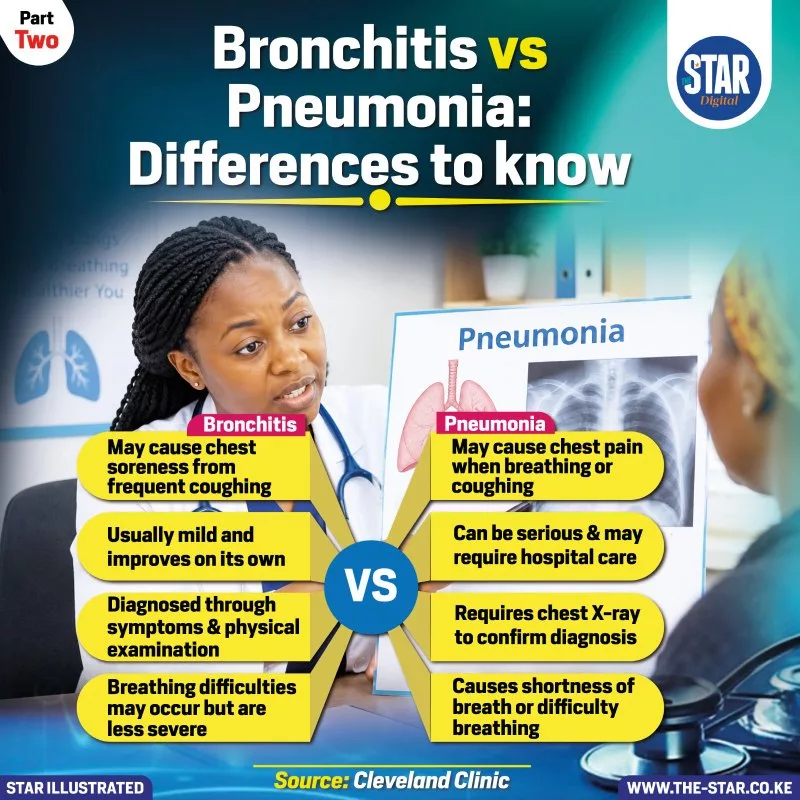
It can be caused by bacteria, viruses or fungi. Symptoms may include high fever, chills, chest pain, rapid breathing and shortness of breath.
Pneumonia can be more serious and may require hospital treatment.
Treatment depends on the cause.
Antibiotics treat bacterial pneumonia but generally do not help viral bronchitis.