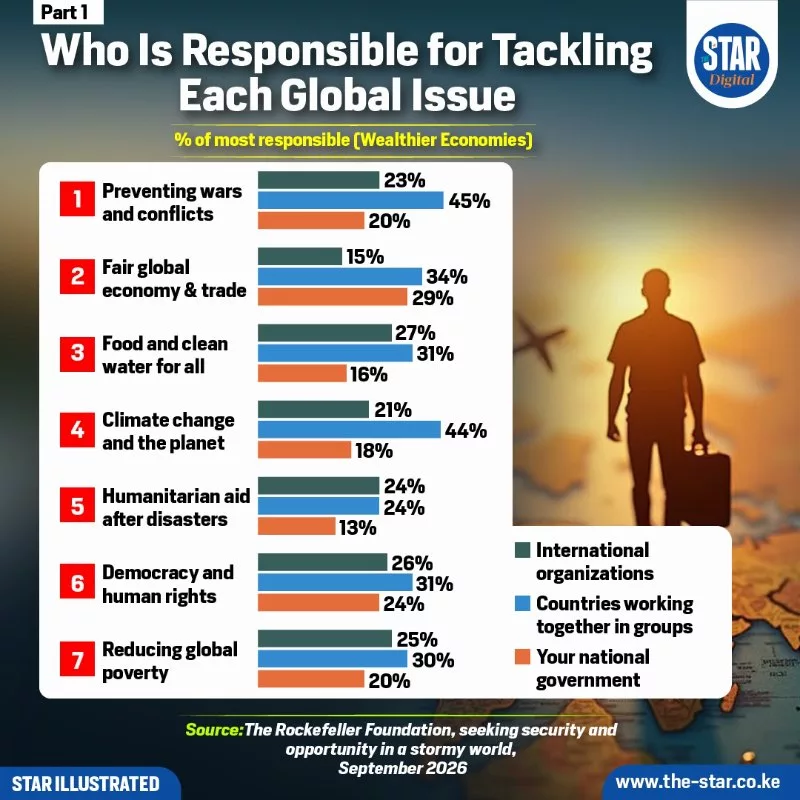
Data from The Rockefeller Foundation highlights how people in wealthier economies allocate responsibility for addressing major global challenges among governments, international organisations and groups of countries working together.
Cooperation between countries is seen as the leading approach to preventing conflicts, cited by 45 per cent of respondents, and addressing climate change, at 44 per cent.
It also leads on ensuring fair global trade and upholding international law, both at 34 per cent, as well as promoting democracy at 31 per cent.
Reducing poverty and regulating emerging technologies and artificial intelligence each account for 30 per cent.
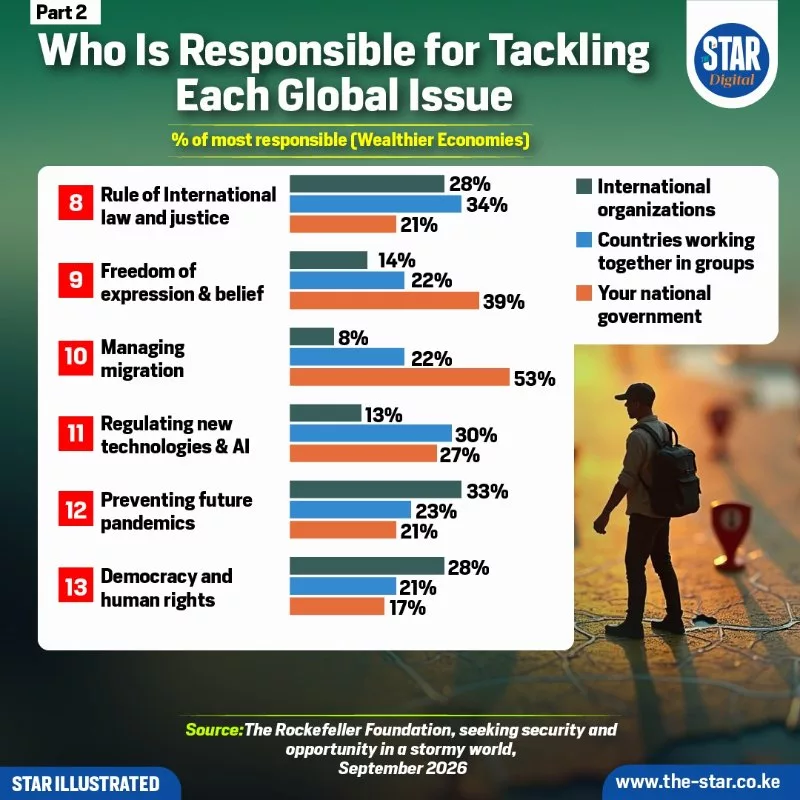
National governments are viewed as primarily responsible for domestic and border-related issues, with 53 per cent assigning them responsibility for managing migration and 39 per cent for protecting freedom of expression and belief.
International organisations are considered most responsible for preventing future pandemics, at 33 per cent, and play a significant role in ensuring access to food and clean water, at 27 per cent.
Humanitarian aid following disasters is seen as a shared responsibility, with international organisations and groups of countries each accounting for 24 per cent