Public support for maintaining or increasing foreign aid remains strong across key global economies, even as international funding faces steep reductions.
According to findings from The Rockefeller Foundation's September 2026 report, "Seeking Security and Opportunity in a Stormy World," majorities in numerous nations favour reversing recent funding cuts or increasing aid commitments.
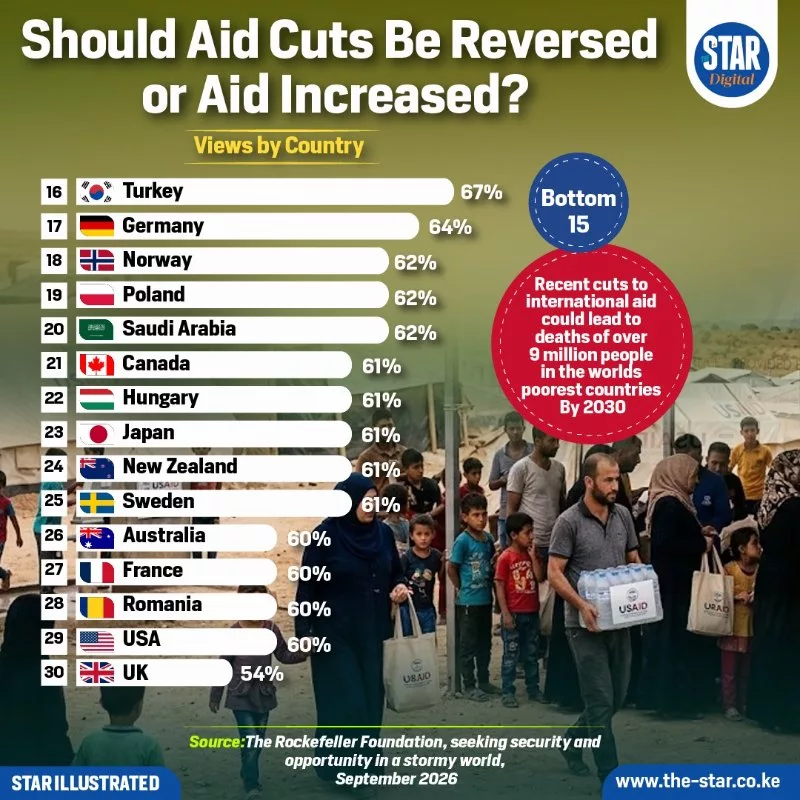
A significant portion of the global public continues to champion foreign assistance. Turkey leads the surveyed nations in approval, with 67 per cent supporting aid restoration or expansion.
High levels of public endorsement are also evident across Europe, where 64 per cent of citizens in Germany and 62 per cent in Norway and Poland express support.
Outside Europe, similar sentiment prevails, with 62 per cent support in Saudi Arabia, while Canada, Hungary, Japan, New Zealand, and Sweden all show 61 per cent agreement.
In Australia, France, Romania, and the United States, 60 per cent of respondents back higher aid or reversed cuts. The United Kingdom ranks lowest among the surveyed bottom 15 countries, though a clear majority of 54 per cent still supports maintaining or expanding international aid efforts.
The figures emerge alongside stark warnings regarding the consequences of reduced funding. Global experts caution that recent cuts to international aid could result in the deaths of over nine million people in the world’s poorest countries by 2030.
As governments balance domestic pressures against international obligations, the public consensus across these fifteen nations reflects continued backing for humanitarian aid funding.