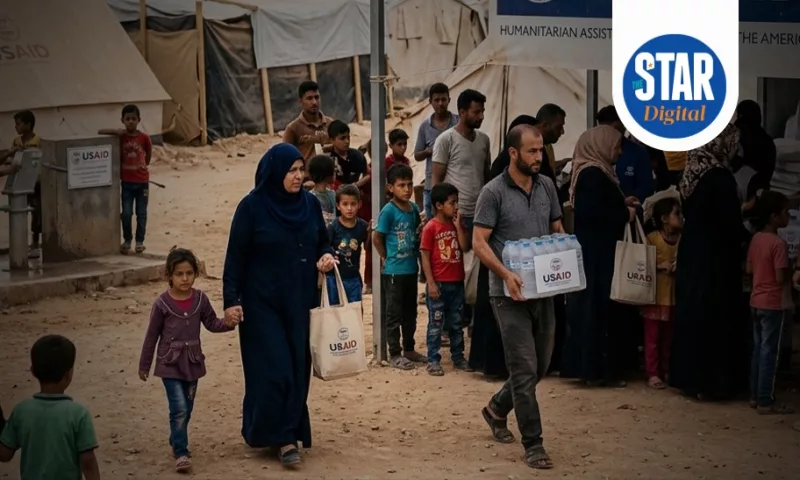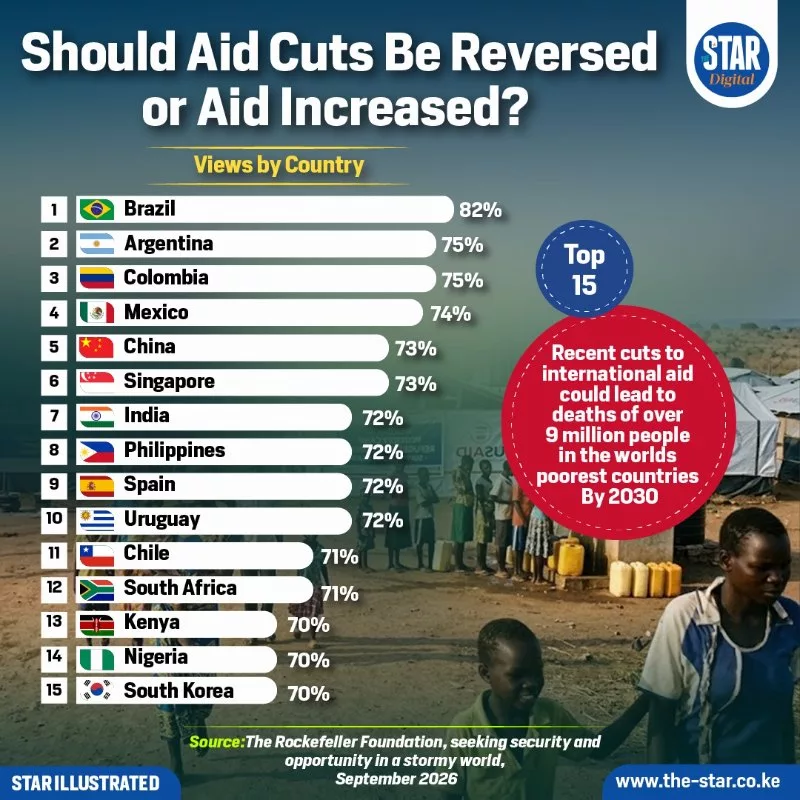
Public support across major developing and emerging economies remains overwhelmingly in favor of reversing foreign aid cuts or boosting assistance, as experts warn of severe humanitarian consequences in the world’s poorest nations.
Recent reductions in international aid could lead to the deaths of over nine million people in vulnerable countries by 2030, according to data from The Rockefeller Foundation. Amid these rising risks, citizens across multiple continents are calling for stronger global support.
Latin American nations show some of the highest levels of backing for restored or increased aid. Brazil leads the ranking, with 82 per cent of respondents agreeing that foreign assistance should be restored or expanded.
Argentina and Colombia follow closely at 75 per cent each, while 74 per cent of respondents in Mexico share the same view. Uruguay and Chile also record high support at 72 per cent and 71 per cent, respectively.
A similar trend is visible across Asia and Africa. In China and Singapore, 73 per cent of those polled support reversing aid cuts or increasing funding. India and the Philippines stand at 72 per cent, alongside South Korea at 70 per cent.
Among African nations represented in the top 15, South Africa registered 71 per cent approval, while Kenya and Nigeria both recorded 70 per cent support. European representation includes Spain, where 72 percent favor higher aid levels.
The figures underscore a widespread global consensus that international assistance should be prioritised to prevent worsening poverty and loss of life.