Nobody quite knows how the water buffalo got to Marajó. The island sits at the mouth of the Amazon, a flat, half-drowned place of mangroves and seasonal floods.
One story says a ship carrying buffalo sank off its coast and the animals swam ashore. Another says convicts escaping from French Guiana rode them through the swamps to Brazil and simply left them behind.
Whichever version you prefer, the result is not in dispute. Marajó today has about half a million buffalo and roughly 440,000 people.
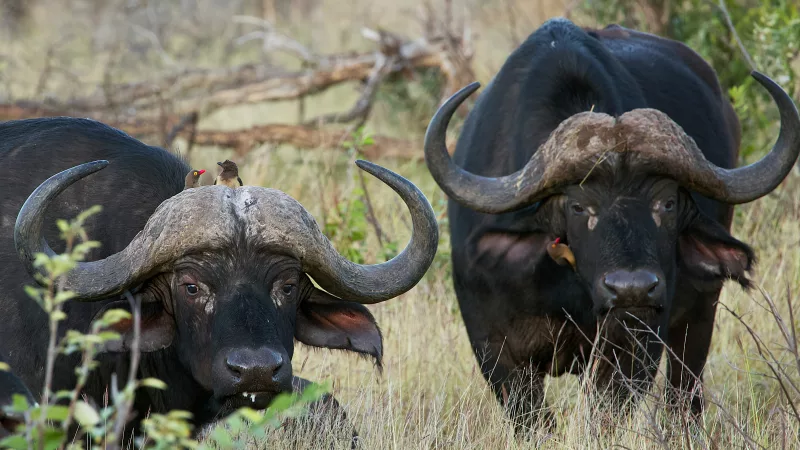
The animals pull carts in the town of Soure. They end up on restaurant menus as steaks topped with buffalo mozzarella. And the military police patrol them, in specially fitted saddles, because in the rainy season a huge buffalo with wide-spreading horns buffalo moves through flooded mangroves faster than a horse.
That is the quiet lesson of Marajó. An animal originating in South Asia ended up thriving in a landscape nobody had designed it for, in a place where the conventional livestock struggled. The fit was found by accident and then built upon.
Decades later, President William Ruto stood at the Agriculture and Food Systems Transformation Summit in Nairobi on October 8 and mused, “I hear buffaloes also produce a lot of milk. If others are milking them, why can’t we do the same?”
His proposal arose in the context of pressure on milk supply and severe dairy shortage associated with drought, pasture deterioration and high feed costs.
Importantly, Ruto’s proposal was to start small and establish whether the model works under Kenyan conditions, to supplement, not replace the national dairy herd with buffaloes.
Almost inevitably the Kenyan digital public exploded into predictable, visceral hilarity. Within hours, social media was flooded with memes depicting suicidal livestock officers attempting to tie down snorting, wild Cape buffaloes in the thickets of Tsavo.
Buffalo, in the Kenyan imagination, belongs in a national park, preferably viewed from the safety of a vehicle. The mental picture of a farmer approaching one with a milk pail therefore writes its own jokes. The mockery was entertaining, but it rested on a basic error.
Begs the question. Once we set aside the wrong buffalo, is the right one a sound idea? The public’s instinctive cynicism is understandable. We live in an era in which policy proposals are routinely conflated with political theatre, and where the gap between executive propositions and grassroots implementation often feels as wide as Rift Valley.
But the collective mockery reveals a deeper, more fundamental confusion, one that conflates the ferocious, untamable wild beast of the African savannah with one of humanity’s most extraordinary agricultural breakthroughs: the domesticated Riverine Water Buffalo also known as Bubalus Bubalis, domesticated more than 5,000 years ago in the Indus Valley and the Yangtze River Basin. It has been milked for thousands of years.
Kenya itself formally declared the domesticated water buffalo a food animal under the Meat Control Act in January last year.
In fact, Kenya and Brazil endorsed a protocol for trading water buffalo in 2018, after Kenyan livestock actors petitioned the Ministry of Agriculture to open a bio-secure import channel for Brazilian buffalo genetics. The interest had already been expressed previously. What has been lacking is the executive momentum.
When stripped of political posturing and internet satire, the President’s proposal, and the ministry’s policy groundwork, deserve rigorous, dispassionate analysis.
The issue is not whether buffalo milk feels familiar to Kenyans. The question is whether a domesticated dairy animal that already supports major commercial milk industries elsewhere could add something useful to Kenya’s livestock economy.
That proposition deserves to be tested on its economics, biology and market potential, not on how bizarre it sounds. The real test of the Ruto’s proposal therefore becomes institutional rather than zoological.
Unfortunately, agricultural policy sometimes suffers from a strange conservatism. We accept innovation readily when it arrives as software, solar panels or financial technology, but we become suspicious when innovation involves biology.
Yet virtually every successful agricultural economy has, at some point, introduced crops, breeds and production systems that were not previously part of its farming tradition. The relevant test has never been familiarity. It is productivity, adaptation, economics and risk.
India provides the obvious comparison. In 2024-25 India produced 247.87 million tonnes of milk, with buffaloes contributing roughly 43 per cent.
This is not a niche experiment on the margins of Indian agriculture. It is part of the architecture of the world’s largest milk-producing industry.
Elsewhere in Italy, the entire multi-billion euro Mozzarella di Bufala Campana industry rests exclusively on the backs of these creatures and generates an annual turnover of roughly $1.3 billion.
The Food and Agriculture Organization similarly identifies domestic water buffaloes as major milk-producing animals in a number of countries. River buffaloes, the type primarily associated with dairying, typically produce between 1,500 and 4,500 litres per lactation.
But the most interesting case for buffaloes in Kenya may not actually be the number of litres they produce. It is what is inside those litres.
Buffalo milk has substantially higher fat and total solids than ordinary cow milk. FAO data put average buffalo-milk fat at about eight per cent compared with about three per cent for cow milk.
This may sound like a nutritional footnote, but it is an economic headline. A litre of milk is not merely a litre of white liquid. Milk is mostly water, and water is the medium that enables bacterial spoilage and inflates the cost of chilling, hauling and processing.
For a processor making cheese, yoghurt, butter, cream or ghee, solids matter because they determine how much finished product can be extracted from the raw milk. To put it into context, to produce one kilogramme of cheese, a processor requires roughly 10 litres of cow milk but only five litres of buffalo milk. This is an industrial game changer.
Buffalo milk is especially suited to products such as mozzarella, specialty cheeses, yoghurt, cream and ghee. FAO presents buffalo dairying, milk collection and mozzarella production in Pakistan as investable agricultural propositions, precisely because higher milk solids can support premium processing.
This fits a larger question Kenya has been wrestling with for years. That is how to move agriculture away from measuring success principally by tonnes and litres and towards measuring value retained by the farmer and the economy.
Kenya will not become richer simply because it produces more agricultural raw material, but when productivity rises, processing deepens, new products emerge, markets become differentiated and farmers capture a greater share of final value. The government itself has repeatedly placed agricultural value addition at the centre of its policy agenda.
Buffalo dairy should therefore not be assessed only as an intervention in milk supply. It should be assessed as a possible new agricultural value chain.
There is also a resilience proposition.
Kenya’s dairy system is overwhelmingly associated with cattle. That specialisation has advantages because farmers understand cattle, processors are configured around cow milk, breeding systems exist, veterinarians know the production system and consumer acceptance is established.
But concentration also creates vulnerability.
When drought reduces fodder availability or feed prices rise sharply, the shock travels through a large part of the same production system at once. Diversification does not eliminate drought, but it can reduce the extent to which national milk supply depends upon one livestock production model. That explains why the President’s broader proposition included camel, goat, sheep and buffalo milk.
Kenya’s formal dairy sector is built largely on one type of animal, the exotic dairy cow and its crosses, concentrated in one kind of landscape, the cool, rain-fed highlands.
That is efficient in good years. But it means much of the country’s milk depends on the same rainfall, falling on the same counties, in the same seasons. When the rains fail, they fail for almost everyone at once.
Taken together, the logic of the proposition of expanding the animals in the dairy sector is coherent. Camels suit the arid north, where cattle suffer in drought. Buffaloes are suited hot, wet lowlands, floodplains, and irrigated land where exotic cows struggle with heat and humidity.
Across Asia, the buffalo is an animal of the rice economy. Living on straw and crop residues that other livestock digest poorly. Kenya has rice schemes in Mwea, Ahero, Kuja and along the Tana Hola and Bura irrigation schemes. Three types of animals for three landscapes is not a meme. It is a portfolio.
Harry Markowitz won a Nobel Prize for an insight that sounds obvious once stated. You reduce risk by holding assets that do not all move together. The gain from diversification comes not from any single asset being better, but from their fortunes being less tightly linked.
Hence this diversification should be understood in the same way that we understand diversification elsewhere in an economy. A country does not build an energy system around one source because one technology is inherently bad. It diversifies because different sources perform differently under different conditions. Agricultural resilience deserves the same logic.
Lastly, is the proposition on disease tolerance and climate adaptation. Water buffaloes evolved in tropical, humid environments. They possess thick hides, specialised sweat mechanisms supplemented by wallowing, and an extraordinary natural resistance to tick-borne diseases such as East Coast Fever, anaplasmosis and trypanosomiasis that routinely decimate exotic cattle herds across sub-Saharan Africa. This becomes structural insurance.
Finally, my unsolicited advice is to the Ministry of Agriculture and Livestock Development. Design this proposal as a pilot rather than a launch that will answer questions before public money or farmers savings are exposed at scale.
The pilot should have a commercial stress test designed into it from the beginning to answer which dairy buffalo breed performs best under selected Kenyan agro-ecological conditions? What is its lifetime milk yield? What does one litre cost to produce? How much water does the production system require? Can locally available fodder support commercially attractive yields?
What diseases require surveillance? What are fertility and calf-survival rates? Can existing milk collection systems handle buffalo milk separately? What premium will processors pay for its higher solids? Does the economics work better for fresh milk or for cheese, yoghurt and other processed products?
This will shift the narrative from “can a buffalo be milked in Kenya” to “can a Kenyan farmer make money doing it?”
The option is an agent of antifragility - Nassim Nicholas Taleb, Lebanese-American mathematician, risk analyst