

Kenya has no shortage of political parties. What we must interrogate is whether every new party expands the people’s power, or merely expands the negotiating power of another politician.
A registration certificate establishes a legal organisation. Building a movement that citizens trust, defend and sustain across generations requires something deeper.
The Office of the Registrar of Political Parties recorded 101 fully registered parties as at September. Its October register separately listed 41 provisionally registered parties. These distinct categories reveal an extraordinary appetite for political organisation.
Whether that appetite translates into better representation, stronger accountability and meaningful choices for citizens deserves examination.
I defend without qualification every Kenyan’s freedom to form a political party. Article 38 protects this right. New organisations can articulate neglected concerns, introduce fresh leadership and challenge complacency.
No established party should consider itself entitled to permanent support, or seek protection from the competition through which democratic legitimacy is earned.
However, Article 91 also requires parties to possess a national character, uphold national unity and practise internal democracy.
Our constitution envisages institutions through which citizens exercise power. It demands more than an office, a symbol and a founder whose ambitions become indistinguishable from the organisation’s purpose.
The distinction matters. A new party widens democracy when it offers a coherent programme, accommodates disagreement and gives members meaningful ownership.
Its contribution becomes doubtful when its principal function is to secure a nomination, negotiate a position or provide temporary shelter for politicians whose previous arrangements have become inconvenient.
This is where the question of false prophets arises. Political false prophecy sells personal ambition as collective liberation. It promises citizens a new beginning without explaining how jobs will be created, services improved or institutions strengthened. Its followers supply the enthusiasm, while its proprietors retain the power to negotiate away their expectations.
Citizens should therefore examine what survives after the launch ceremony. Does the party organise between elections? Can members influence its leadership? Does it remain active when public office is distant? Can it withstand disagreement, electoral disappointment or the departure of its financier? These are practical tests of whether an institution belongs to its members.
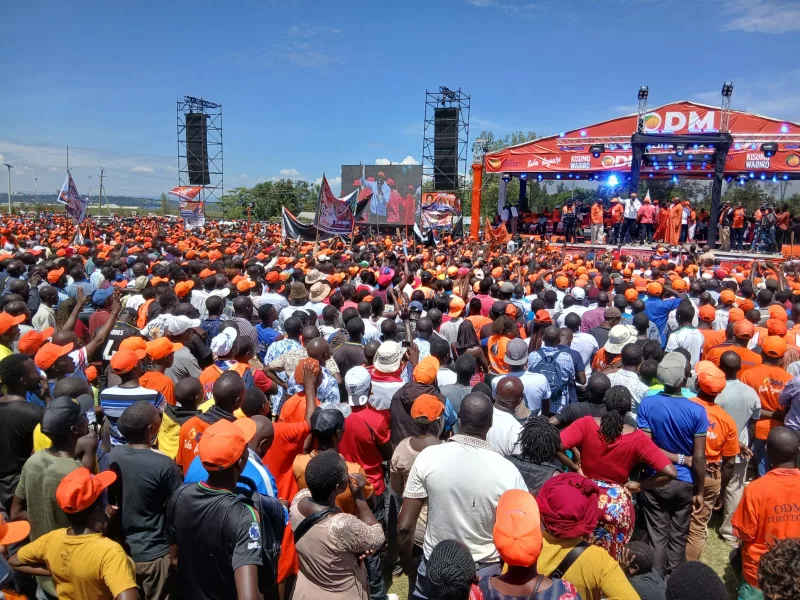
ODM’s record deserves consideration against those tests. The party contested the general elections of 2007, 2013, 2017 and 2022 under the same recognisable identity.
Through changing coalitions, departing personalities and difficult political circumstances, it remained a substantial electoral force. Four successive general elections demonstrate a relationship with voters that cannot be explained by a passing political fashion.
The National Assembly’s official membership summary of May 22, 2023 listed 86 ODM members. Its representatives included constituencies as diverse as Mandera East, Wajir South, Kajiado Central, Turkana North, Saboti and Mvita.
This geographical spread is evidence of an organisation capable of bringing different communities into a shared political home.
Today, that endurance carries an even deeper significance. One year has passed since the death of our founding party leader, Raila Odinga.
We miss him dearly: his courage, his counsel, his humour and his extraordinary ability to give ordinary Kenyans confidence that their voices mattered.
For those of us privileged to serve alongside him, the loss remains profoundly personal. Yet even in grief, ODM remains as strong as ever in the conviction and attachment of its members. The movement continues because the relationship he nurtured with Kenyans became part of their own political identity.
That is among Baba’s greatest achievements. He inspired devotion while helping build something larger than individual ambition.
His enduring legacy places a responsibility on us: to preserve the movement’s unity, deepen its democratic character and ensure that the hopes invested in it continue to find expression through service, organisation and principled leadership.
Historical honesty requires acknowledging that Kanu, Ford–Kenya and other parties have also survived multiple electoral cycles. Longevity alone is therefore no exclusive claim.
ODM’s distinction lies in the combination of continuity, substantial representation and a popular identity that has endured both electoral setbacks and the painful loss of its founding leader.
In Mombasa, that identity comes with expectations. People judge political commitments through their experience of schools, hospitals, livelihoods and public administration.
Their loyalty obliges us to deliver, listen and account for our decisions. A party entrenched in people’s hearts and minds must demonstrate that their concerns remain central to its work.
We must consequently resist complacency within ODM itself. Unfair nominations, exclusion and weak accountability damage the very relationship we celebrate. Young people must see opportunities to lead. Women must exercise real influence.
Members must experience ownership. Our strongest tribute to Baba is a movement whose democratic practices match the aspirations he helped awaken.
Kenya should welcome every genuine contribution to democratic life while scrutinising those who merely trade in its language. Party proliferation creates opportunity; public trust determines which organisations endure.
ODM’s strength has been tested across elections, political realignments and bereavement. We carry our founding leader’s memory with love, and his unfinished democratic mission with resolve.
The orange endures because Kenyans have made it their own. That enduring ownership is the foundation of our confidence in the years ahead.
Mombasa governor and ODM deputy leader





