As Breast Cancer Awareness Month unfolds in October, health guidelines highlight key measures individuals can adopt to lower their risk of developing breast cancer
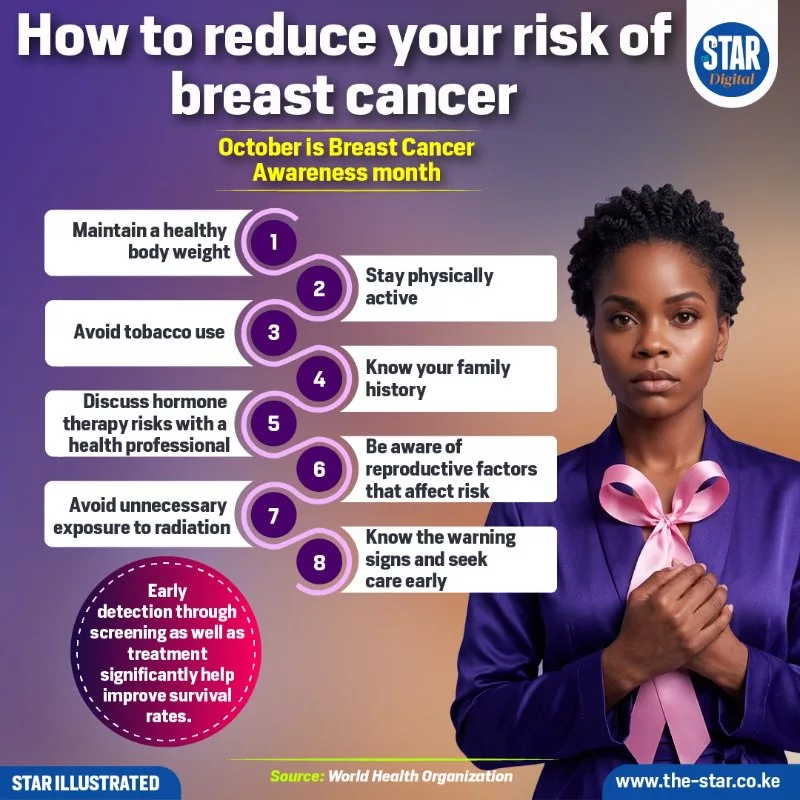
World Health Organization guidance outlines eight proactive steps centred around lifestyle choices, medical awareness, and early intervention
Maintaining a healthy body weight and staying physically active form the foundational lifestyle recommendations aimed at mitigating risk
Individuals are further advised to avoid tobacco use completely, alongside limiting unnecessary radiation exposure.
Beyond daily habits, medical consultation and awareness of personal health histories play a critical role
Additionally, remaining aware of reproductive factors that affect overall risk remains essential
Recognising potential symptoms early serves as a key line of defence
Early detection through regular screening, paired with timely medical treatment, significantly helps improve survival rates among patients
By taking informed steps toward prevention and routine monitoring, individuals can better safeguard their long-term health