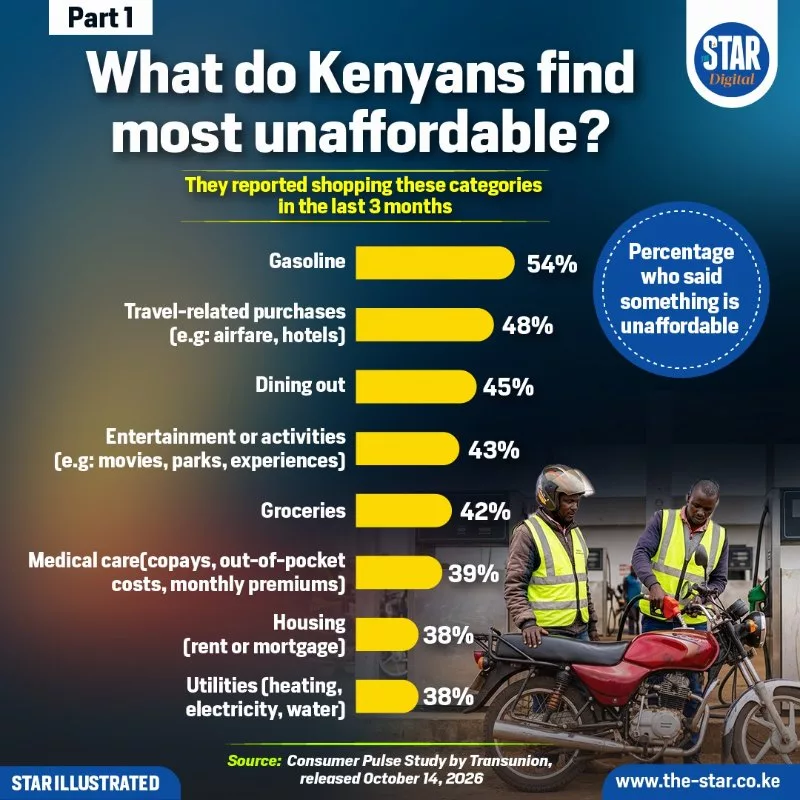
Gasoline is the expense most consumers consider unaffordable, followed by travel-related purchases and dining out, according to a Consumer Pulse Study by TransUnion.
The study, released on October 14, 2026, found that 54 per cent of respondents who had shopped for gasoline in the past three months considered it unaffordable.
Travel-related purchases, including airfare and hotels, ranked second, with 48 per cent of respondents saying the expenses were beyond their budgets. Dining out followed at 45 per cent, highlighting the cost pressures facing consumers seeking to spend on activities outside their basic needs.
Entertainment and leisure activities, including movies, parks and other experiences, were considered unaffordable by 43 per cent of respondents. Groceries followed closely, with 42 per cent saying the cost of food shopping was too high.
Medical care also featured prominently, with 39 per cent of respondents identifying expenses such as co-payments, out-of-pocket costs and monthly premiums as unaffordable.
Housing costs, including rent and mortgage payments, were cited by 38 per cent of respondents. The same proportion said utilities, including heating, electricity and water, were unaffordable.
The findings point to pressure across several household spending categories, from fuel and food to healthcare and housing, while discretionary expenses such as travel, dining and entertainment also remain a challenge for many consumers.
Gasoline recorded the highest share of respondents reporting affordability concerns, at six percentage points above travel-related purchases and nine points higher than dining out.
The study's findings are based on consumers who reported shopping in the listed categories during the three months preceding the survey. The figures measure the proportion who considered each category unaffordable, rather than the amount they spent on the goods and services.
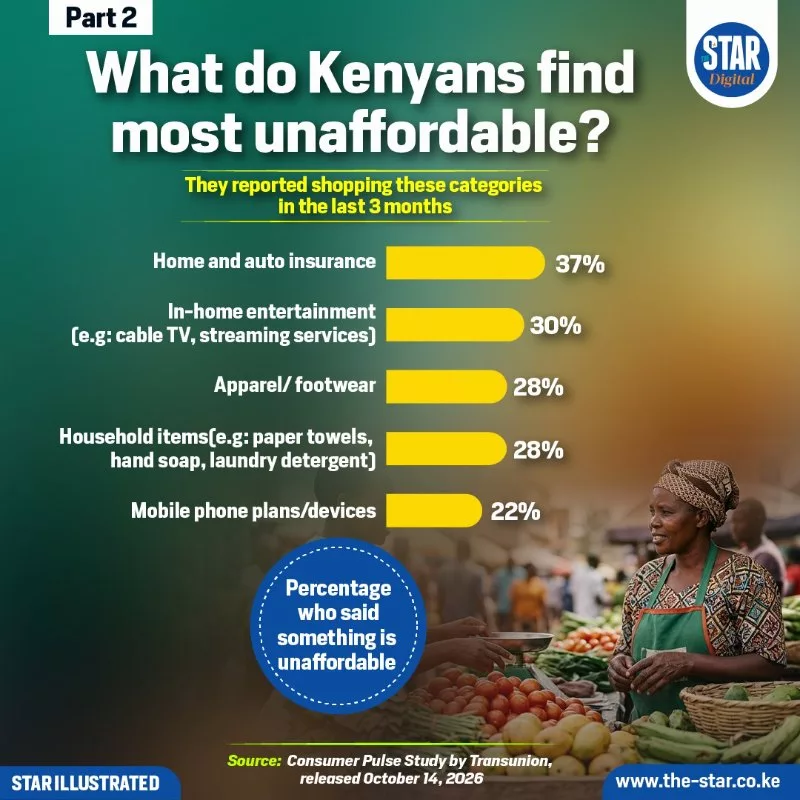
Meanwhile, home and auto insurance ranks as the primary financial burden, with 37 per cent of respondents identifying it as the category they find most challenging.
As inflation and economic pressures influence spending habits, essential protection for property and vehicles has become increasingly out of reach for a major segment of the population.
Following closely behind, in-home entertainment—which includes cable television and streaming services—was cited by 30 per cent of participants as a major affordability hurdle. Households are increasingly reevaluating discretionary subscriptions as they prioritize core living expenses.
Meanwhile, basic consumer goods face identical pressure levels. Both apparel and footwear, alongside essential household items such as paper towels, hand soap, and laundry detergent, were marked by 28 per cent of consumers as difficult to afford. These figures underscore the strain placed on everyday retail and cleaning supplies.
Rounding out the surveyed categories, mobile phone plans and devices represent an affordability concern for 22 per cent of consumers. As digital connectivity remains vital for daily life, maintaining mobile services and equipment continues to demand careful financial balancing.
The TransUnion findings provide a clear snapshot of current consumer sentiment and economic priorities in Kenya, mapping out the precise sectors feeling the impact of household budget constraints.